

Government performance score averages fell by one-quarter from March to December
December 18, 2025 – 2025 ends much the way it started, with political and economic turmoil that has persisted in some form or another for the duration, with Canada and the United States continuing to fail to reach a trade deal, and that relationship strained. For tens of millions of Canadians, cost-of-living and affordability challenges have been exacerbated by the trade situation.
While provincial governments began the year basking in higher approval levels buoyed by a jolt of national pride, they end it with the same kind of enthusiasm Canadians have for stale fruitcake.
New data from the non-profit Angus Redi Institute finds that satisfaction with governments has dropped considerably compared to the beginning of 2025. Comparing scores on ARI’s Government Performance Index – an average of satisfaction across 16 issues – scores are down by approximately one-quarter. The average in March – led by a significant rise in those saying the tariffs were a top issue – was 34 nationally. That has dropped to 26 now, as the cost of living and health care are back atop the list of priorities, and largely a cause of dissatisfaction.
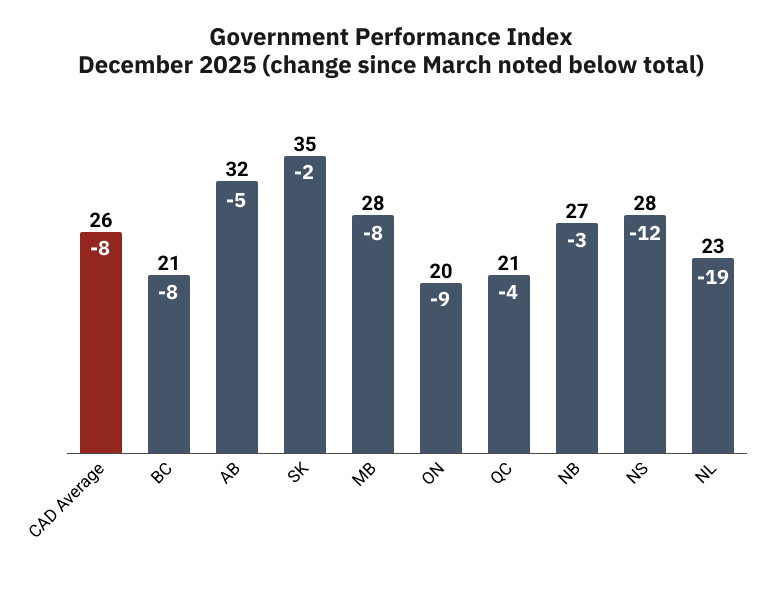
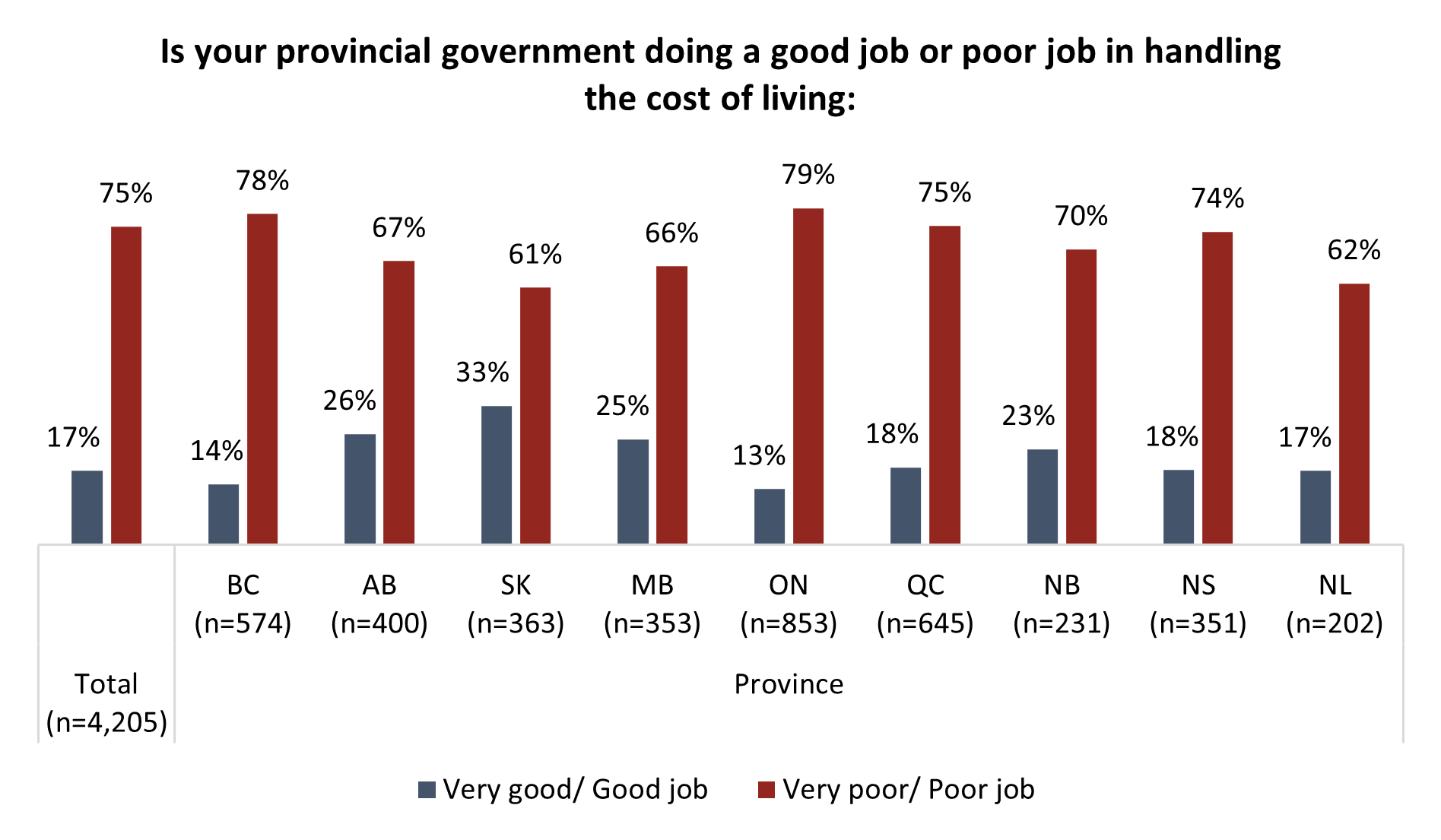
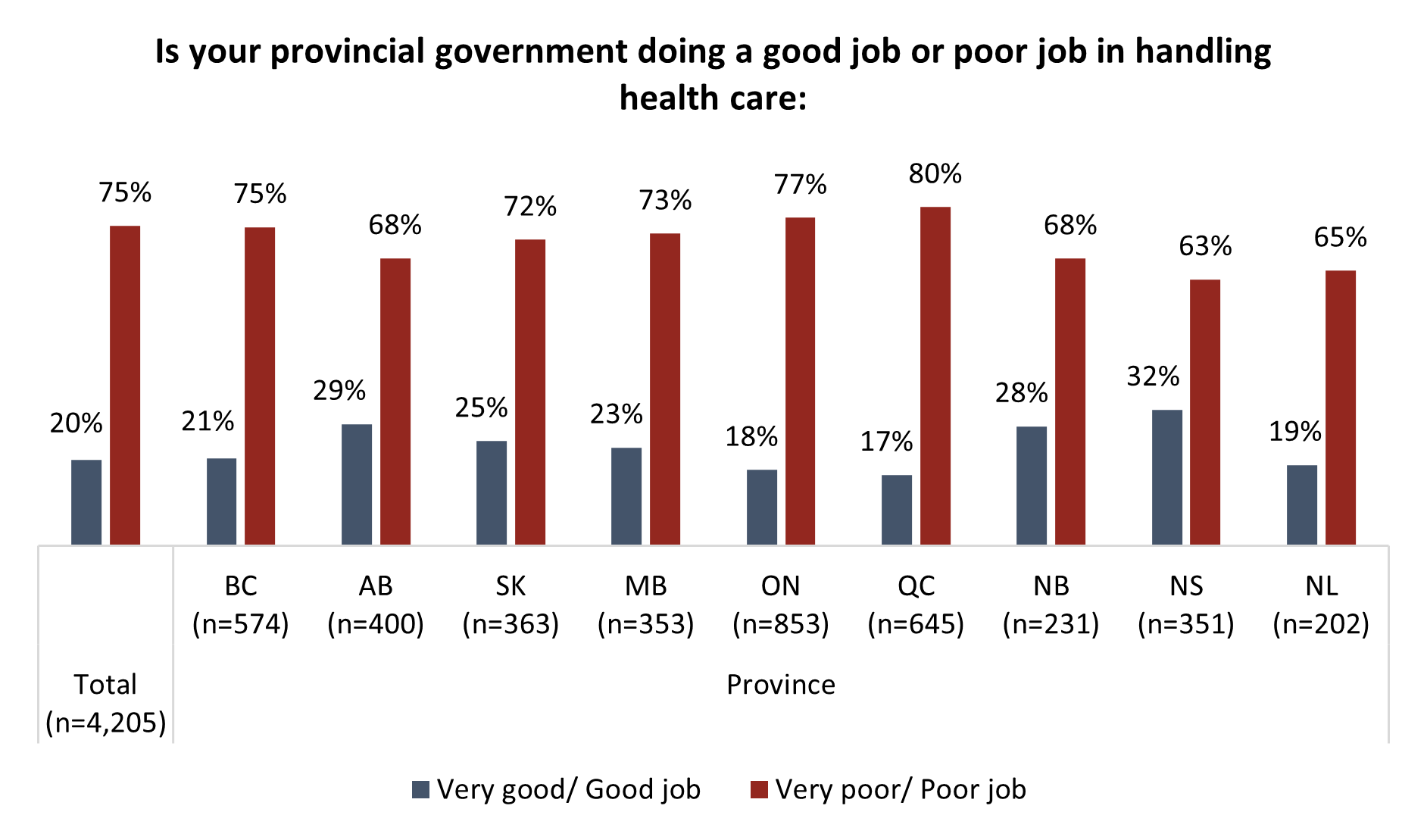
Scores range from 35 in Saskatchewan, where residents are mostly likely to rate their government as performing well on the issues they care most about, to 20 in Ontario. Although the two prairie provinces of Alberta and Saskatchewan are seen by residents in each as performing better than those in other provinces rate their own respective government, there are also red flags. On health care, 68 per cent in Alberta and 72 per cent in Saskatchewan believe their provincial government is doing a ‘poor job’. On the rising cost of living, 67 per cent in Alberta and 61 per cent in Saskatchewan are critical of their governments’ performances.
Note: Because its small population precludes drawing discrete samples over multiple waves, data on Prince Edward Island is not released.
INDEX
Government performance comparison
Province-by-province breakdown
- British Columbia
- Alberta
- Saskatchewan
- Manitoba
- Ontario
- Quebec
- New Brunswick
- Nova Scotia
- Newfoundland and Labrador
Government performance comparison
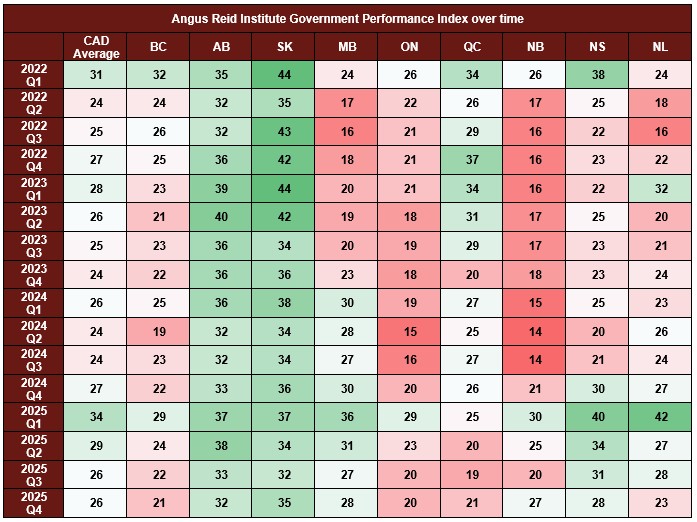
The Angus Reid Institute’s Government Performance Index takes scores across 16 different provincial issues to create an estimate of how those populations feel about their current level of governance. More important issues are valued more highly, which points the totals toward both quality and priority. Leading the way this quarter is Saskatchewan with a score of 35, followed by Alberta at 32. Ontario, British Columbia, and Quebec, all score at the bottom of the list.
More on these issues and scores is to come, but feel free to view detailed tables here.
In order to better assess provincial government performance by which issues residents consider most important, ARI calculates the Government Performance Index by weighting performance on the top issues higher than those on issues considered less critical by provincial residents. That is, for the Index, governments are scored higher for earning praise from its residents on the cost of living and health care, the top two issues in each province, than they are for a residents’ “good job” on emergency management, an issue selected as important by fewer than three per cent in each province.
The trend in government performance has been generally downward in recent years because of this “weighting” aspect of the Government Performance Index. Provincial governments have been viewed as performing poorly on issues such as health care, the cost of living and housing affordability, which have been among the top concerns for provincial residents in the past three years.
For example, consider one the cost of living, an issue that has dominated Canadians’ priorities in recent years. This issue also has the tendency to generate overwhelming criticism when Canadians assess their government’s work to combat it. The top performing province this quarter is Saskatchewan, with 33 per cent saying their province has done a good job in that area, with three-in-five saying it has done a poor job. Scores across the country are overwhelmingly poor:
Another key issue, the second most important in the country according to Canadians, is health care. On this, criticism is equally high. Thus, if governments are hoping to enter the good graces of their constituencies, these two major challenges are the likely, but daunting path:
Two governments tend to carry higher levels of support within their provinces, even amidst poor nationwide ratings. In Alberta and Saskatchewan, the GPI has resided in the 30s or 40s for three years, while aside from a Trump-induced boost in the first quarter of this year, those scores have been difficult for other governments to attain:
Province-by-province breakdown
British Columbia
The top five issues as chosen by British Columbians are the cost of living, health care, housing affordability, the economy and public safety. The governing BC NDP do not perform particularly well on any of these, which has led to their place at the bottom of the Government Performance Index.
The fiscal year will reportedly end with an historic deficit, eclipsing $11 billion. And while much of the attention has been on the pipeline politics between B.C., Alberta, and Ottawa, some have criticized the government for failing to follow through on key campaign promises from last year’s provincial election across many of these top issues, including the cost of living and health care.
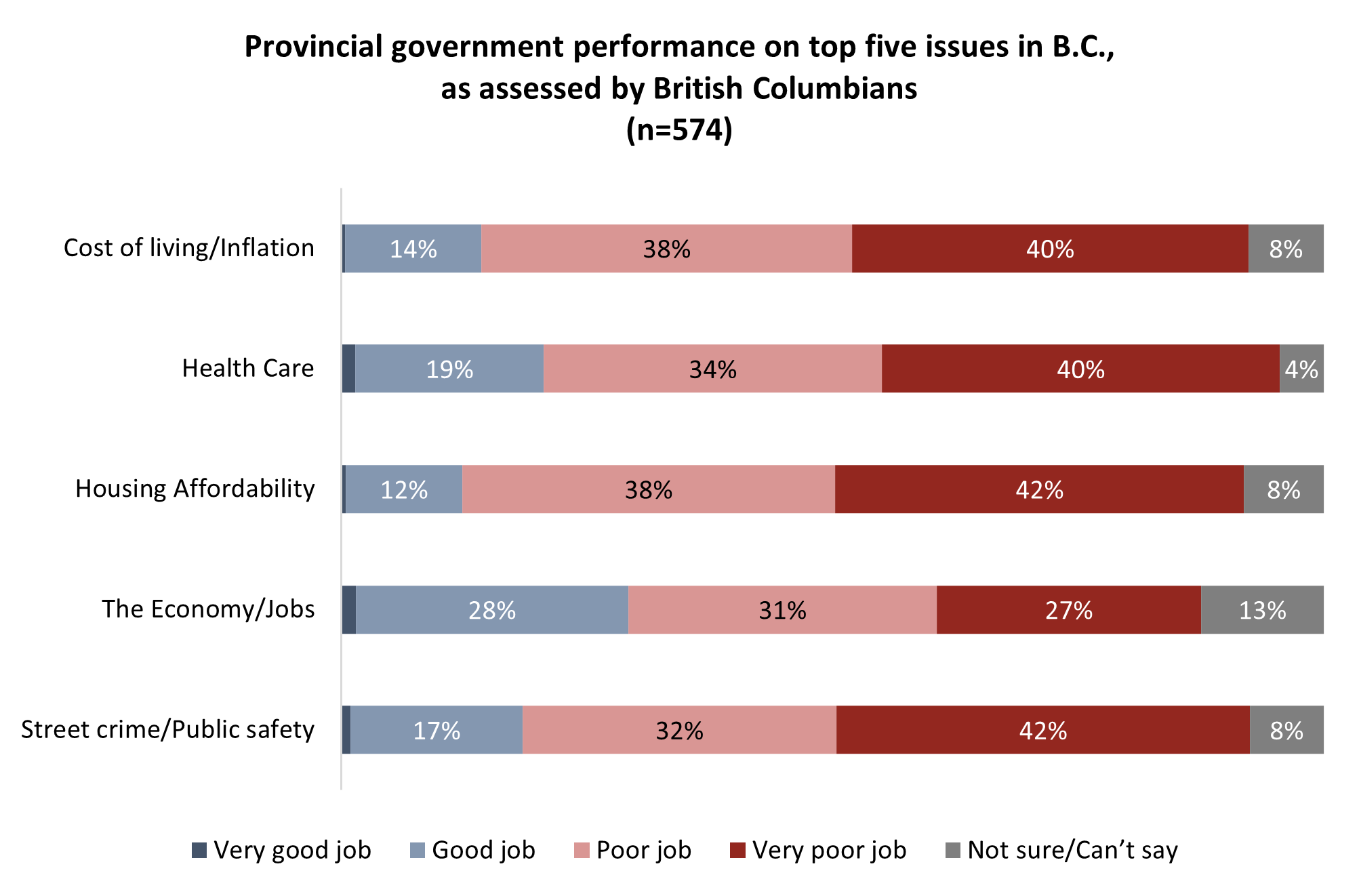
This criticism of the B.C. government’s handling of key files is not only coming from those who supported the opposition Conservative party during the 2024 provincial election. A majority of past BC NDP supporters believe the Eby government is performing poorly on the rising cost of living (66%), health care (63%), housing affordability (73%) and public safety (65%):

One issue currently far outside the top five of residents’ concerns but still making headlines is Indigenous relations.
Related:
B.C. divided about UNDRIP: Equal numbers say it’s a necessary step, goes too far
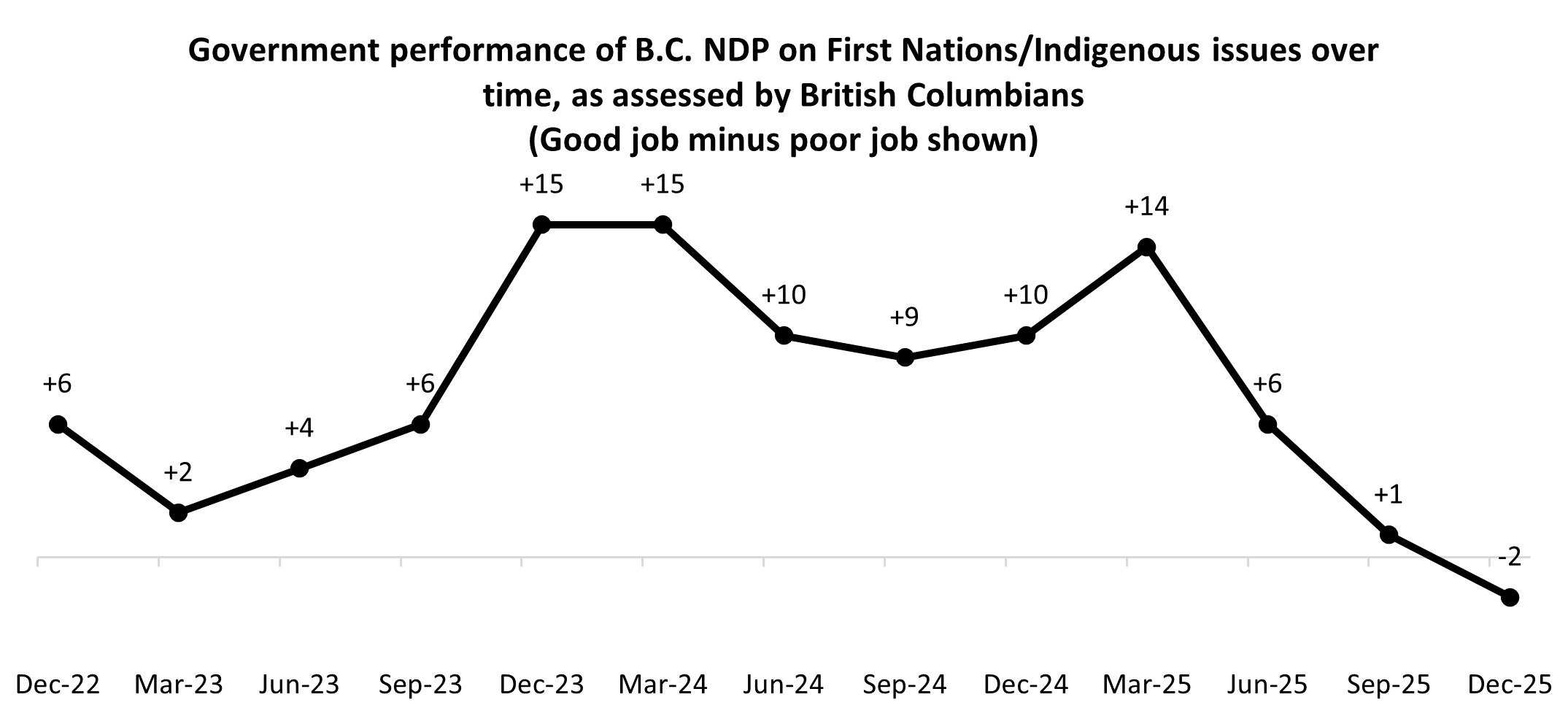
Currently, slightly more than one-in-20 (6%) British Columbians believe First Nations/Indigenous issues is one of the top issues facing the province. Over the past three years, this issue has typically registered in the single digits. However, BC’ers are becoming more critical of Eby’s government on this file.
Even as recently as March of this year, there were more residents who believed the Eby government was doing a good job (49%) rather than a poor one (34%) on working with the province’s First Nations. Since then, the proportion of those saying the government is performing well on this file has declined (49% to 40%) while the percentage of those who are critical has climbed (34% to 42%). For the first time since Eby became premier, the latter outnumber the former:
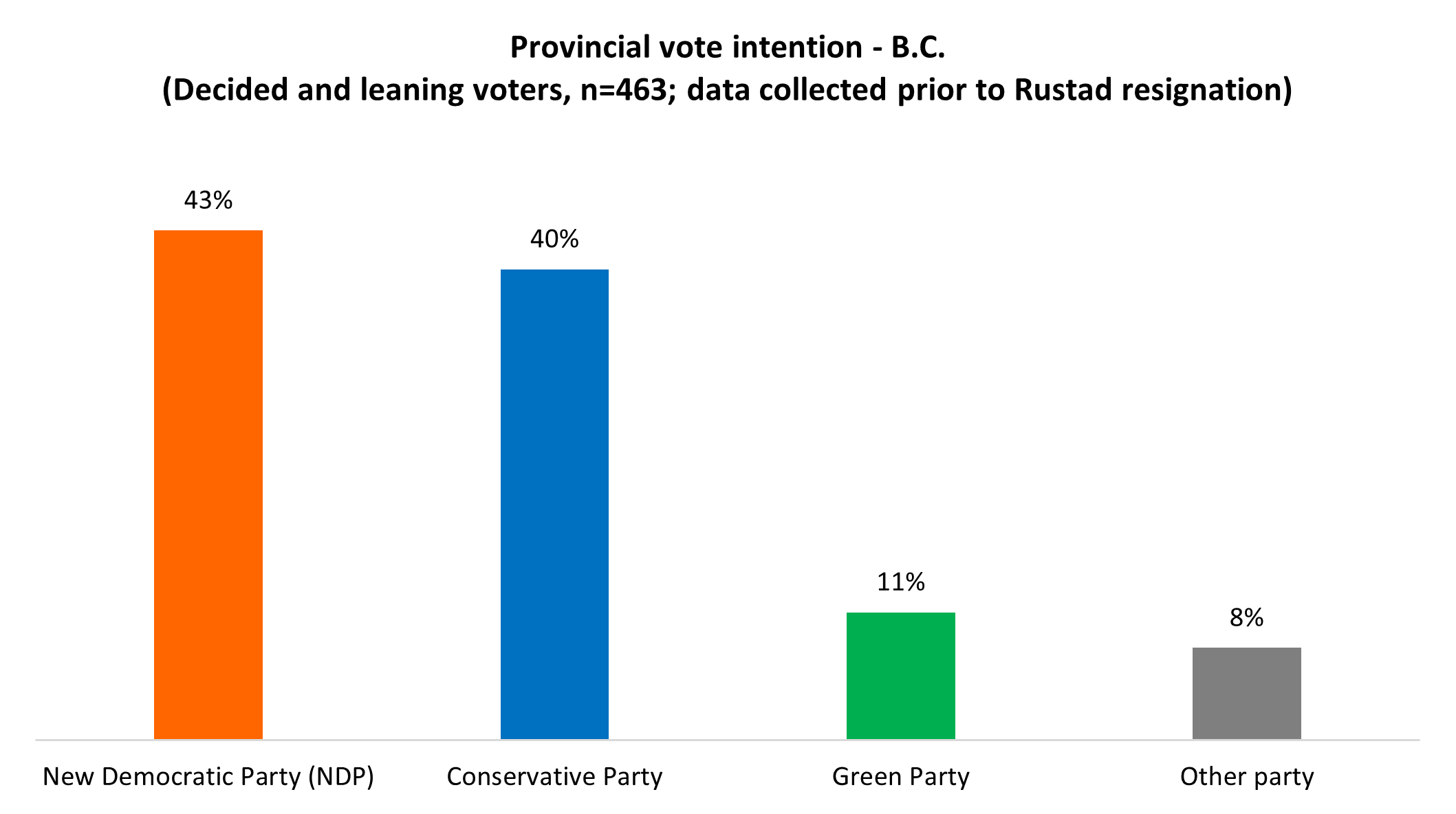
While the BC Conservative Party must now undergo the process of finding a new party leader after John Rustad resigned early in December, the party is not in a terrible position electorally speaking. If an election were held currently, 40 per cent say they would support the BC Conservatives. The BC NDP hold a three-point lead over their main opposition, but the Green Party, under new leader Emily Lowan, has also re-entered double digits, up from eight per cent in previous polling from ARI. Eight per cent would support another party, though it is worth noting that these data were collected prior fledgling party OneBC reportedly removed its leader Dallas Brodie, though Brodie insists she is still the head of the party:
 Alberta
The high cost of living is a top issue chosen by Albertans, just as it is in every other province across the country. Most in the province (67%) believe Premier Danielle Smith and the UCP government has handled that issue poorly.
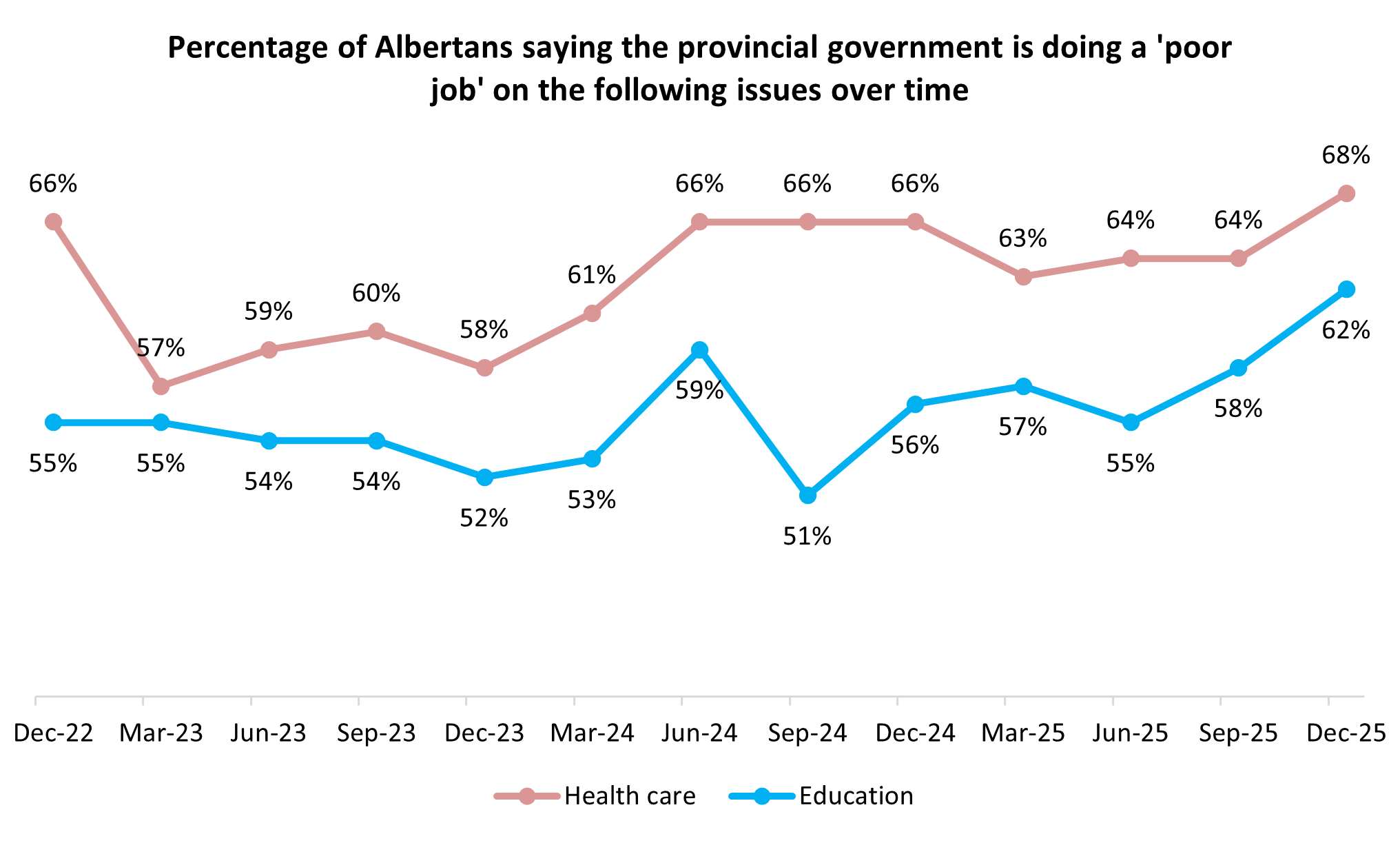
But its two of the other top five issues selected by Albertans that have been more of a focus for the UCP in 2025. Education rose in importance as the province’s teachers walked off the job and then were legislated back with an assist from the notwithstanding clause. The percentage of Albertans who believe Smith and the UCP are handling education well (32%) are outnumbered almost two-to-one by those who believe the government is fumbling that file (62%).
Related: Teachers’ Strike: Most Albertans side with teachers as they criticize UCP’s handling of education
Health care, the second-most chosen top issue by Albertans, is currently on the cusp of a new era in the province. Alberta is set to become the first province in the country to allow doctors to work in both the public and private system in what is a massive rework of how surgeries and diagnostics will be performed in its health-care system. The effects of this change likely won’t be seen in the province for many years. But as it stands, approaching seven-in-ten (68%) Albertans offer the UCP a thumb-down on the health care file.

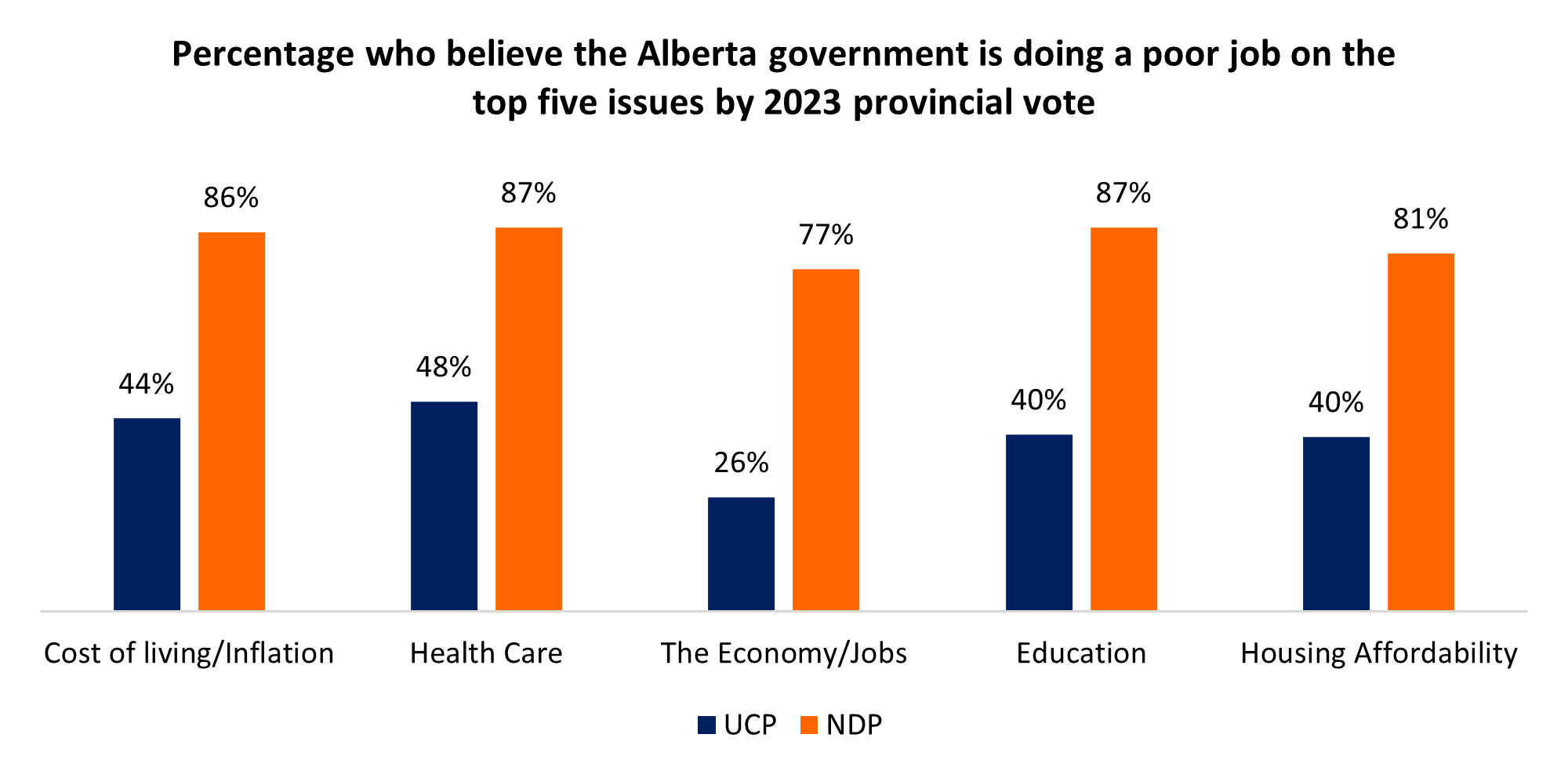
The bulk of the criticism of the government on key files is from those who voted NDP in the last provincial election. However, past UCP voters are by no means offering universal plaudits. They are instead split as to whether the Alberta government is doing a good job or not on cost of living (45% good job, 44% poor job), health care (46% good, 48% poor) and housing affordability (42% good, 40% poor).
There is more praise, but still plenty of criticism from UCP supporters, on how the province is handling education (54% good, 40% poor).
UCP voters are more enthusiastic about the government’s performance on the economy (66% good, 26% poor) an issue closer to more of their hearts (41% top issue) than those who voted NDP in 2023 (20% top issue, see detailed tables for full data).
 Returning to those headline-making issues in Alberta in 2025, criticism of the province’s performance on education is rising. Those who believe the UCP are doing a bad job on health care is also at its highest point since Smith became premier at the end of 2022:
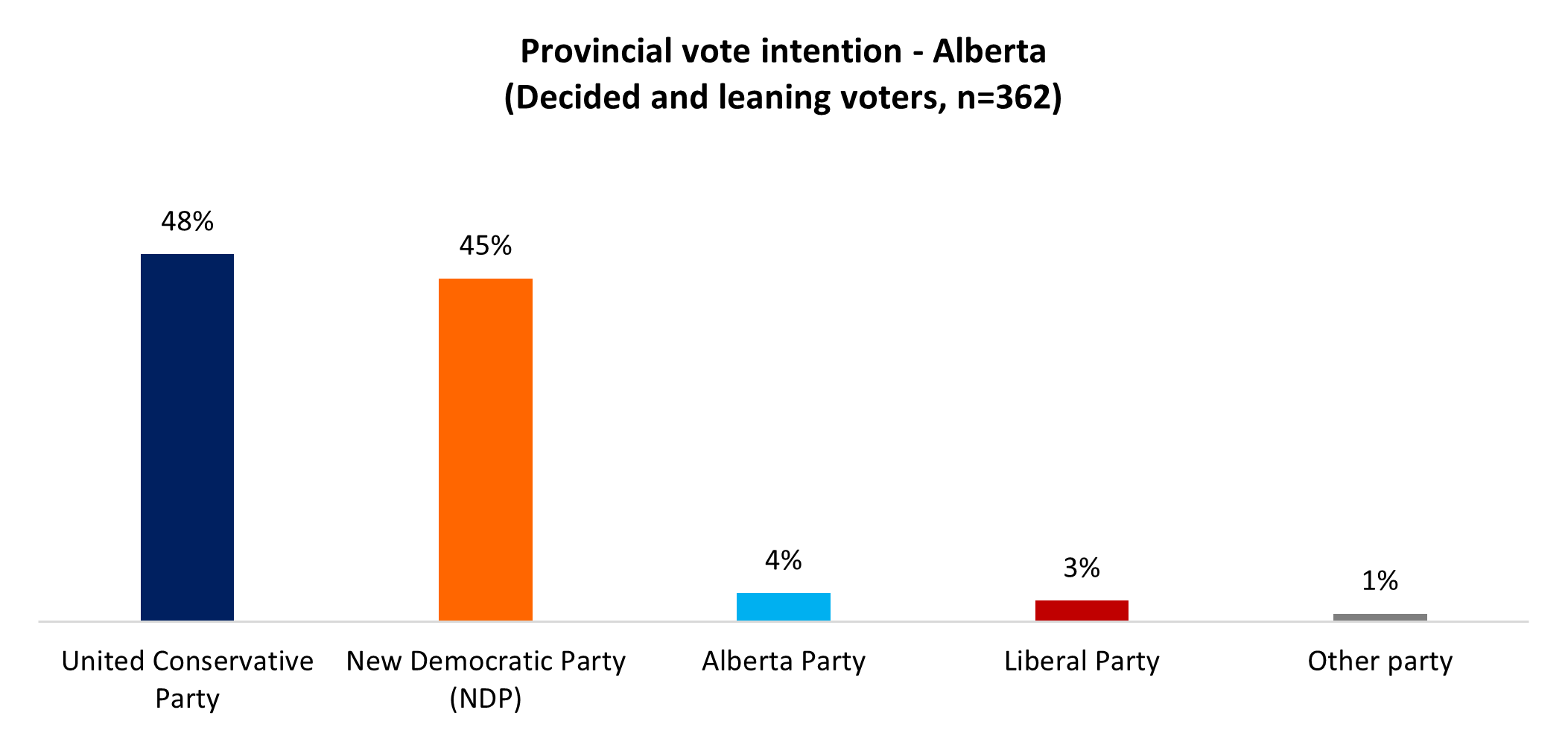
 The UCP government is halfway through its mandate, and despite the above criticisms from Albertans, the rival NDP have yet to make much headway in overturning the electoral landscape which landed the UCP its majority government in 2023. Half (48%) of Albertans say they would vote UCP if there were an election today, a three-point edge over the Alberta NDP and leader Naheed Nenshi.
The UCP used its legislative power to prevent an upstart rival from naming itself the Progressive Conservatives, the namesake of the former political dynasty which collapsed in 2015, leading to a one-term NDP majority. The PCs merged in 2017 with the Wildrose to create the modern UCP under then leader Jason Kenney.
Peter Guthrie, a former UCP minister who was kicked out of caucus after quitting his cabinet role earlier this year, was trying to revive the PC name to challenge Smith on the centre right in a future election. After Bill 14 banned the word “conservative” from any other political party name – perhaps Smith and the UCP were casting a wary eye at B.C.’s political scene while conceiving the law – Guthrie settled on the Alberta Party name and became the party’s leader.
In these data, taken before Guthrie was named Alberta Party leader, few (4%) Albertans are considering the other right-leaning option currently:
 Saskatchewan
The country’s most well-approved provincial government is led by Scott Moe’s Saskatchewan Party, though even in Regina there has been attrition. The Moe government’s overall GPI score has dropped from 44 to 35 since the beginning of 2023. The party’s best issue is the economy, where 52 per cent say it has done a good job. This, despite Saskatchewan NDP leader Carla Beck recently pointing out that the provincial debt has almost doubled since 2017 to nearly $40 billion. Significant tariff challenges persist in the province. On most other issues, the negative reviews outpace the positive ones.
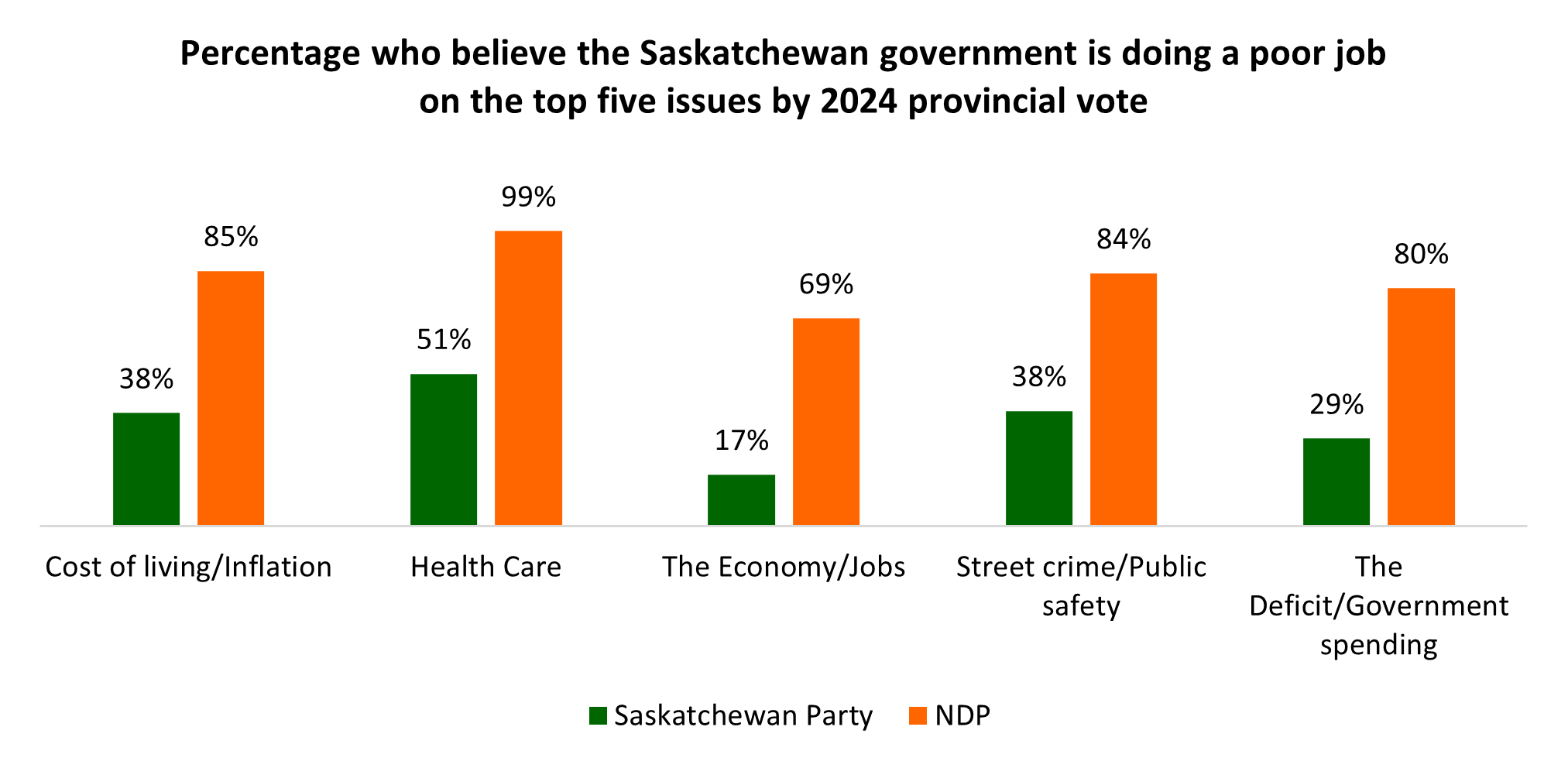
On its worst issue, health care, criticism is relatively bipartisan. Nearly all past NDP voters say the government has done a poor job, joined by half of those who supported the Sask. Party. Residents are facing major health care challenges in rural areas, and staffing shortages and burnout are reportedly a significant concern.
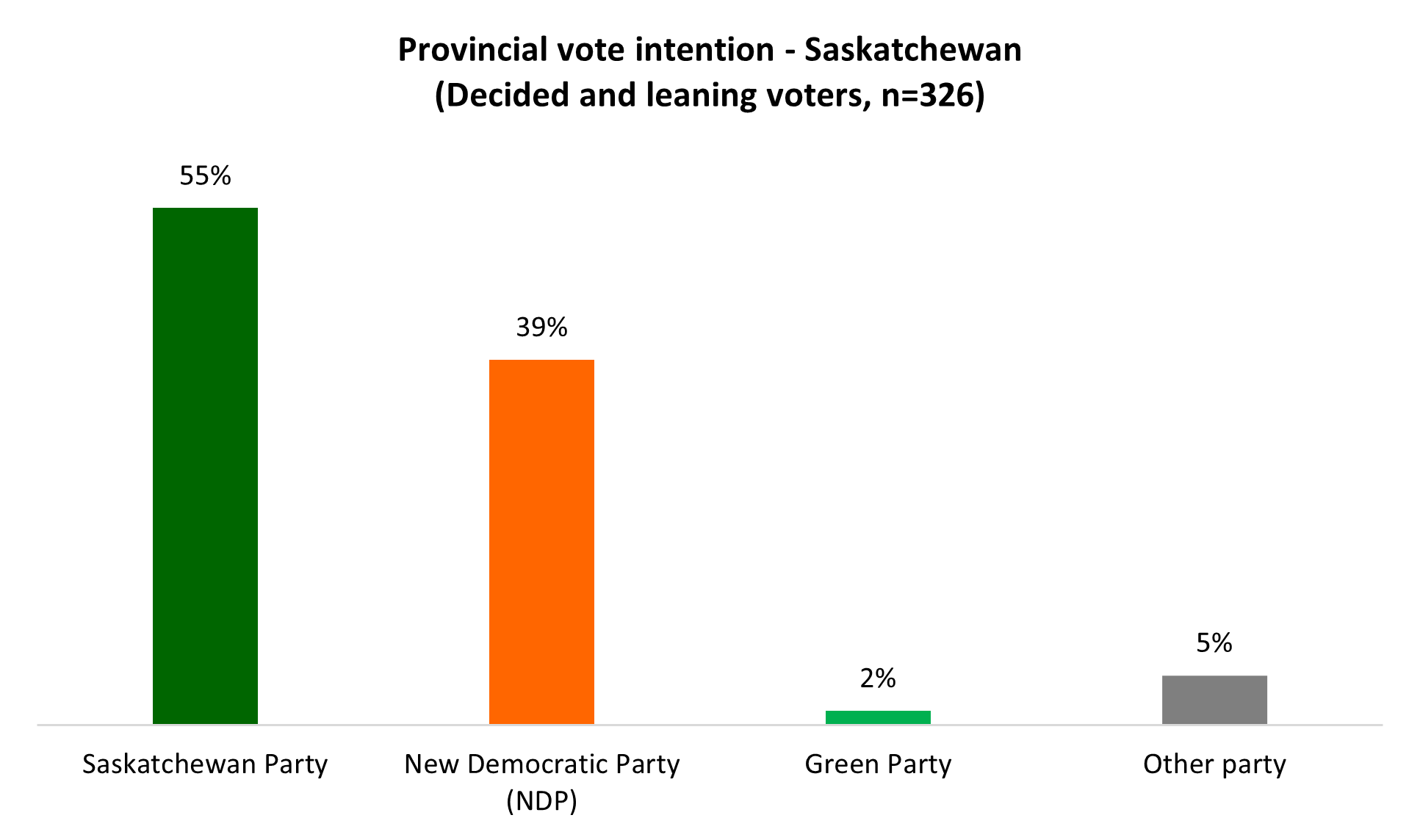
 The province held an election last fall, so another isn’t scheduled for another three years. Currently, a majority (55%) say that they would vote for the Saskatchewan Party, while 39 per cent would vote for the opposition:
Manitoba
In Manitoba, a notable contrast is emerging. Premier Wab Kinew remains the most popular provincial leader in the country according to ARI’s most recent Premier Approval ratings. This doesn’t, however, translate into significant government satisfaction. On each of the five top issues as chosen by Manitoba residents at least half say the government is performing poorly. There are a number of lower priority issues where the Manitoba NDP performs much better – including Indigenous issues, the relationship with the federal government, and the U.S. tariff saga (see detailed tables here).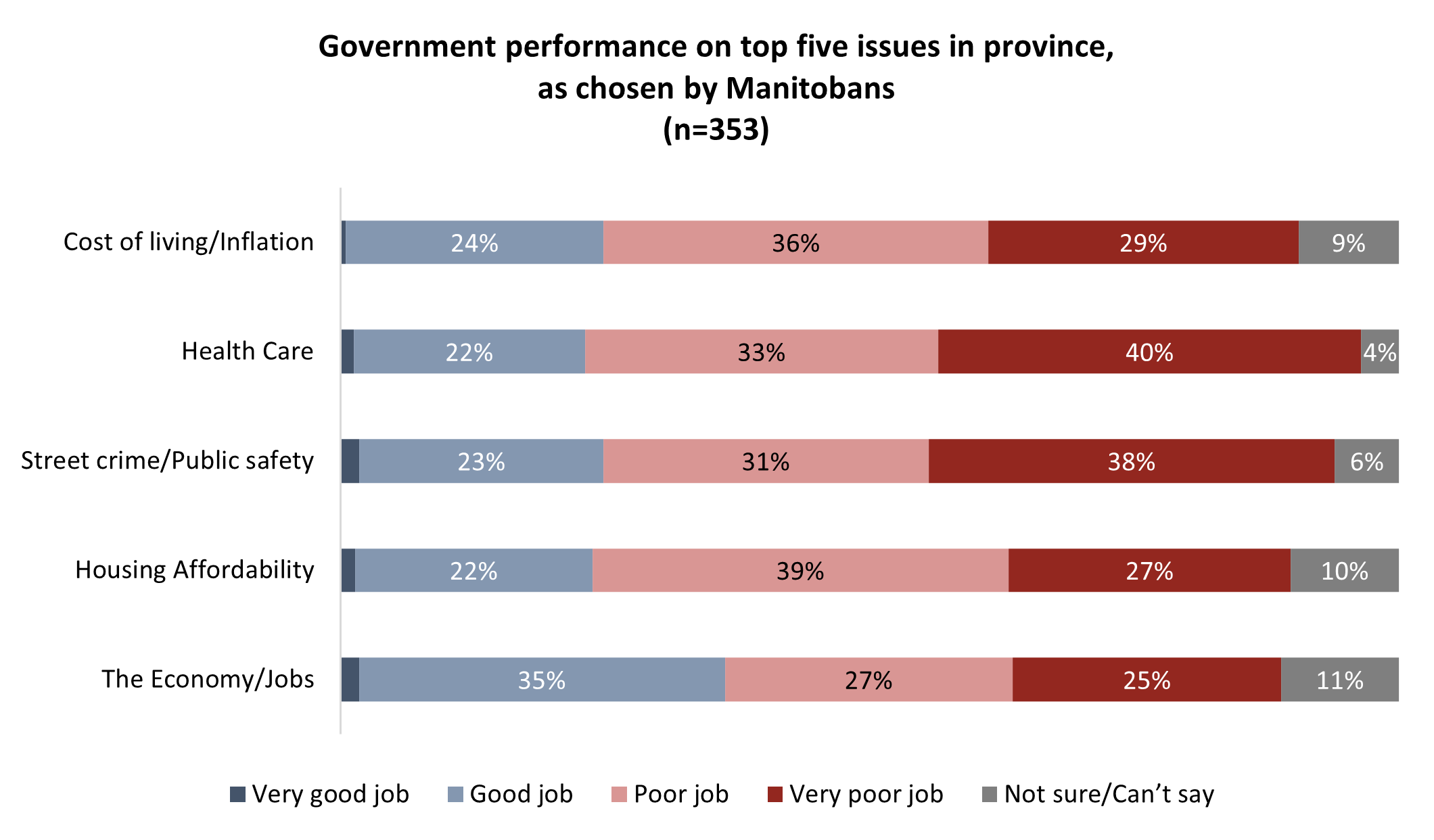
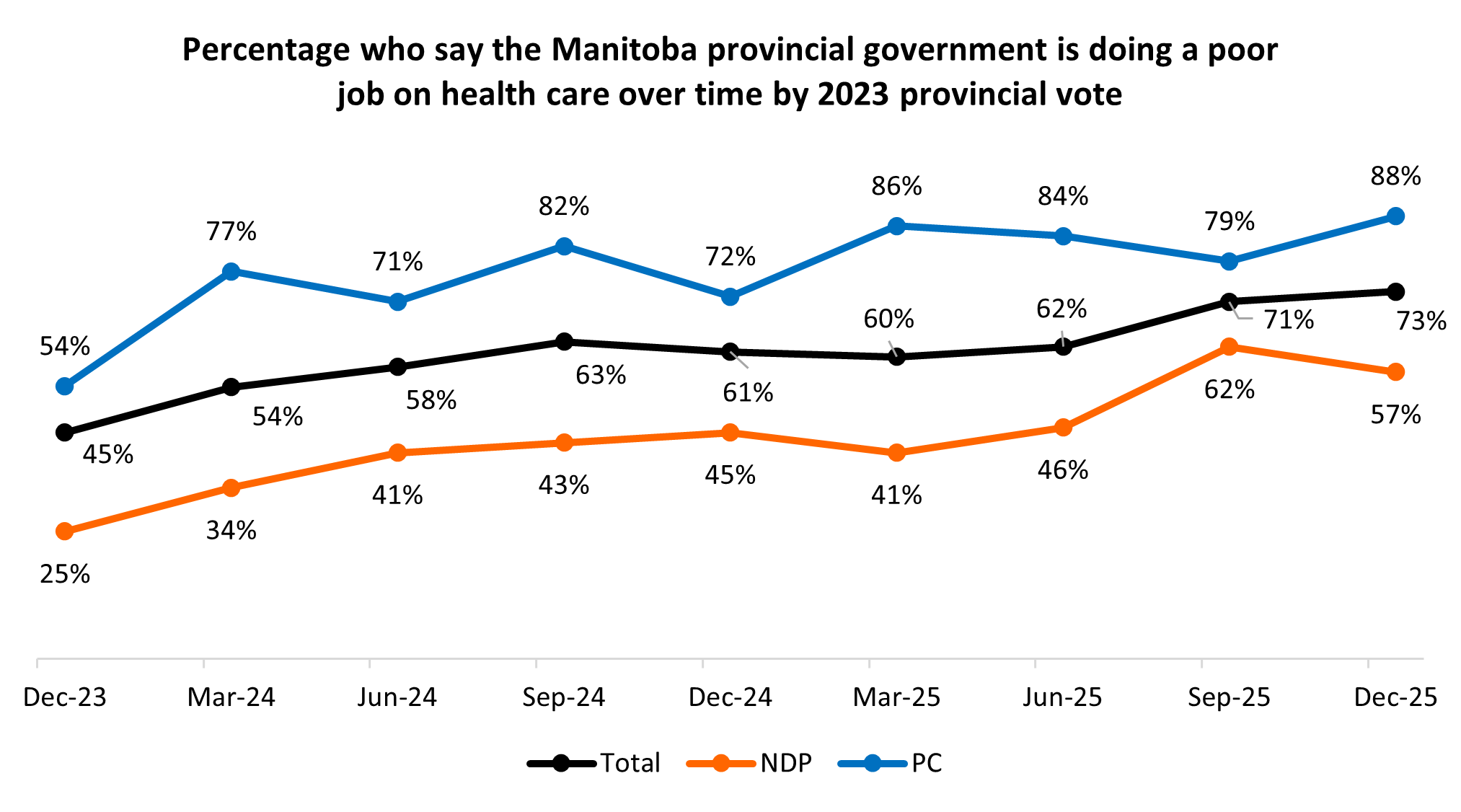
Responses from opposition voters are much more negative on these performance measures, but a significant portion of NDP voters, too, are critical. The exception is with economic performance, for which NDP voters are more supportive: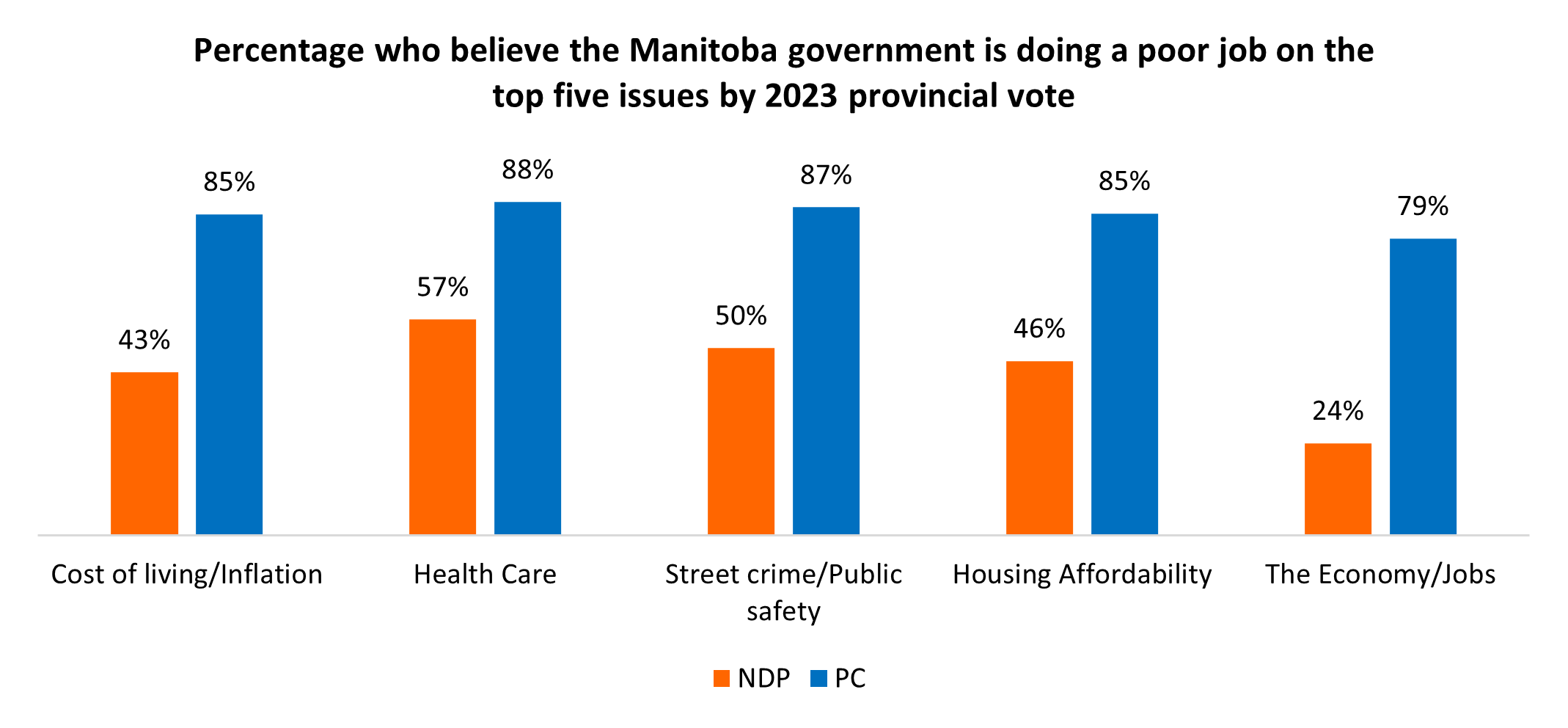 One issue that has plagued all levels of government in recent years across the country is health care. In Manitoba this is no exception. An increasing number of residents, regardless of political affiliation, have been critical over the past three years.
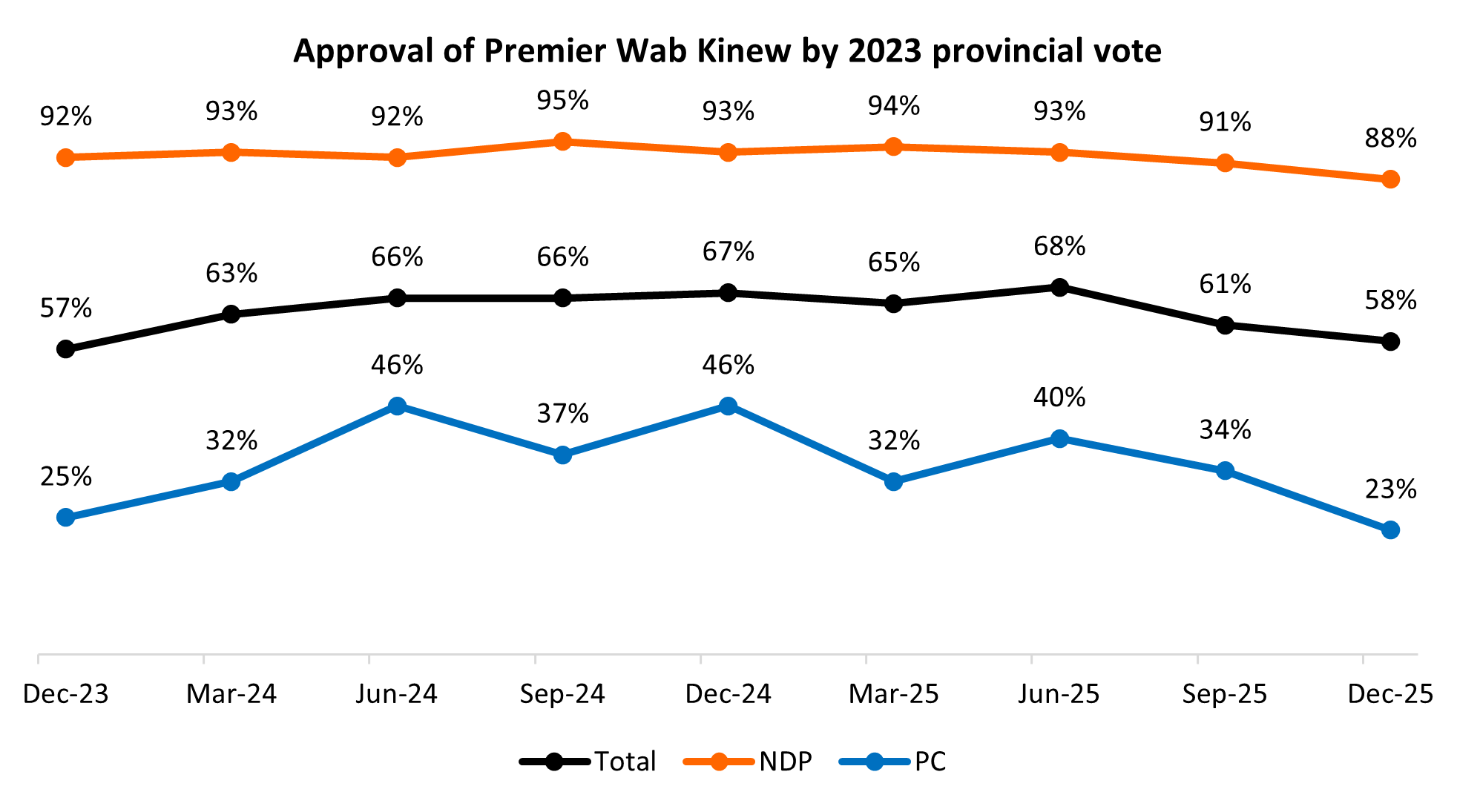
 Kinew previously was receiving more approval from opposition parties than his peers. Currently, one-quarter of those who voted PC in 2023 say they approve of Kinew. Compare that to the opposition party approval for B.C. Premier David Eby (8%), Alberta Premier Danielle Smith (13%), and Saskatchewan Premier Scott Moe (13%). Kinew’s approval has been rising and falling within the PC voter base, while it has remained consistent among NDP voters:
While no election is scheduled until 2027, currently voters are evenly divided about which party they prefer:

Ontario
The Progressive Conservative government under Premier Doug Ford finishes the first calendar year of its third mandate facing criticism of its performance on the top five issues as chosen by Ontarians: the rising cost of living, health care, housing affordability, the economy and public safety. On the latter two, it is relatively better appraised, but still at most one-quarter in the province believe Ford’s government is doing a good job on those issues.
On the high cost of living (79%), health care (77%) and housing affordability (83%), more than three-quarters of Ontarians say the government is doing a poor job:

PCPO voters are also highly critical of the government they re-elected to a majority mandate in February. More than two-thirds of those who voted for Ford and his party earlier this year believe the government is handling inflation (68%) and housing affordability (69%) poorly. More than three-in-five (63%) of those PC voters believe the government is mishandling the health care file.
As the province’s economy is battered by tariffs from U.S. President Donald Trump, half (50%) of those who voted for Ford and the PCs say the government is doing a bad job on the economy:

Poor performance on the top issues is the rule rather than the exception for the PCs under Ford in the past half decade. Compared to its peers across the country, the Ontario government has never outperformed the average rating in the past five years: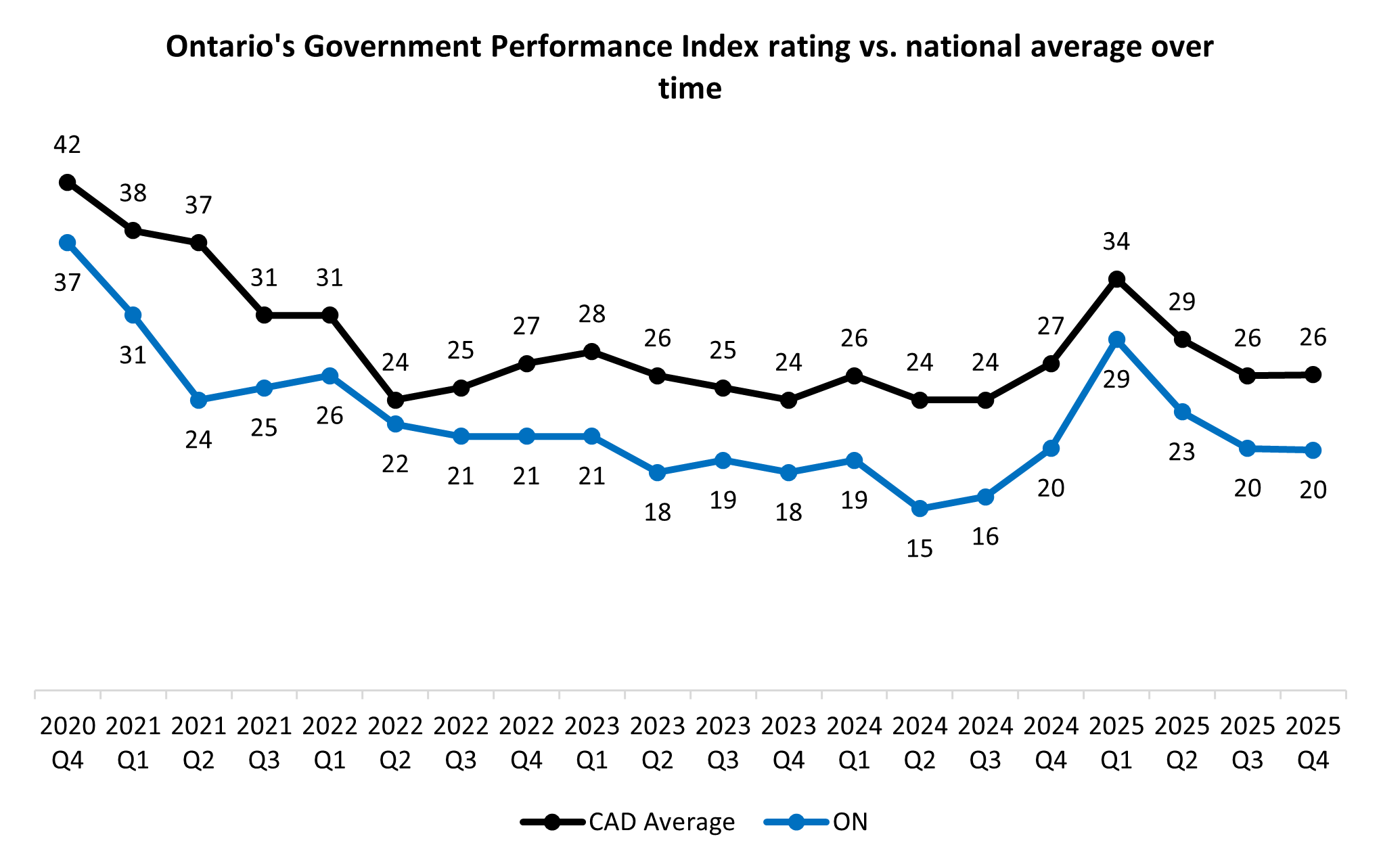
And yet, if an election were held today, Ford would likely return with another majority mandate. Two-in-five (41%) in the province say they would vote for the Progressive Conservatives. The Liberals (28%) and NDP (23%) trail:

Quebec
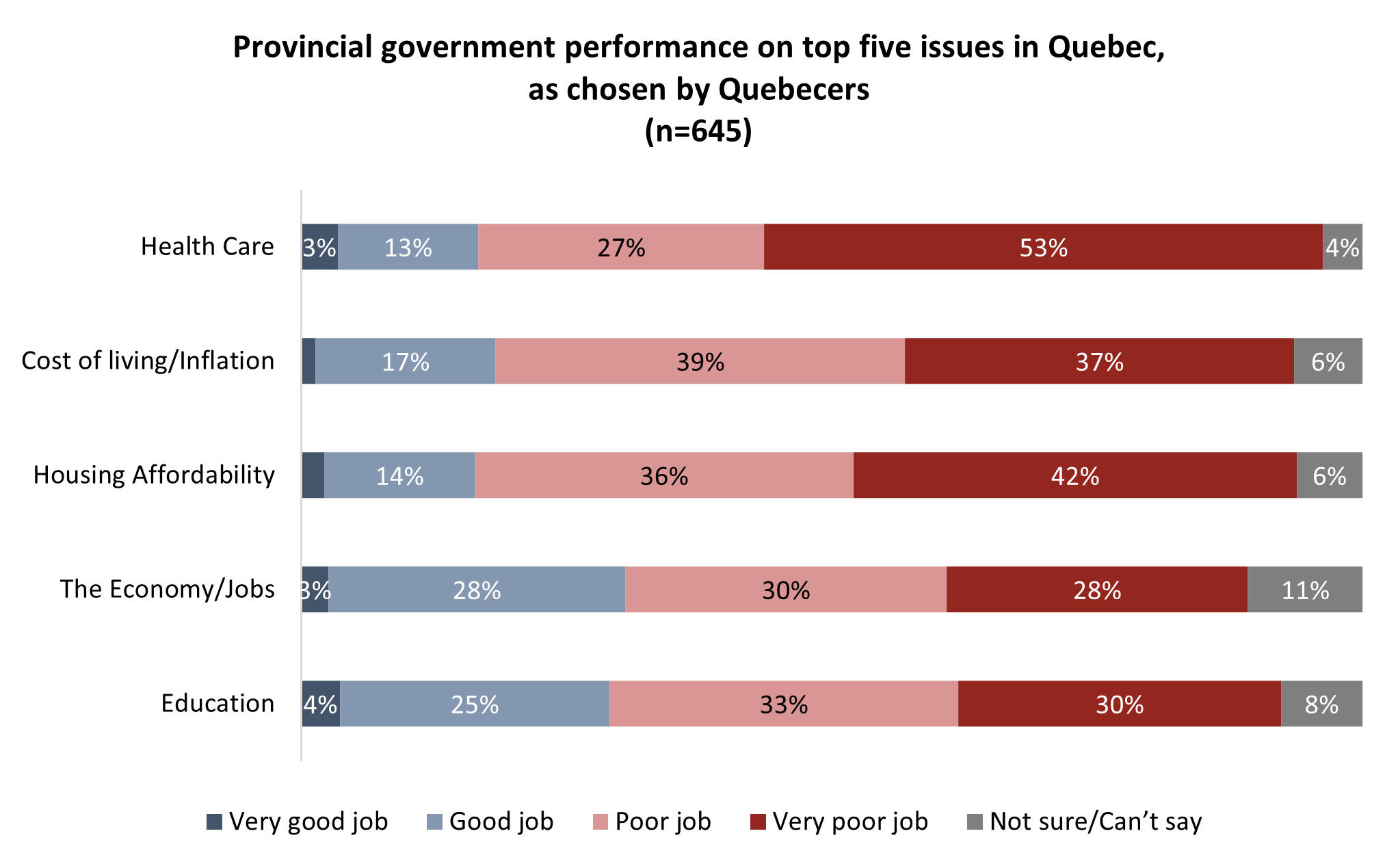
There will be other snow days down the line, but on his most recent wintery reflection Premier François Legault has decided to stay and contest the 2026 election, which is shaping up to be a reckoning for the premier and the long-standing Coalition Avenir Québec majority. Legault’s personal popularity has cratered in his second term as Quebecers have found plenty of fault in his government’s performance on key issues. Most in the province believe the CAQ are performing poorly on health care (80%), the high cost of living (76%), housing affordability (78%), the economy (58%) and education (63%), the top five issues in the province:
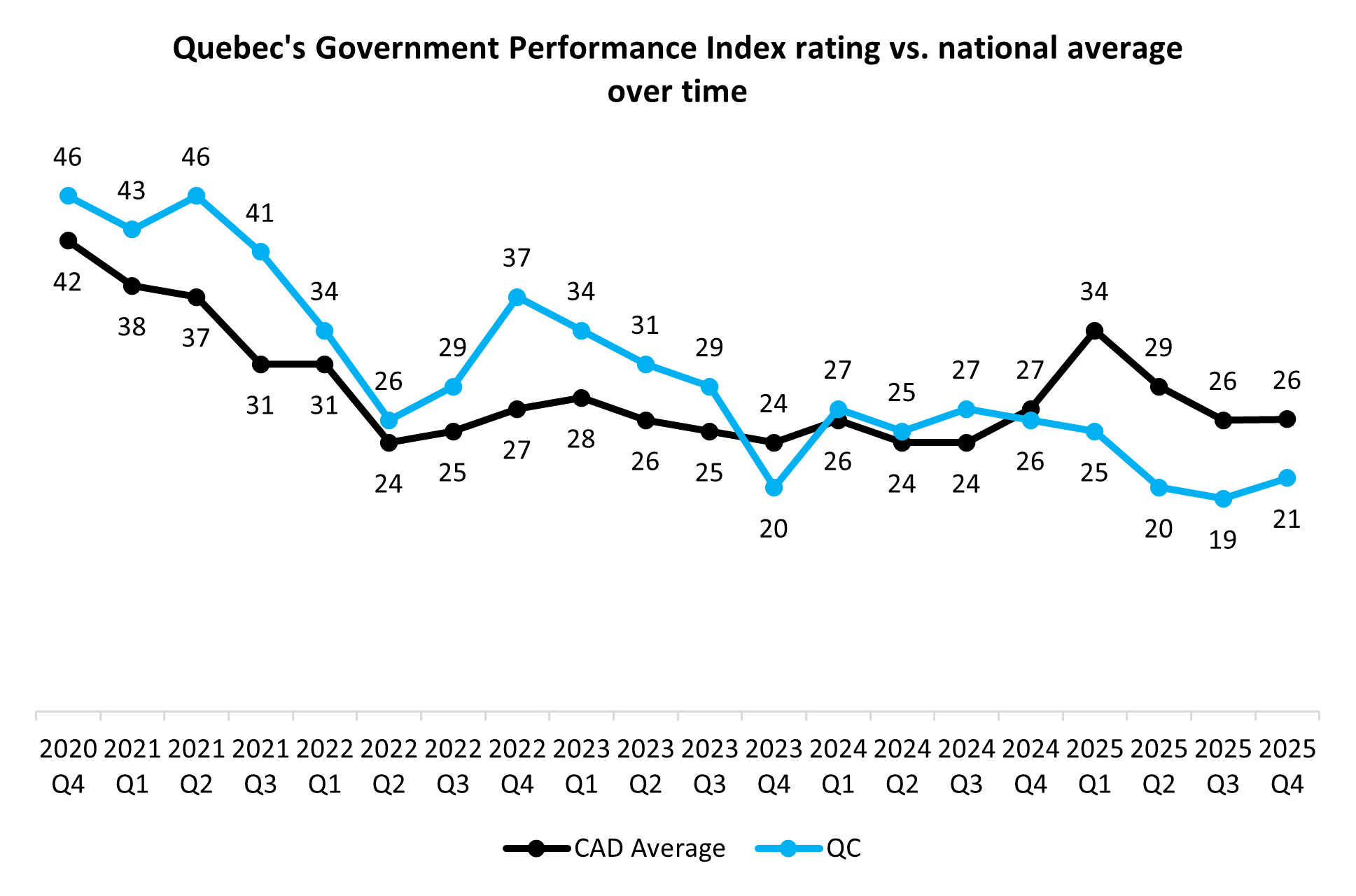
 During Legault’s first term, Quebec typically outperformed its peers when it came to resident’s assessments of its handling of key issues. But in the last two years, Quebecers have soured on the CAQ government as concerns over health care and inflation have lingered:
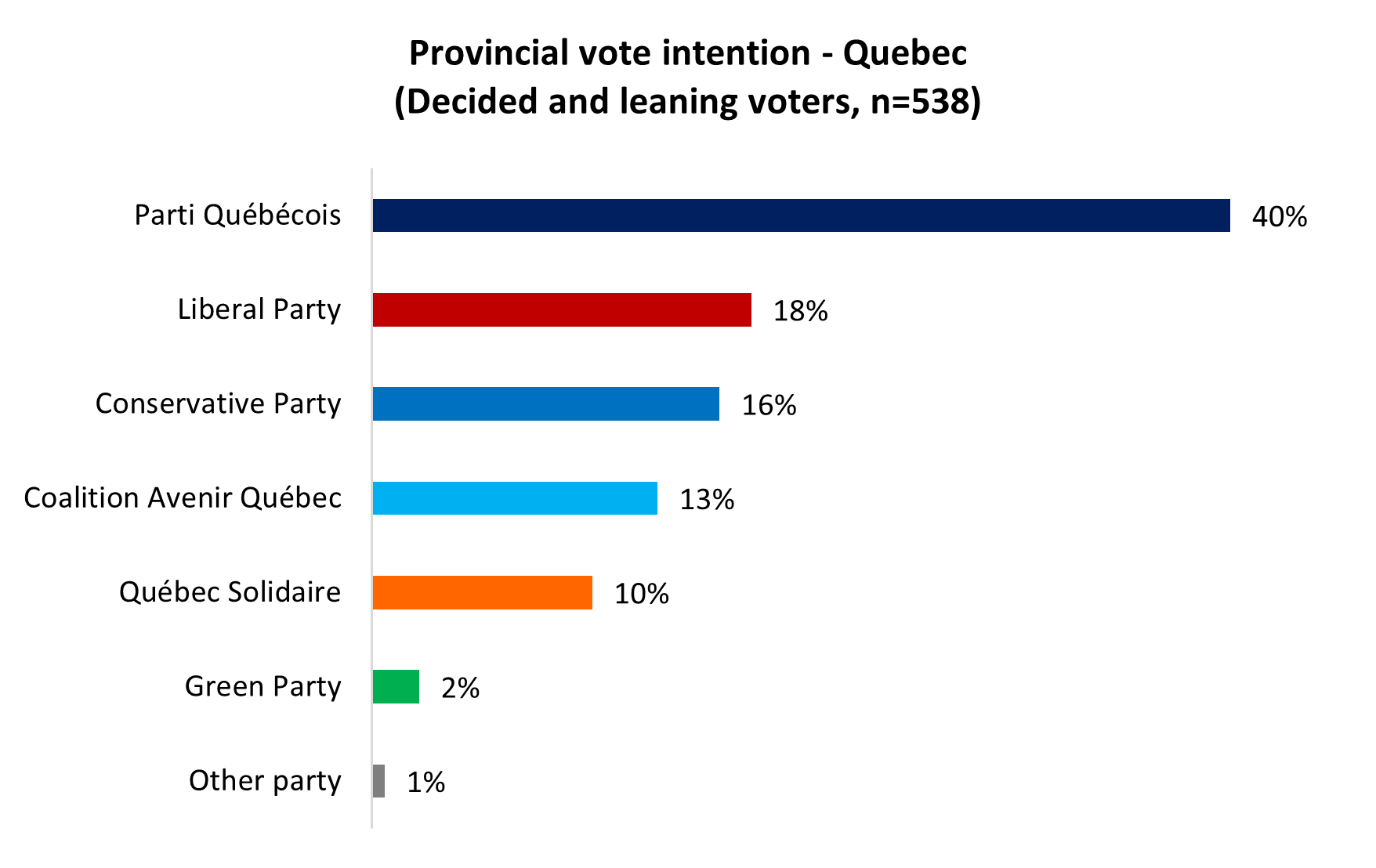
 As things stand, Legault won’t get a third term in office to turn things around. Two-in-five (40%) in the province say they would vote for Parti Québécois if an election were held today, putting that party well ahead of the Liberals (18%), whose leader, former federal minister Pablo Rodriguez, resigned after these data were collected. The Conservatives (16%) are close behind the Liberals. Legault’s CAQ is the choice of just over one-in-eight (13%):
 New Brunswick
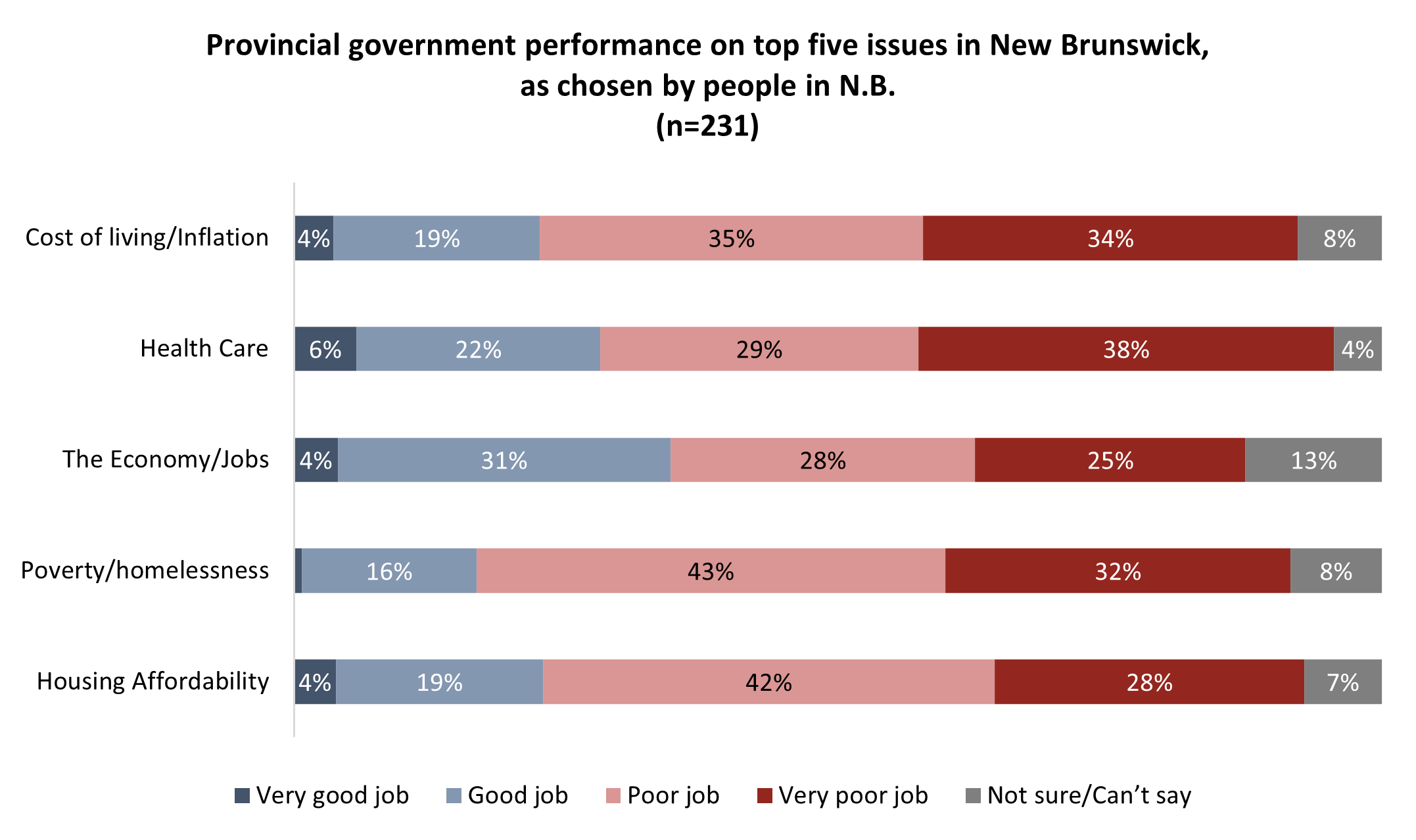
The Liberals under Premier Susan Holt have had more than a year now to tackle the key issues facing New Brunswick, including the far-and-away top two, cost of living and health care. Residents are more critical than not of Holt’s performance. Most believe the provincial government is performing poorly on the high cost of living (69%) and health care (67%):
 Holt and the Liberals have at least closed the performance gap between the provincial government and its peers compared to her predecessor, PC Premier Blaine Higgs. In the fall of 2024, there was a 10-point gap between the New Brunswick government, languishing at the bottom for several quarters, and the average provincial score. For the first time since the second quarter of 2021, the New Brunswick government receives an above-average score from its constituents on the top issues of the day. Still, as noted above, there is plenty of criticism from provincial residents:
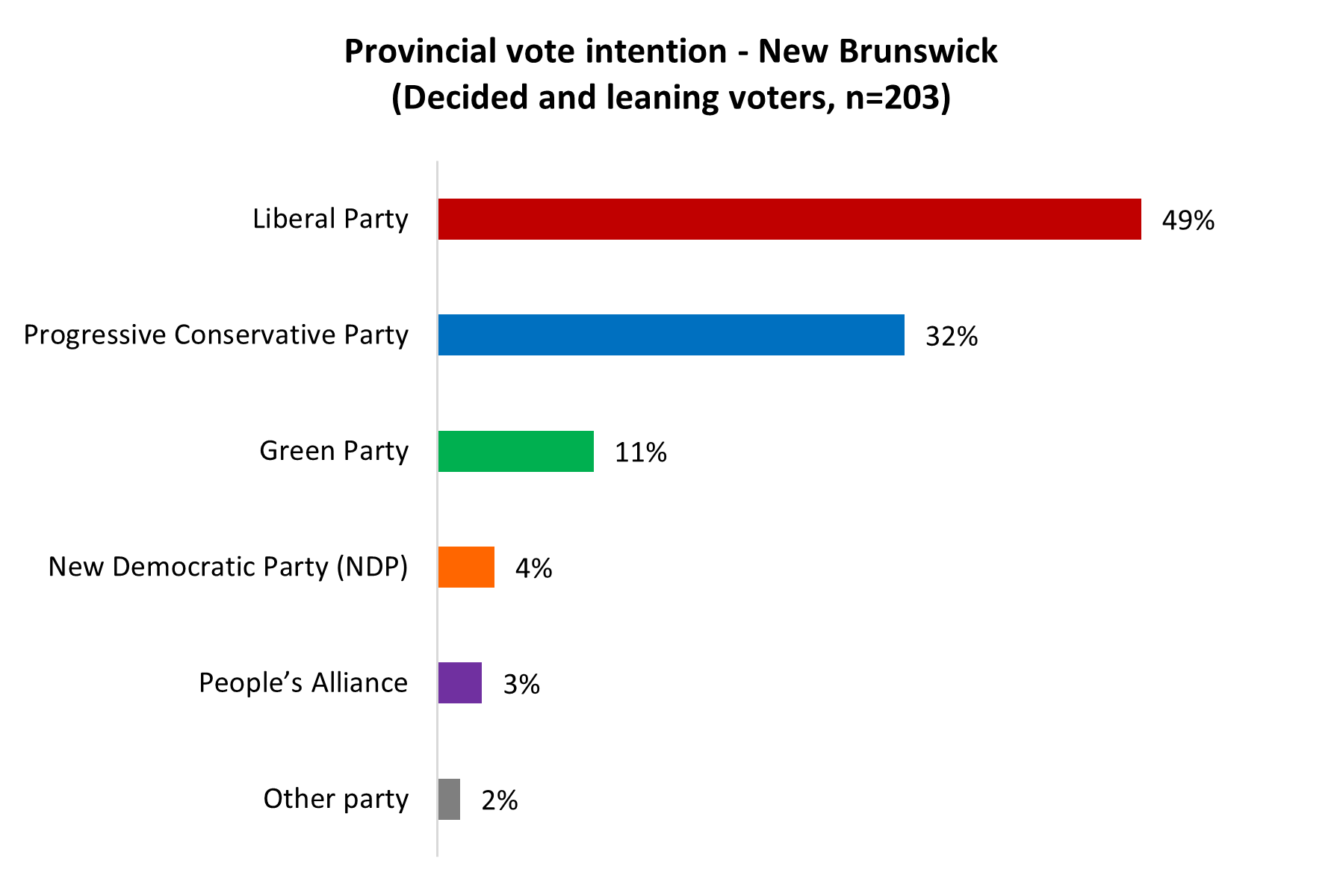
 Perhaps owing to the upturn in government performance, the Liberals hold a 17-point lead in vote intention over the Progressive Conservatives, who will decide who will lead them into the next election next fall.
 Nova Scotia
One year ago, Premier Tim Houston and the Progressive Conservatives secured a second straight majority with a snap election. Although by the Angus Reid Institute’s Government Performance Index, the Nova Scotia government has performed better than its peers, there are still plenty of concerns from residents in the province. Three-in-five (63%) believe Houston’s government has performed poorly on health care, the top issue in the province. Cost of living, the second highest chosen issue, is also seen as an area that needs improvement by most in Nova Scotia (74%):
Houston’s Progressive Conservative government has made a major investment in health care since the party won the 2021 election. The results have been mixed as the government has claimed success with finding Nova Scotians family doctors while there has been criticism of coverage in the province’s emergency rooms.
Perhaps seeing some positive developments from the government’s investment, Nova Scotians have been much less likely to be critical of the government’s performance on health care in 2025 than in past years. Although the government finishes the year with a majority (63%) in the province saying it is performing poorly on the issue, on average, the Houston Progressive Conservatives have received better grades this year than in the early years of its government:
Houston’s PCs continue to lead in vote intention as 2025 flips to 2026. Half (47%) in the province would vote for the incumbents if the election were today:
Newfoundland and Labrador
There’s a different party in power in St. John’s but residents in Canada’s eastern-most province are not giving Premier Tony Wakeham and the Progressive Conservatives much grace on the key issues of the day. As was the case for the previous Liberal government, there are more in the province who believe the government is handling health care, cost of living, public safety, the economy and housing affordability poorly than well. There has been an increase in the proportion of Newfoundlanders and Labradorians reserving judgement on these top issues, but perhaps not as much as one would assume given the change in government:
Wakeham and the PCs secured a majority in the fall election with just needed just 44.4 per cent of the popular vote, edging the rival Liberals by less than a percentage point but claiming six more seats. The electoral picture is much the same currently: the PCs and the Liberals are in a statistical tie in vote intention: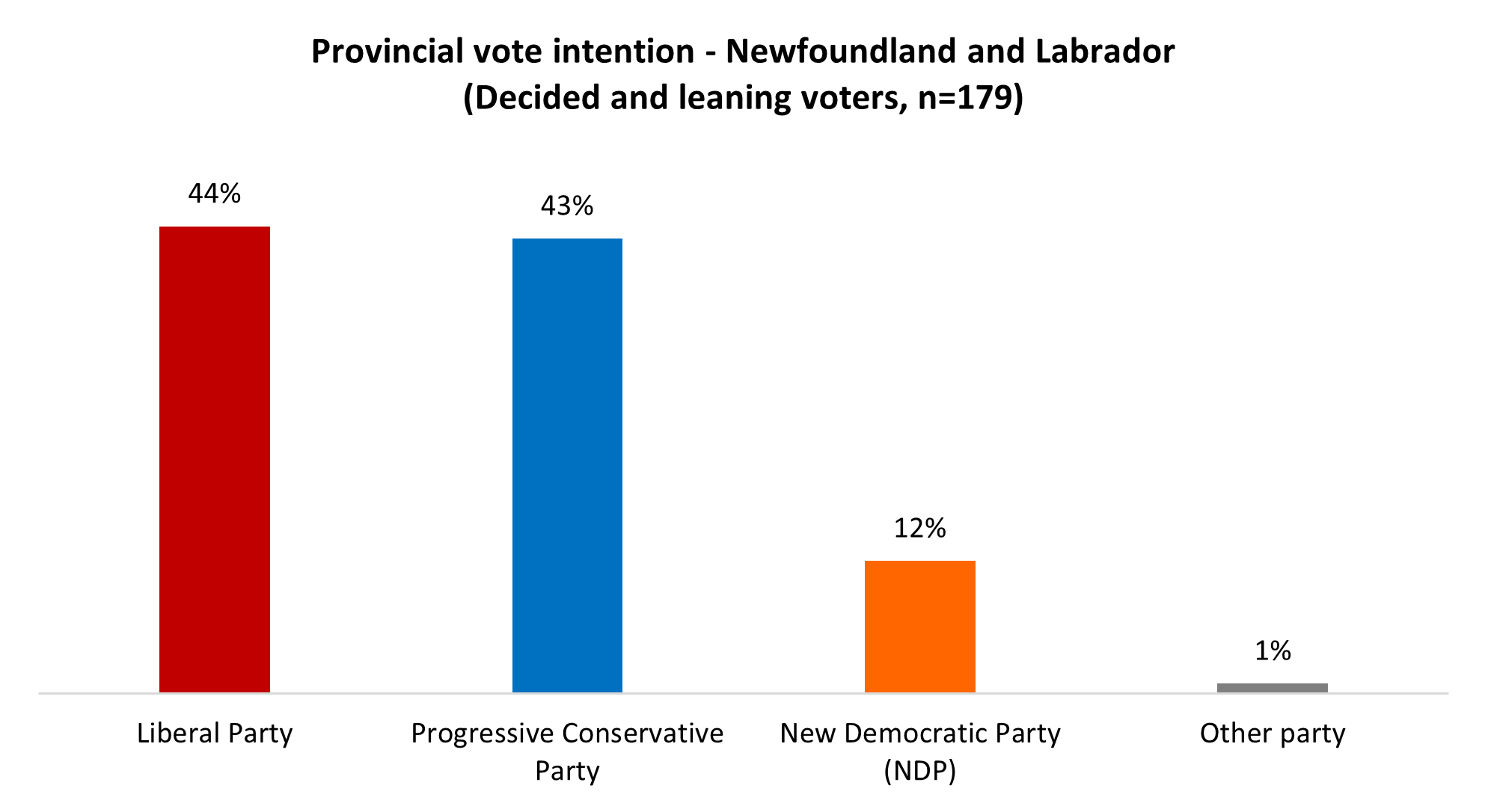
Note: Because its small population precludes drawing discrete samples over multiple waves, data on Prince Edward Island is not released.
METHODOLOGY:
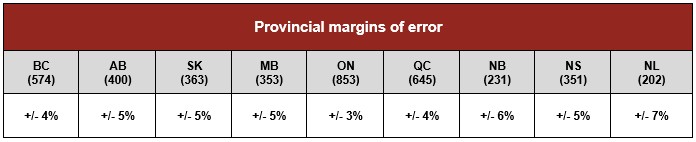
The Angus Reid Institute conducted an online survey from Nov. 26 to Dec. 1, 2025, among a randomized sample of 4,025 Canadian adults who are members of Angus Reid Forum. The sample was weighted to be representative of adults nationwide according to region, gender, age, household income, and education, based on the Canadian census. Provincial margin of errors are found at the end of the report. Discrepancies in or between totals are due to rounding. The survey was self-commissioned and paid for by ARI. Detailed tables are found at the end of this release.
For detailed results by age, gender, region, education, and other demographics, click here.
For PDF of full release, click here.
MEDIA CONTACTS:
Shachi Kurl, President: 604.908.1693 shachi.kurl@angusreid.org @shachikurl
Dave Korzinski, Research Director: 250.899.0821 dave.korzinski@angusreid.org
Jon Roe, Research Associate: 825.437.1147 jon.roe@angusreid.org