


Past CPC voters divided (47% support 44% oppose, while Liberals near unanimously opposed (89%)
October 21, 2025 – Nimbus and Stratus may be floating through Canada this fall – and they’re not just clouds anymore. These are the latest COVID variants that have provinces around the country preparing immunization campaigns to help stem circulation. But two provinces are taking a different approach this respiratory illness season, opting to end free coverage of COVID-19 vaccines.
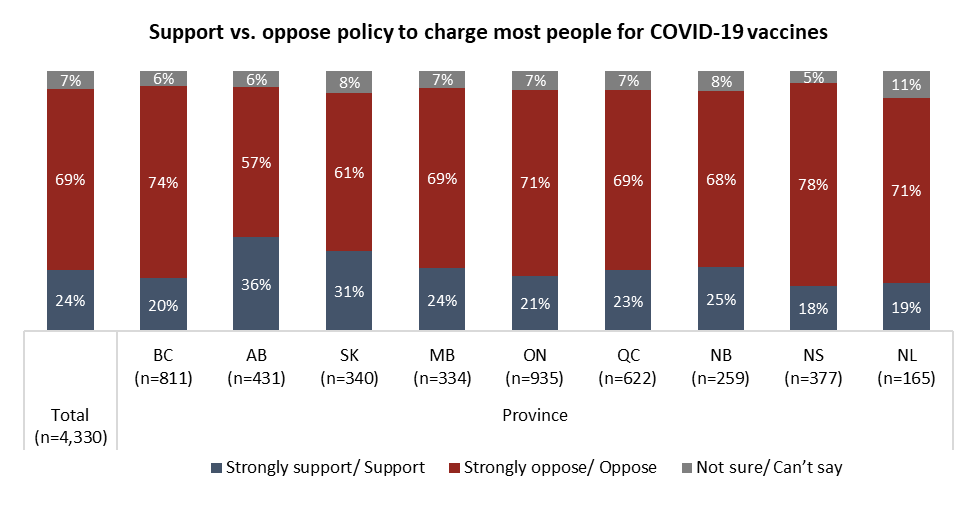
New data from the non-profit Angus Reid Institute finds the policy of provinces charging $100 for the COVID-19 vaccine (for non-at-risk groups) deeply unpopular, with seven-in-10 opposing it nationally (69%) and one-quarter (24%) supportive. Alberta and Quebec recently became the first two provinces to begin to charge for the vaccine, which has been universally free since the pandemic.
Support for this charge is highest in Alberta at 36 per cent, buoyed by 64 per cent support among past UCP voters. Opposition, meantime, reaches four-in-five in Nova Scotia (78%) and exceeds three-in-five in every other region aside from Alberta.
Nationally, past CPC voters are most supportive of adding a charge for the COVID vaccine (47%) but are overall divided (44% oppose). This idea is heavily opposed by those who voted Liberal in the spring (89%).
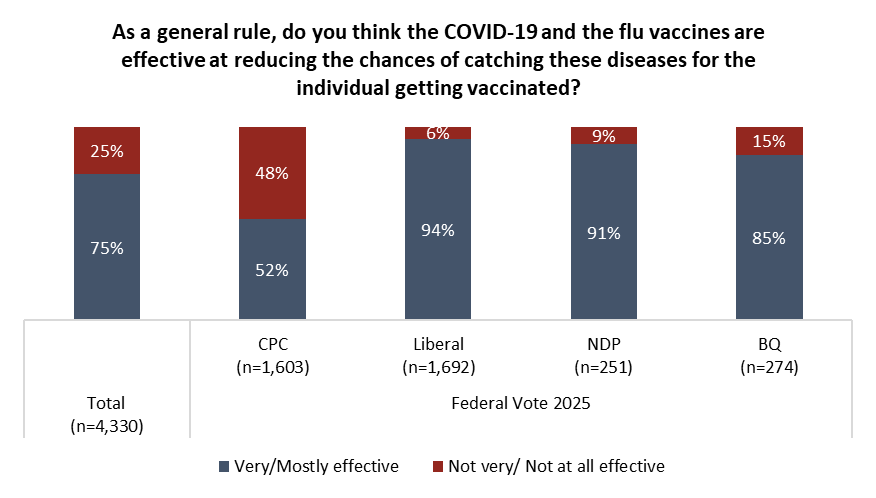
Much of the push for ending free vaccination is evidently driven by the view among past Conservatives that these inoculations are ineffective. While three-quarters of Canadians say that generally they feel COVID-19 and flu vaccines are effective at reducing the chance of catching these diseases, this drops to 52 per cent among CPC voters and rises to near unanimity among past Liberals (94%).
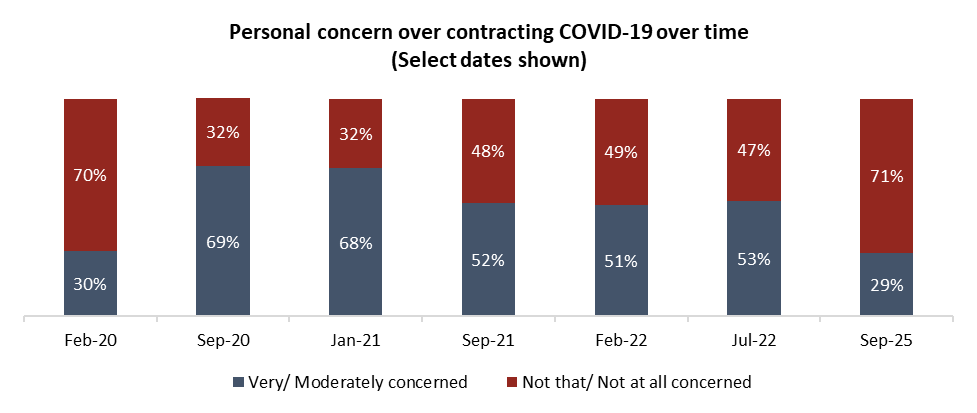
Another factor may be the diminished concern over COVID-19 infection. Levels of anxiety have waned significantly since the pandemic. Three-in-10 (29%) describe themselves as very or moderately concerned they will be infected by COVID-19, which matches the level noted in February 2020, before the first wave hit Canada.
INDEX
-
Concern over contracting COVID-19 similar to pre-pandemic levels
-
The politics of vaccines – CPC voters doubt effectiveness
-
Majority oppose policy to charge most people for COVID-19 vaccine
-
But policy finds support among two-thirds of UCP voters
Concern over contracting COVID-19 similar to pre-pandemic levels
With respiratory season coming into full effect, there is already concern that COVID-19 is on the rise, with reports of higher case numbers in hospitals and a bump in levels of the virus measured in wastewater. Doctors recommend vaccination as a precaution and staying home when sick, but for most Canadians, COVID doesn’t appear to be nearly the significant threat it once was. During the first year of the pandemic, concern was at its peak, with approaching seven-in-10 (69%) saying they were personally concerned about catching COVID-19. That concern faded over time. Now concern, held by three-in-10, sits at a similar level to that seen in February 2020, prior to the virus spreading in Canada.

Canadians older than 54 are more concerned (35%) than those younger than that, but even among Canadians that age, contracting COVID-19 is not a concern for the majority.
Throughout much of the first two and a half years of the pandemic, a majority of Canadians older than 54 reported they were “very” or “moderately” concerned about being infected with COVID-19:

Across the country, concern levels are currently similar, ranging from 22 to 32 per cent:

The politics of vaccines – CPC voters doubt effectiveness
Although concern over COVID-19 has faded, most (75%) still believe vaccines against COVID-19 and the flu are effective at reducing the chance of catching the diseases for those who are vaccinated.
There remains a clear political divide on the issue of the effectiveness of vaccines. Half (48%) of those who voted CPC in the spring federal election believe the flu and COVID-19 vaccines are not effective protection against those viruses. Nearly everybody who supported other federal parties believe those vaccines are effective.
Previous data from ARI showed that CPC voters were more likely to believe vaccines carried “a real risk of serious side effects”, especially the one inoculating against COVID-19.
Related: Support for mandatory childhood vaccination rebounds, but one-in-five parents hesitant to vax

Majority oppose policy to charge most people for COVID-19 vaccine
The Alberta government announced this summer that it planned to charge most in the province to receive the COVID-19 vaccine this fall. Premier Danielle Smith and Health Minister Adriana LaGrange said they wanted to ensure there was less wastage for the vaccine after $200-million worth of doses were wasted in the past three years. Doctors have criticized the policy as creating a two-tier health system which only covers those who can afford the vaccine and “sabotaging” the COVID-19 campaign, which could lead to more infections and stress on the health-care system.
In Quebec, a similar announcement was made in September. People in those two provinces will pay between $100 and $200 to receive the vaccine if they are not in higher risk groups.
Albertans are more likely (36%) than Canadians in other provinces to support a policy to charge for the COVID-19 vaccine, but still a majority (57%) are opposed. This opposition is echoed by most other Canadians across the country, who believe these shots should remain free to those who wish to receive them:

Alberta policy finds support among two-thirds of UCP voters
Despite the COVID-19 vaccine charge and other controversial policy moves in Alberta, Smith is approved of by approaching half (46%) in the province, including one quarter (24%) who strongly approve of her performance as premier.
Related: Premiers’ Performance: The journey from first to worst for Legault; Eby’s decline continues
Two-thirds (64%) of past UCP voters say they support charging for COVID-19 vaccines, indicating that the policy is popular among most of Smith’s base:

Survey Methodology
The Angus Reid Institute conducted an online survey from Aug. 28 to Sept. 5, 2025, among a randomized sample of 4,330 Canadian adults who are members of Angus Reid Forum. The sample was weighted to be representative of adults nationwide according to region, gender, age, household income, and education, based on the Canadian census. For comparison purposes only, a probability sample of this size would carry a margin of error of +/- 1.5 percentage points, 19 times out of 20. Provincial margins of error are at the end of the release. Discrepancies in or between totals are due to rounding. The survey was self-commissioned and paid for by ARI.

For more information on our polling methods, click here.
For detailed results by age, gender, region, education, and other demographics, click here.
For PDF of full release, click here.
For questionnaire, click here.
MEDIA CONTACTS:
Shachi Kurl, President: 604.908.1693 shachi.kurl@angusreid.org @shachikurl
Dave Korzinski, Research Director: 250.899.0821 dave.korzinski@angusreid.org
Jon Roe, Research Associate: 825.437.1147 jon.roe@angusreid.org