

Ontario’s Doug Ford drops back close to record low, with just 31 per cent approving of him
March 18, 2026 – As B.C. abandons the biannual tradition of changing clocks, Premier David Eby is falling back as some others spring ahead.
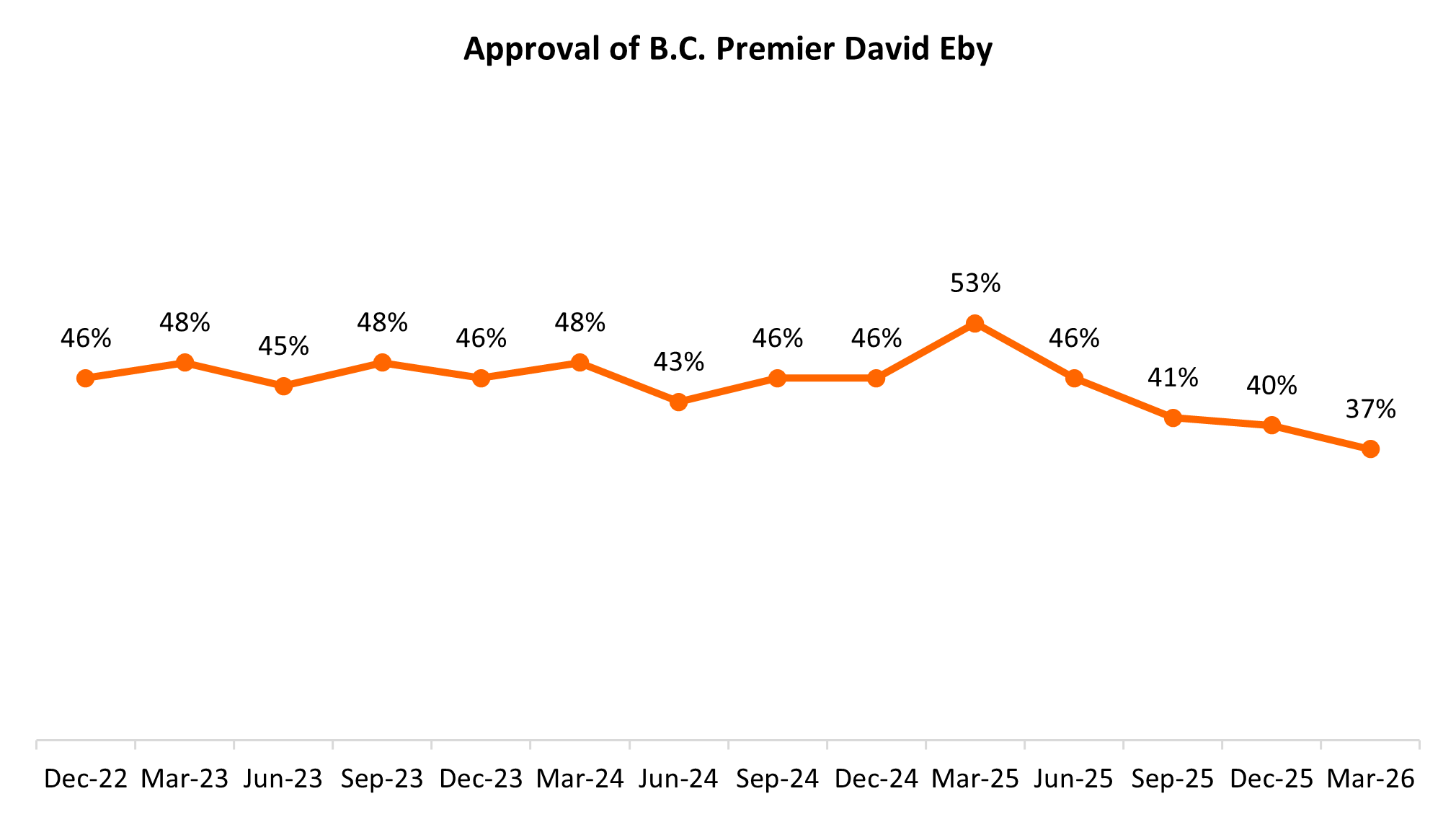
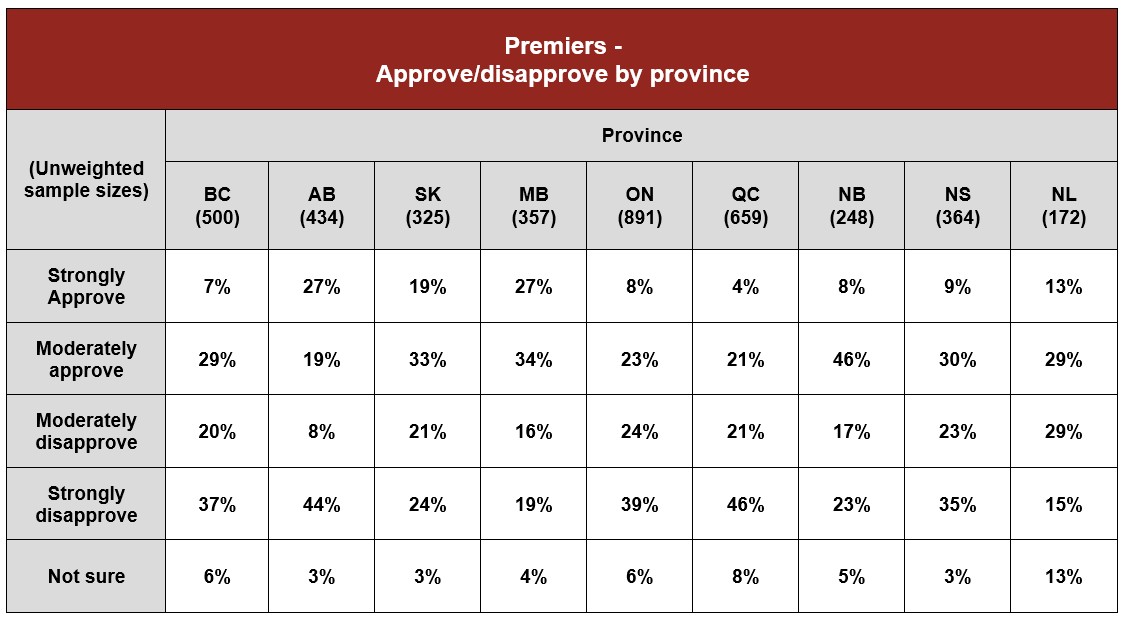
New data from the non-profit Angus Reid Institute finds Eby’s approval rating has declined 16-points year-over-year. In March 2025, when most premiers enjoyed a bump in popularity as nationalism surged in the face of tariffs and threats from U.S. President Donald Trump, Eby was approved by a record-high of 53 per cent of British Columbians. Now, just 37 per cent say the same.
The drop comes as B.C. finds itself mired in budget concerns, health care issues, and brewing controversies over Aboriginal title.
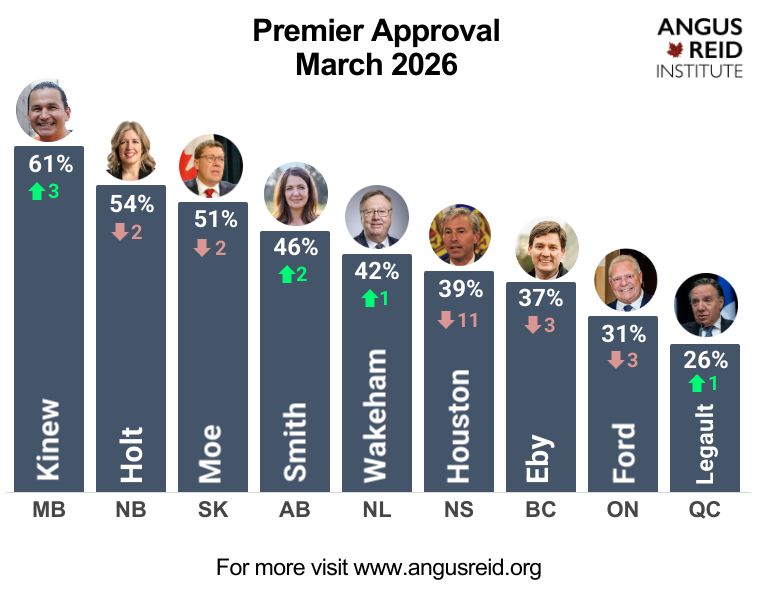
Eby’s fall is notable, but the largest decline this quarter belongs to Nova Scotia Premier Tim Houston, who drops double digits after a budget about-face. Nova Scotia is also staring down a significant provincial deficit, but Houston’s government will have to find other areas to save funds after back-tracking on proposed cuts to services for people with disabilities, seniors and visible minorities. The mea culpa was not enough to reverse public opinion on Houston, as he falls to 39 per cent approval.
Elsewhere, Manitoba Premier Wab Kinew is in a familiar pole position, with approval of three-in-five (61%) in the province. Only two other provincial premiers – Susan Holt in New Brunswick and Scott Moe in Saskatchewan – join him in receiving majority approval of their constituents.
Note: Because its small population precludes drawing discrete samples over multiple waves, data on Prince Edward Island is not released.
INDEX
- A different shade of orange – Eby declines while Kinew bumps back up to top spot
- Majority holdouts – Moe and Holt
- Smith gets a small bump in Alberta
- Two Atlantic leaders hover around the two-in-five mark
- In Ontario and Quebec, large populations, small approval numbers
A different shade of orange – Eby declines while Kinew bumps back up to top spot
Canada’s two New Democratic Party premiers find themselves going in different directions. In British Columbia, BC NDP leader David Eby continues to slip from his once steady position in the mid-40s when it comes to public approval, to a decile below. Currently, 37 per cent approve of him. Eby has been embroiled in controversy over his role in the federal government’s land agreement with the Musqueam Indian Band. Eby initially claimed that he didn’t know the details of agreement, though it was later noted that he sat front row at the signing ceremony and that his government was briefed on the agreement in the weeks prior.
This, alongside B.C.’s historic deficit and reportedly weak investment environment, have many questioning what Eby and his party’s future will look like after the B.C. Conservative Party leadership race elects a new opposition leader.
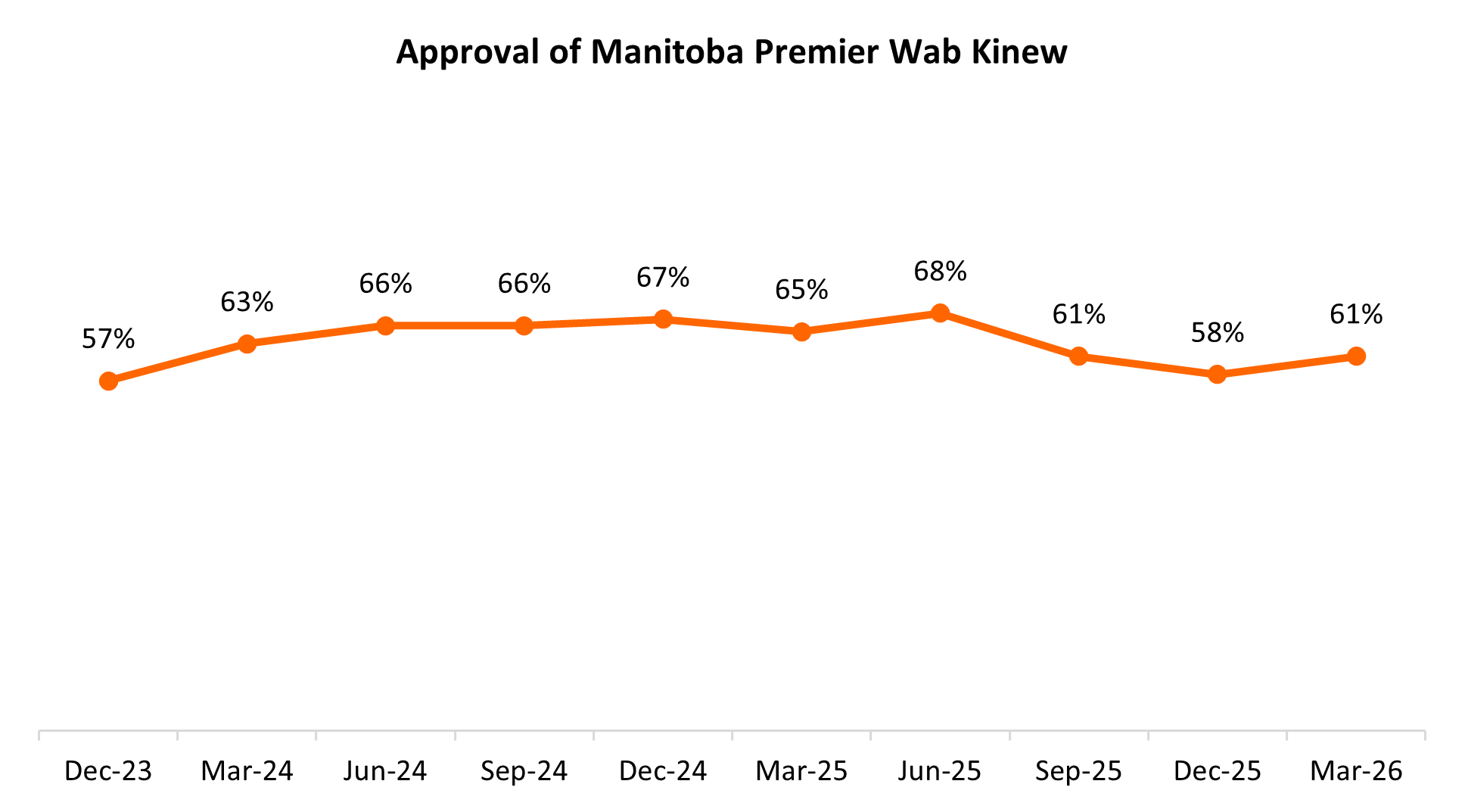
Meanwhile, it’s a return to familiar territory for Manitoba Premier Wab Kinew, who earns the approval of three-in-five (61%) in the province, a mark he has solidly hit in eight of the 10 quarters he has been premier. Although there has been criticism of his government’s progress on key issues such as health care and education, that has been perhaps offset by popular measures to address affordability. Kinew’s government instituted a gas tax holiday when it first took office. It was lifted, but replaced by a permanent reduction in fuel taxes. This year, the government announced the price of 1L cartons of milk would be fixed for the entirety of 2026.
Majority holdouts – Moe and Holt
New Brunswick Premier Susan Holt was honest in her assessments of her government’s performance in her state of the province speech in January. She said her government had missed targets on health care and education but touted successes on the fronts of housing and the environment.
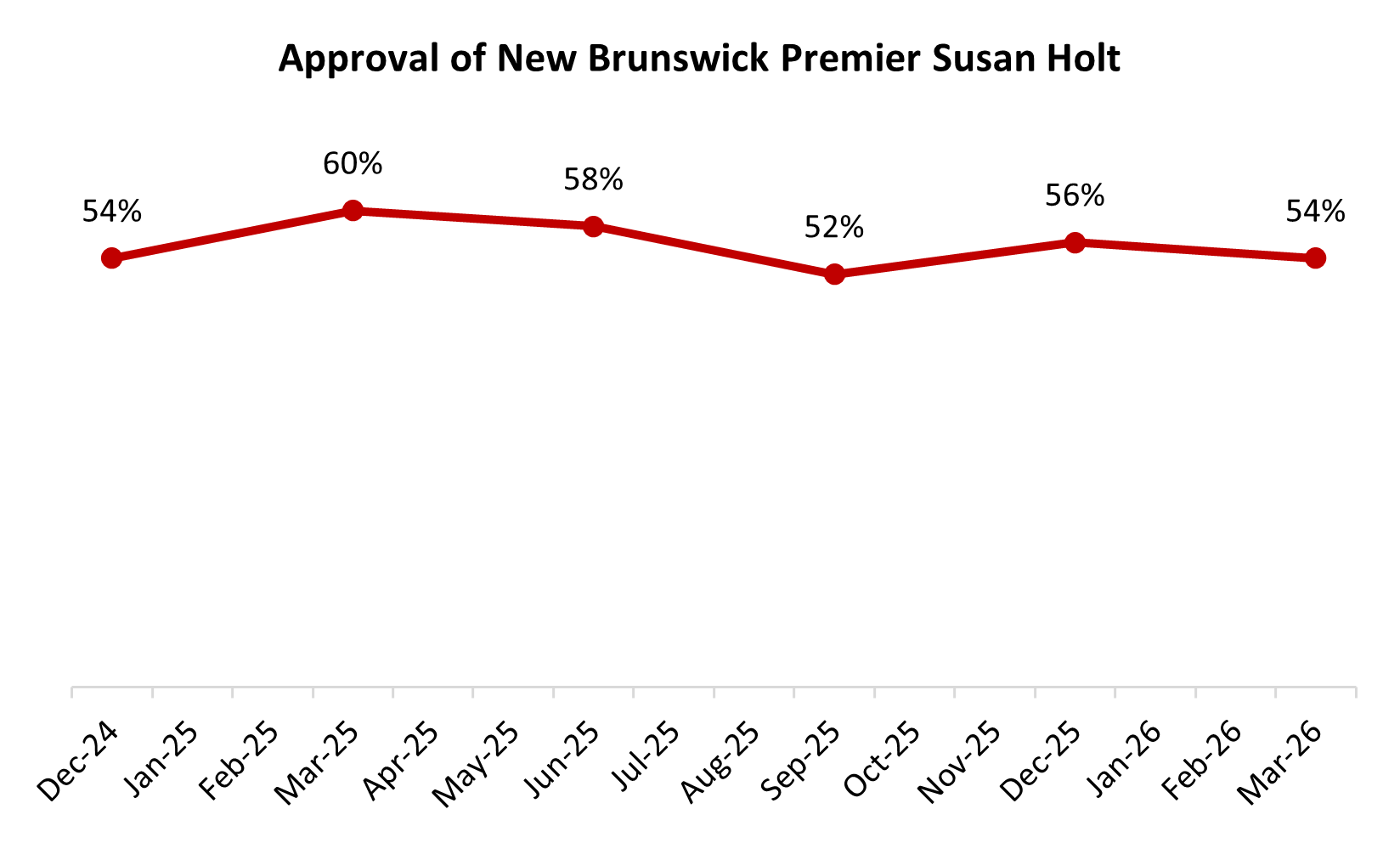
There are stormy days ahead for the province, as it looks set to address a record-high deficit in the coming budget. Holt has warned there will be “difficult decisions” necessary. Despite these stark assessments, as it stands, approval of Holt remains in majority territory, where it has for all six waves of ARI reporting since her election:
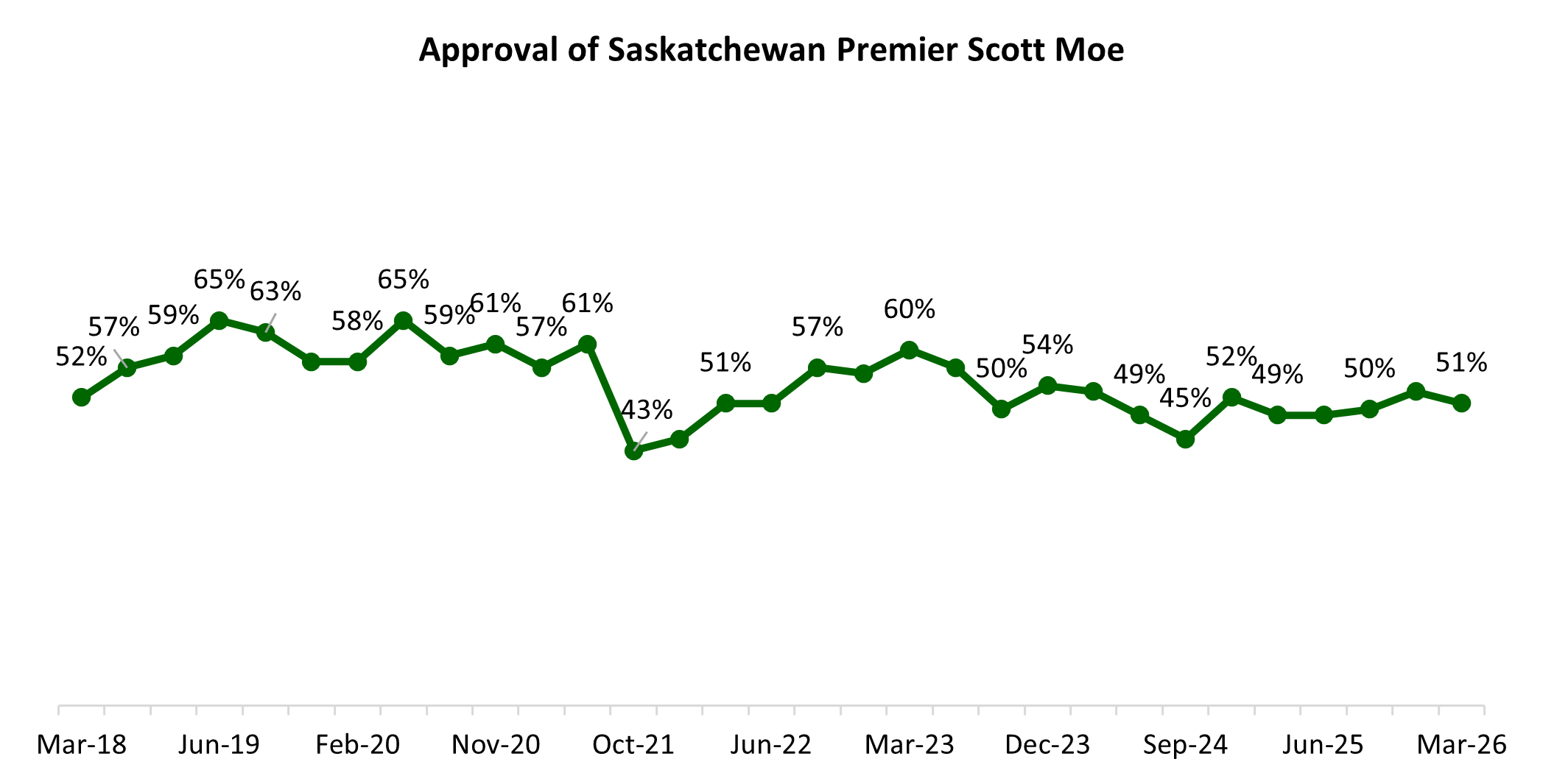
Saskatchewan Premier Scott Moe has gone international in recent months, securing major wins on the economic front for his province in the forms of a $2.6-billion uranium trade deal with India and a drop in tariffs assessed on the key provincial crop of canola after a trip with Prime Minister Mark Carney to China.
The domestic picture, however, will likely pose further challenges for Moe and his Saskatchewan Party government in the coming months. Prior to this week’s budget announcement, Moe said the province will have a deficit, partially due to revenue drops from international trade headwinds. Half in Saskatchewan say they approve of Moe:
Smith gets a small bump in Alberta
Alberta’s budget projected a $9.4-billion deficit for the upcoming fiscal year, but that may be mitigated by the spike in oil prices driven by the war in Iran. Despite the deficit, Premier Danielle Smith and her UCP government has chosen not to go on the path of austerity, instead raising taxes and fees on a number of different areas to help offset spending elsewhere.
Smith set the scene prior to the budget by announcing some of the questions that will be on the ballot for the fall referendum that will ask Albertans how they feel about immigration and restricting access to Alberta’s services from temporary residents. Smith and her finance minister blamed rapid population growth for part of the government’s budget shortfall.
“Throwing the doors wide open to anyone and everyone across the globe has flooded our classrooms, emergency rooms and social support systems with far too many people, far too quickly,” Smith said. Critics were quick to point out she called on the previous federal government increase its provincial allotment of immigrants two years ago.
Recent policy developments have done little to change Albertans’ assessments of Smith: more than two-in-five (46%) approve of her performance, in line with how she has been viewed since taking office in 2022.

Two Atlantic leaders hover around the two-in-five mark
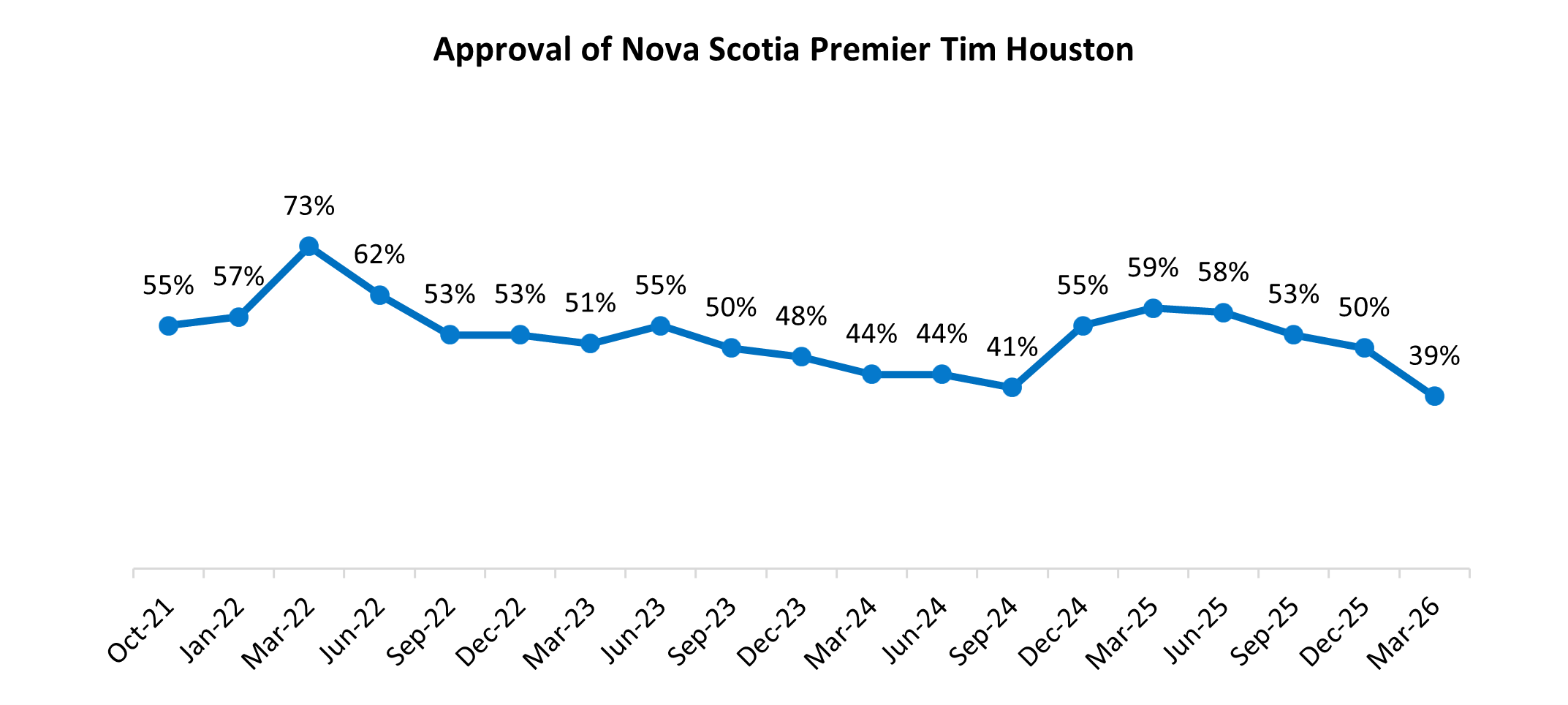
Much like in other provinces in the country, Nova Scotia’s provincial government is dealing with a lot of red ink in its budget. A surplus in 2024-25 has given way to a $1.2 billion projected deficit this fiscal year, with several $1-billion-plus deficits scheduled to follow. Premier Tim Houston and his government had planned to make $300 million in spending cuts, including reducing head counts in the public service and reducing grants to hundreds of community organizations and programs. Nova Scotians responded with protests and Houston’s government responded by reversing some of the cuts that had affected people with disabilities, seniors, African Nova Scotian and Indigenous people.
However, the uproar clearly influenced Houston’s personal popularity. Approval of Houston has declined by 11-points to 39 per cent, the lowest it has been during his tenure as premier.
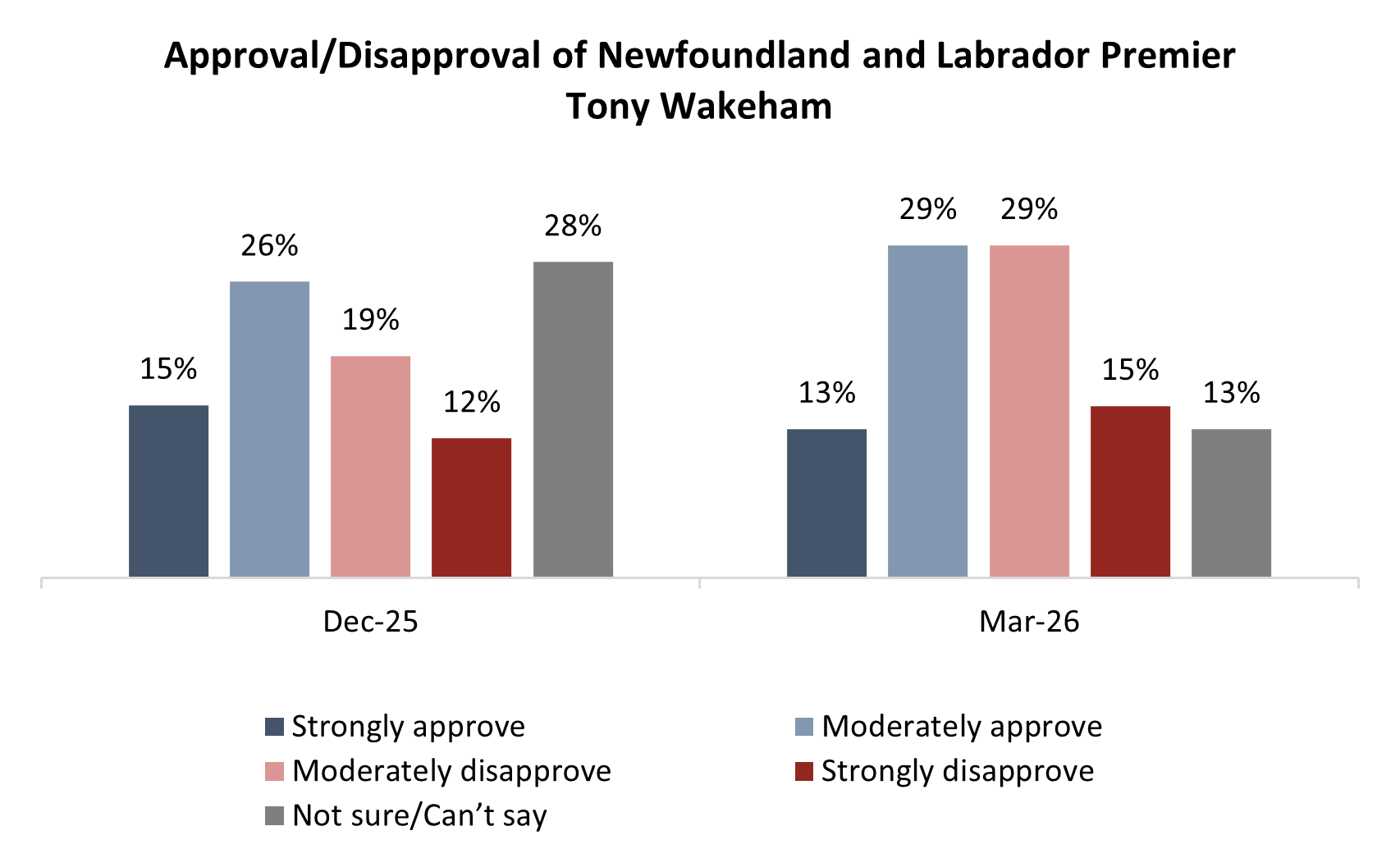
Canada’s newest premier, Newfoundland and Labrador’s Tony Wakeham, was the bearer of good news this quarter when he announced an agreement to advance Bay du Nord, an offshore oil project that had been paused since 2023. The project will be worth billions of dollars to provincial coffers, as well as a significant future employer in the province.
The revenue influx is welcome news for the in-debted province, which has the highest net debt per capita in Canada. Wakeham will have to balance spending on campaign promises, while sorting out the deficit spending his government inherited from the former governing Liberals.
There are more provincial residents who have an opinion of Wakeham this quarter than last, but his approval remains unchanged. Two-in-five (42%) say they approve of his performance in the premier’s office so far.
In Ontario and Quebec, large populations, small approval numbers
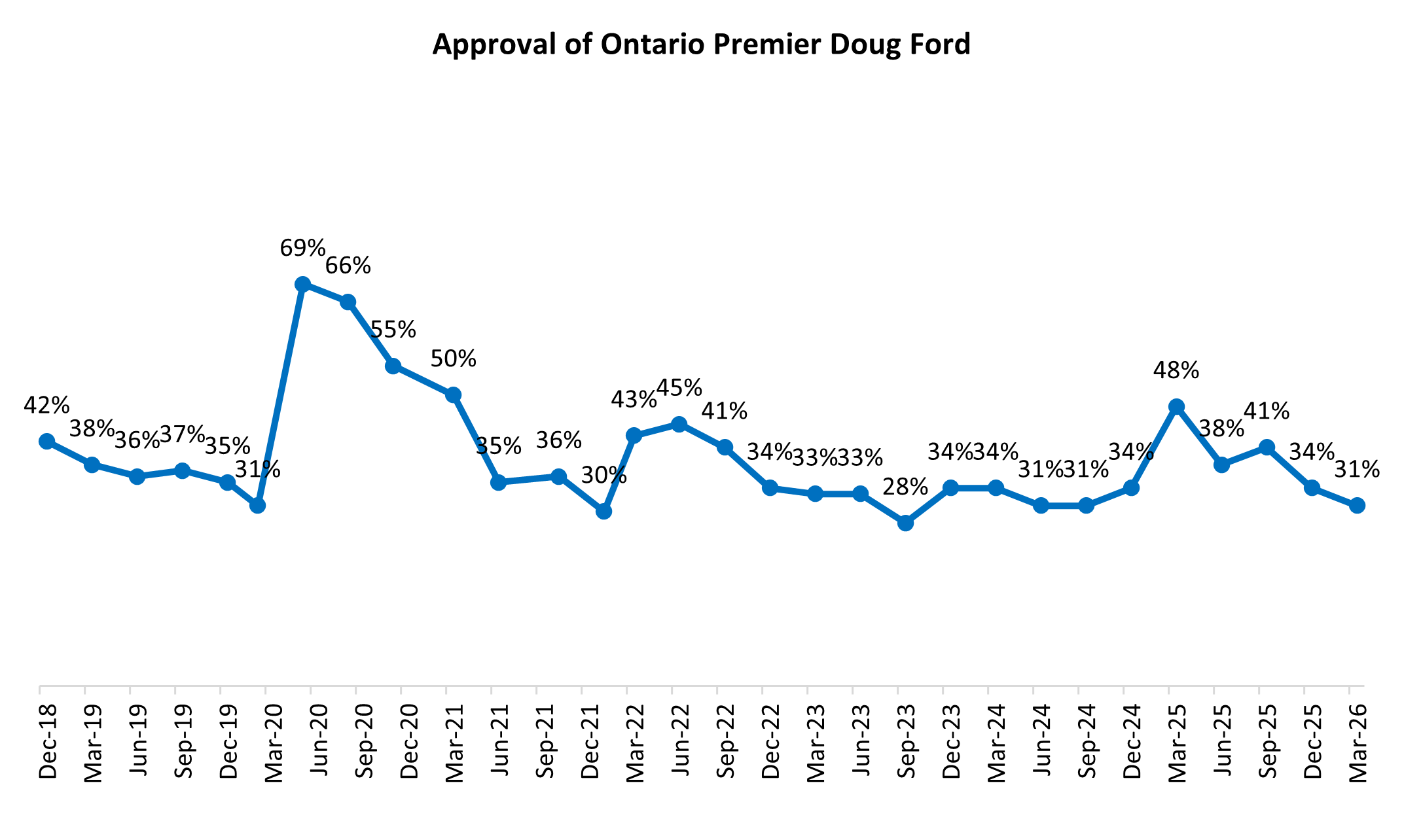
A lot has changed from a year ago for Ontario Premier Doug Ford. At the time, Ford’s role of “Captain Canada” in the face of tariffs and annexation threats from U.S. President Donald Trump revived the Ontario premier’s popularity. He was perhaps the most notable beneficiary of a “Trump bump” after languishing near the bottom of ARI’s premier approval ratings for the previous two and a half years. The bump has smoothed out, and Ford is back to generating approval of just three-in-10 Ontarians.
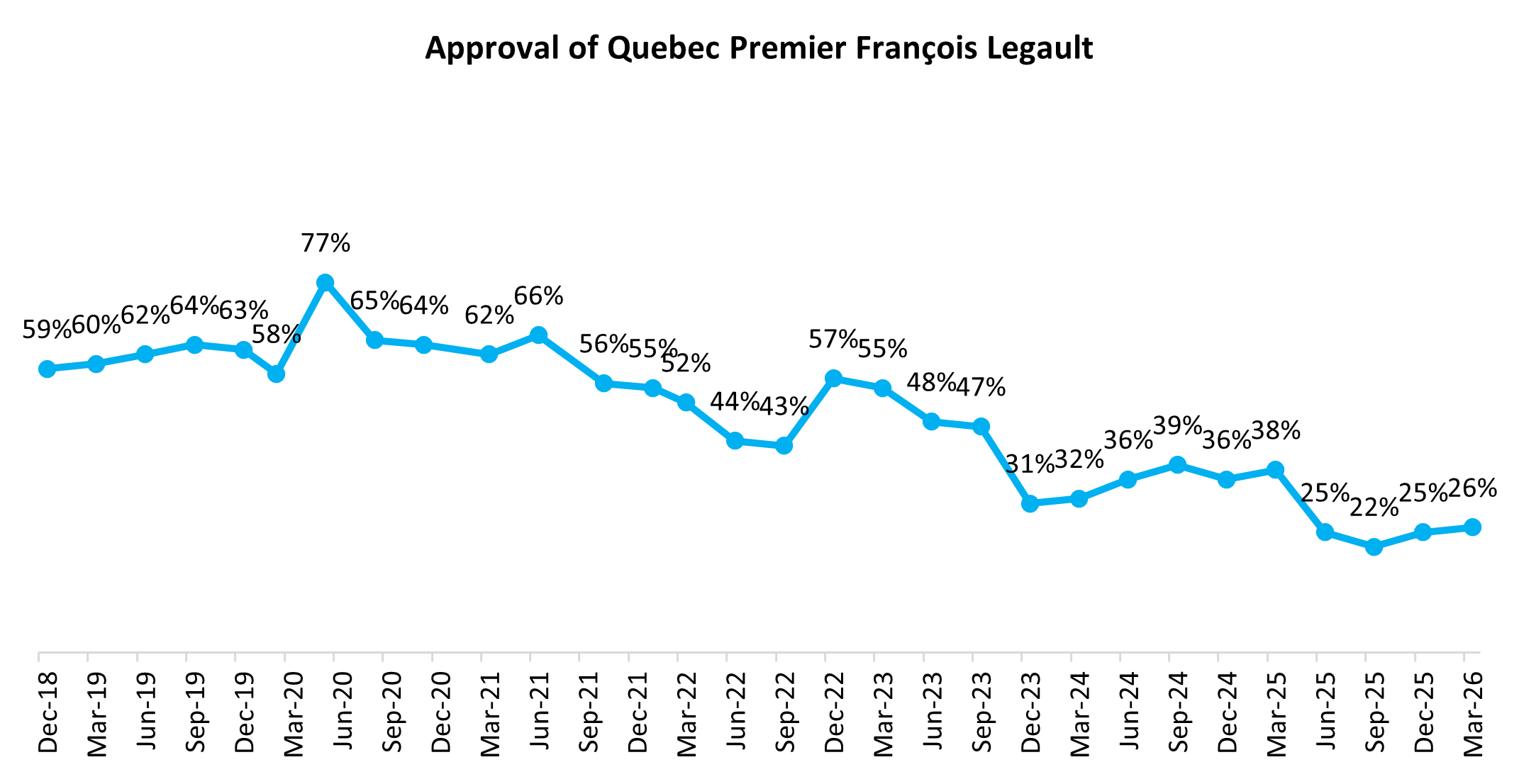
Quebec Premier François Legault’s personal unpopularity – he is the least approved-of premier in the country for the third consecutive quarter – likely played a factor in his January decision to step down prior to the fall Quebec election. There are two candidates to replace him, both former cabinet ministers in Legault’s government: Bernard Drainville, who was also once a candidate for the Parti Québécois leadership in 2015; and Christine Fréchette. Whoever wins will face the tall task of turning around the fortunes of Coalition Avenir Québec before the election this fall while distancing themselves from the controversies that also played a role in Legault’s downfall, including the SAAQ Cliq scandal, the collapse of the Northvolt battery plant deal, and issues with key public services including health care and education.
Note: Because its small population precludes drawing discrete samples over multiple waves, data on Prince Edward Island is not released.
Summary table
METHODOLOGY
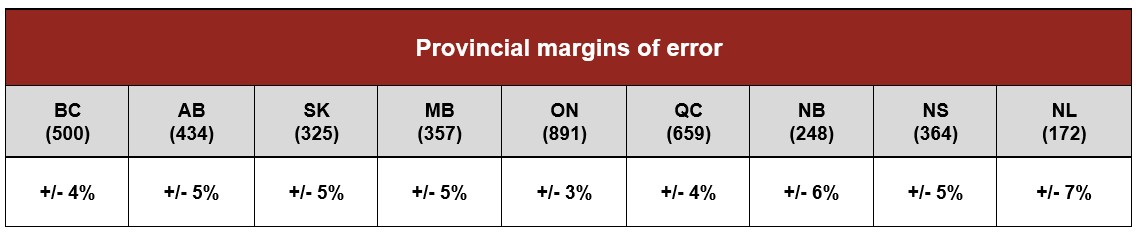
| The Angus Reid Institute conducted an online survey from March 11-17, 2026, among a randomized sample of 4,005 Canadian adults. Respondents are drawn from the Angus Reid Forum, a large-scale online panel developed to include Canadian residents in each of the 343 federal ridings in Canada and representative of the Canadian population by age, gender, family income, ethnic status and education. The sample was weighted to be representative of adults nationwide according to region, gender, age, household income, and education, based on the Canadian census. Provincial margins of error are found at the end of the release. Discrepancies in or between totals are due to rounding. The survey was self-commissioned and paid for by ARI.
For more information on our polling methods, click here. |
For PDF of full release, click here.
MEDIA CONTACTS:
Dave Korzinski, Research Director: 250.899.0821 dave.korzinski@angusreid.org
Jon Roe, Senior Research Associate: 825.437.1147 jon.roe@angusreid.org