

Two-thirds say their household finances are good/ very good; just 35 per cent say the same of the country
September 22, 2025 – A year defined largely by economic uncertainty has governments across the country revamping economic projections and expectations, with deficits a large part of the story.
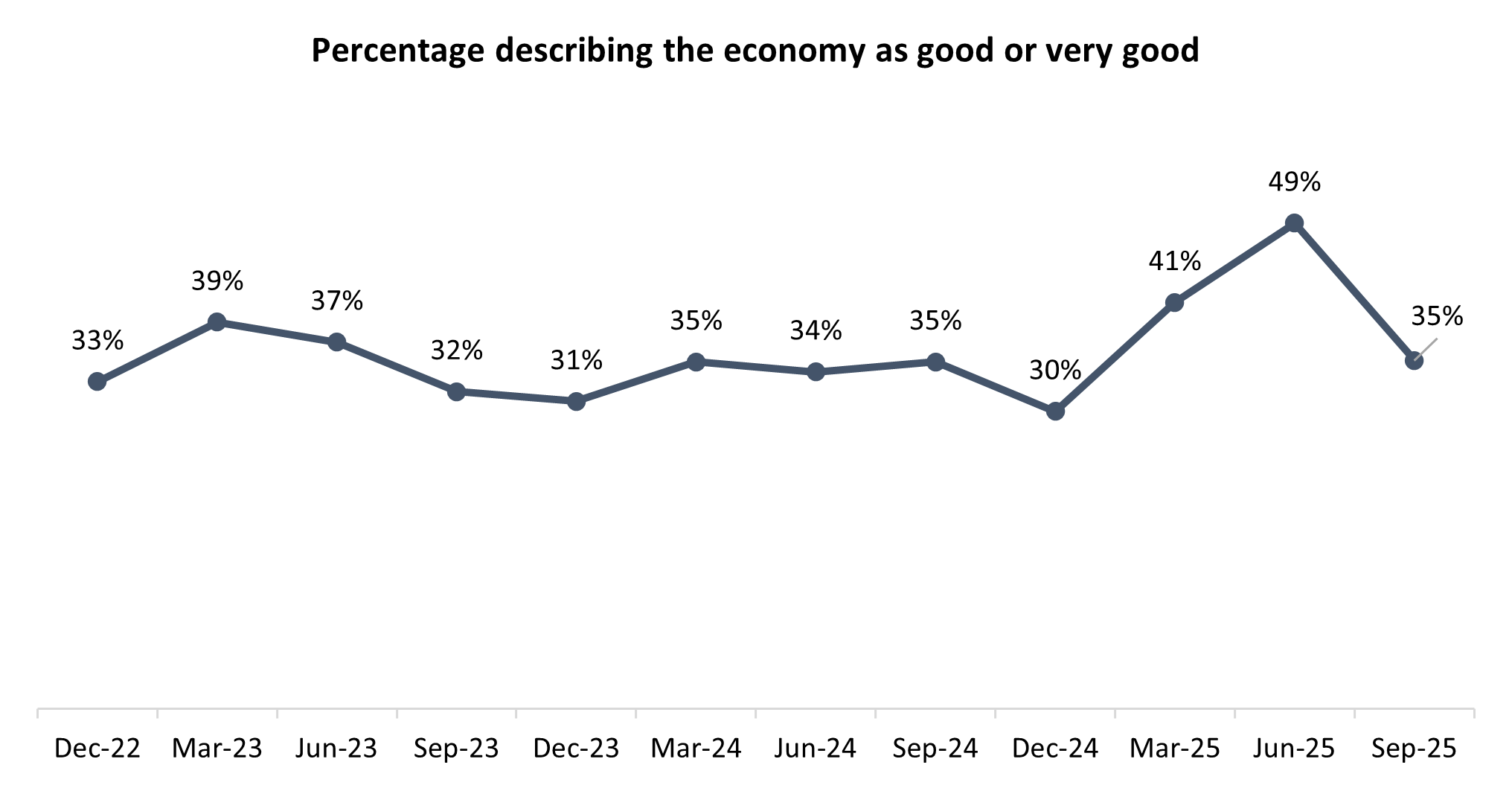
Canadians appear to have internalized the messaging. New data from the non-profit Angus Reid Institute finds that burgeoning economic optimism in the first months of the Carney Liberal government has dissipated. The percentage of Canadians who say the national economy is in good or very good shape has dropped 14 points from 49 per cent in June to 35 per cent now. On the other side are three-in-five who say the economy is either poor (41%) or very poor (20%).
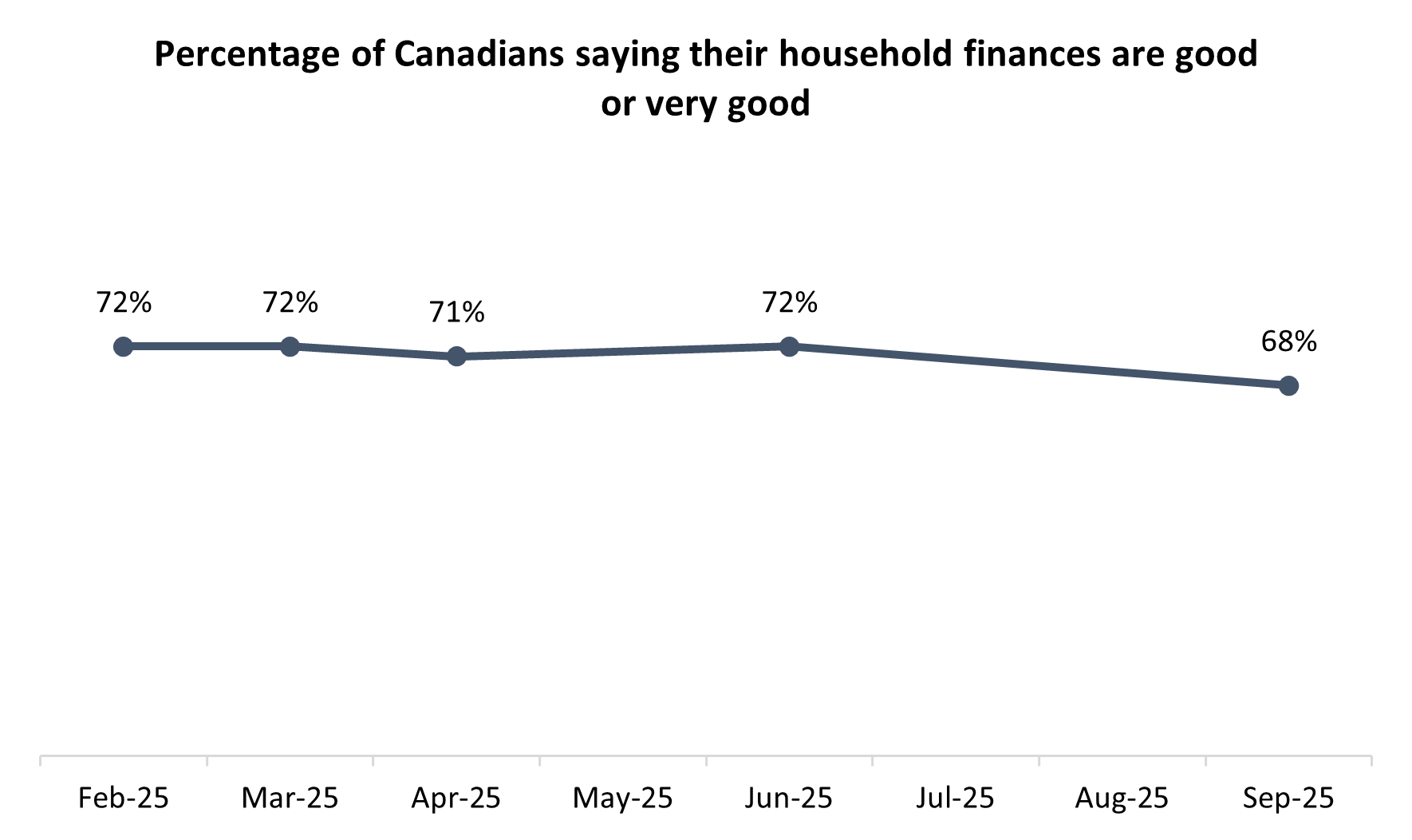
The good news it that Canadians also say these perceptions have yet to significantly impact them at the household level. Two-thirds (68%) describe their household finances as at least good, a number that has mostly held throughout 2025, but that has slipped by four points since June.
More Key Findings:
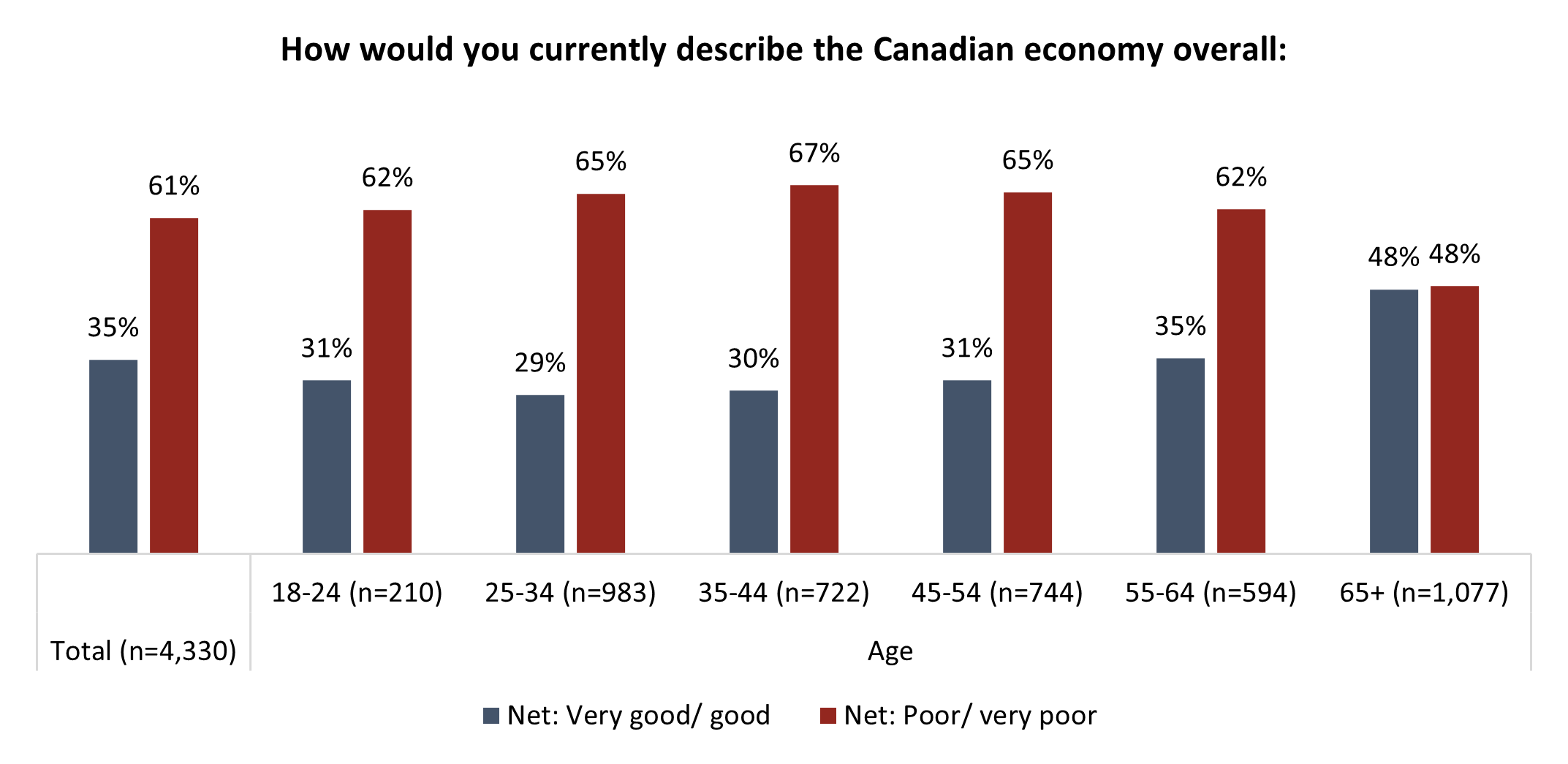
- Retirement age Canadians are much more positive about the state of the Canadian economy. Equal numbers describe it as good (48%) or poor (48%). All other age groups are approximately twice as likely to describe it as poor than good.
- Albertans (51%) and Saskatchewan residents (46%) are most likely to say their provincial economy is in a good place. Quebecers are least likely (32%)
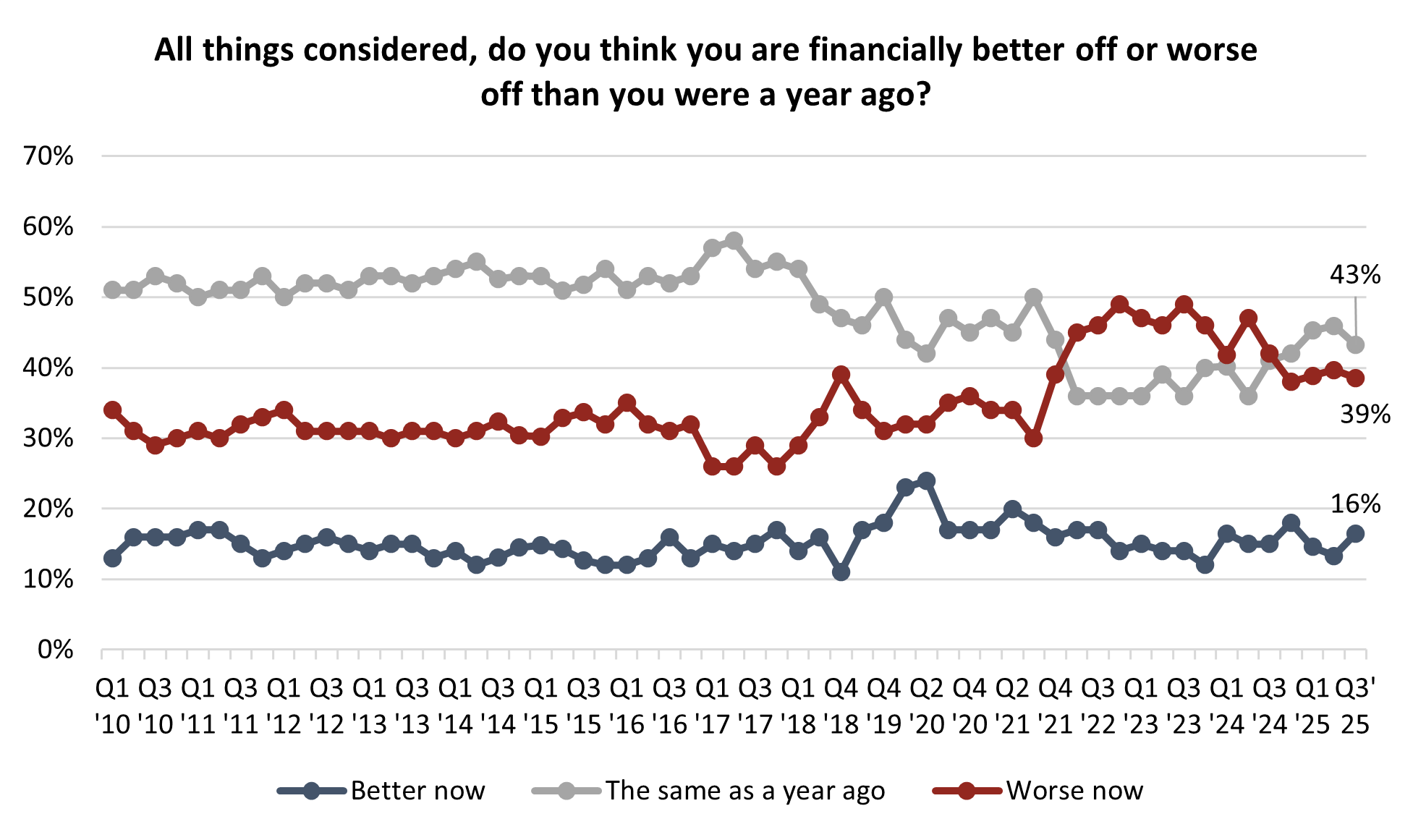
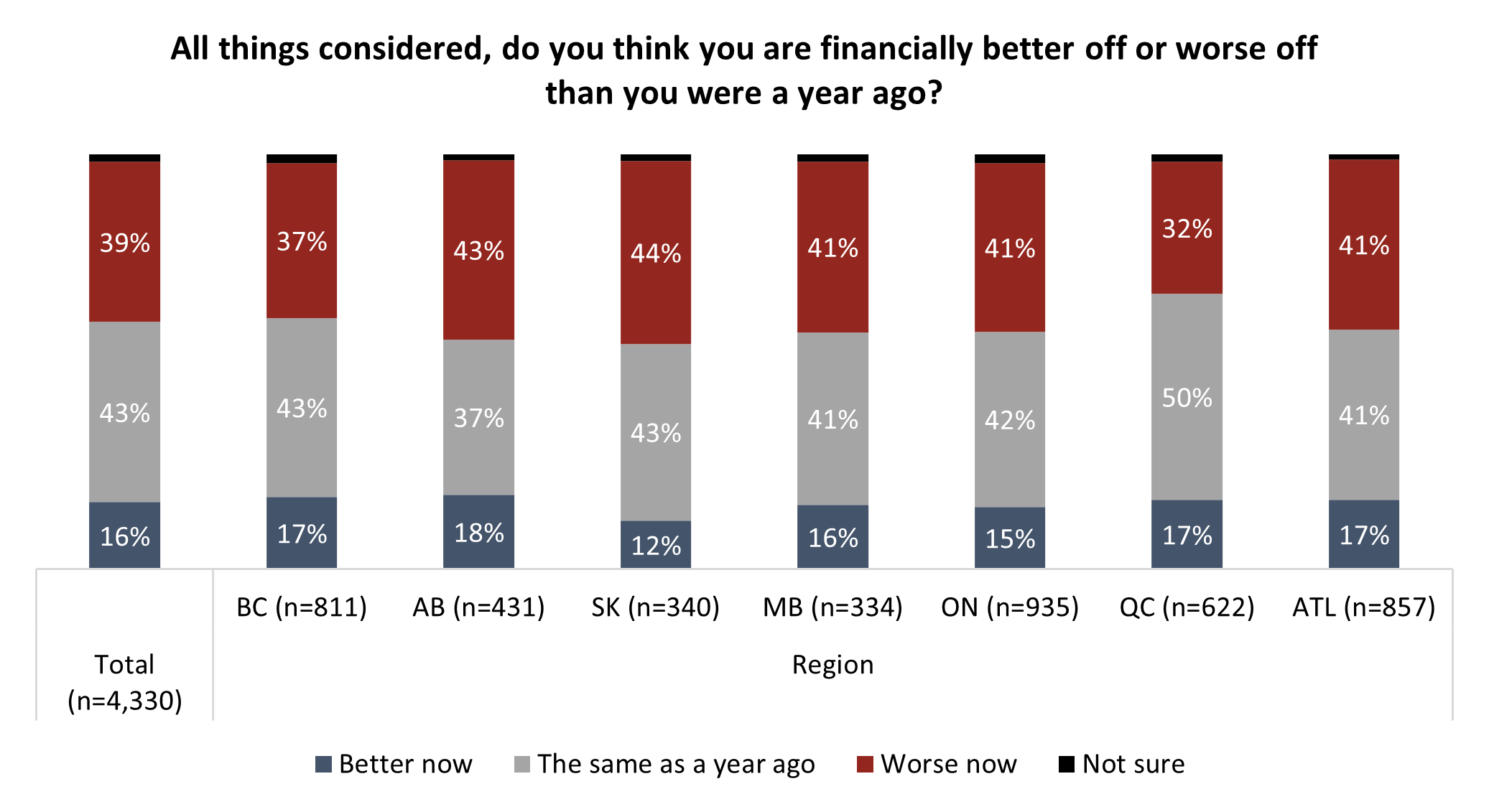
- Two-in-five Canadians say they are worse off now than they were at this time last year (39%) while far fewer are better off (16%). Others (43%) report no change.
INDEX
Economic state of the country
-
Seven-in-10 say they’re in good shape overall
-
But few say finances have improved over 12-month period
-
What about next year?
-
Positivity about Canadian economy evaporates
-
Views of provincial economies
Economic state of the country
Seven-in-10 say they’re in good shape overall
The situation at the household level in Canada remains relatively solid. Asked about their own household financial status, approximately seven-in-10 (68% describe it as either good or very good. It is worth noting that there has been a small downward movement in this proportion compared to previous waves of data, but this does not yet represent a trend.
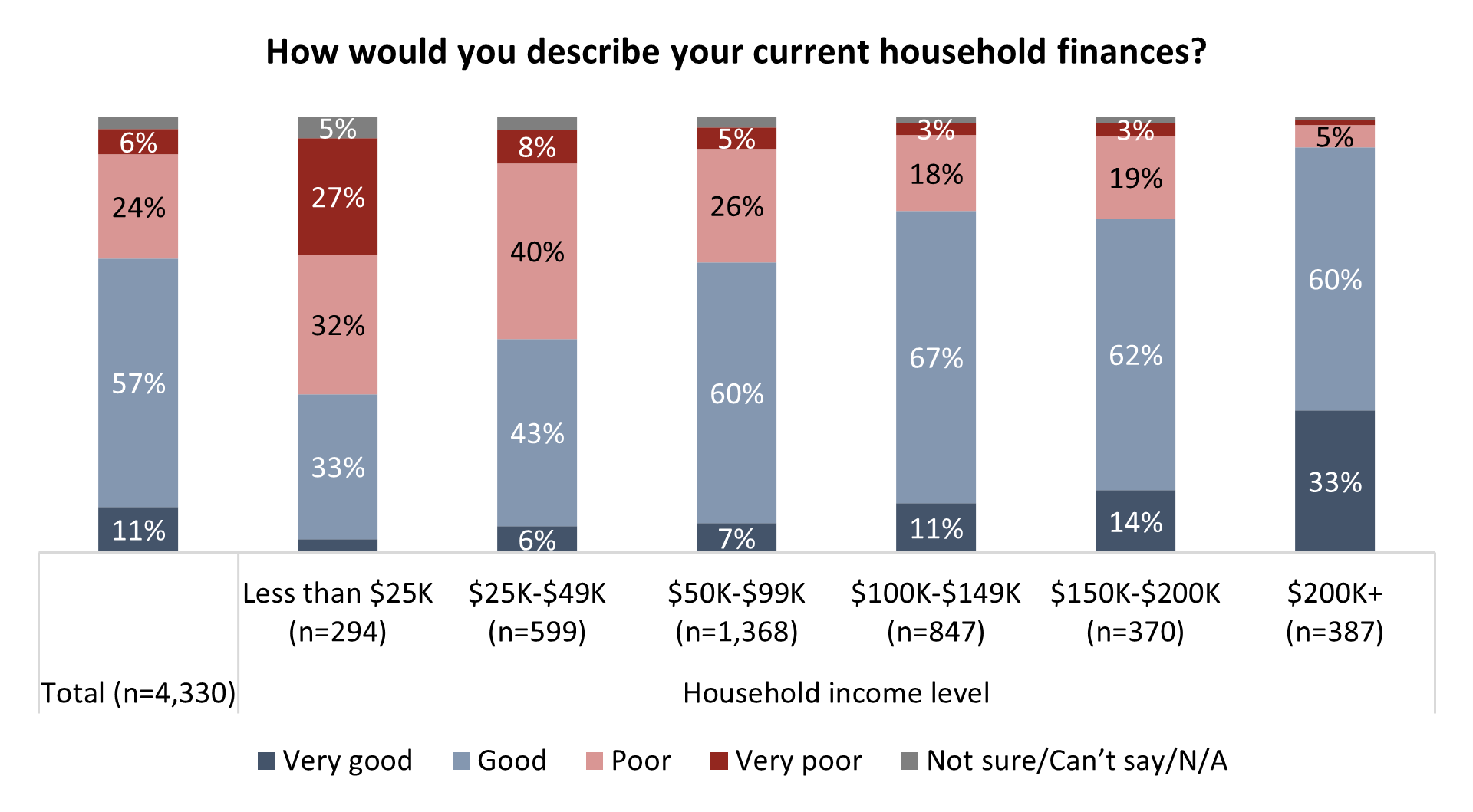
Conditions are far from uniform. Among those who have lower household income levels there are much higher rates of self-reported poor finances. While three-in-10 overall (30%) say their finances are poor or very poor, this doubles among the lowest income bracket and reaches half (48%) in the $25,0000 to $49,000 group:
Notably, young people are also most likely to show significant anxiety about the job market, while two-in-five overall say they or someone in their household may lose a job. These data were released in the previous story about economic well-being last week:
Related: Economic Focus: Concern over jobs and unemployment skyrockets among young people
But few say finances have improved over 12-month period
Most Canadians have not seen their financial situation improve materially over the past 12 months. Two-in-five (39%) say they’re worse off now, while 16 per cent say they’re better off. The largest group (43%) have not seen any significant change. This represents the fourth consecutive quarter where the “unmoved” group is the largest, a small improvement over the data that emerged after the COVID-19 pandemic broke out, when Canadians were most likely to say they were worse off:
 Those most likely to say they’re worse off are found in Alberta and Saskatchewan. Though this proportion exceeds three-in-10 in all regions. For more data, including age, gender, and education, click here to see detailed tables:
 What about next year?
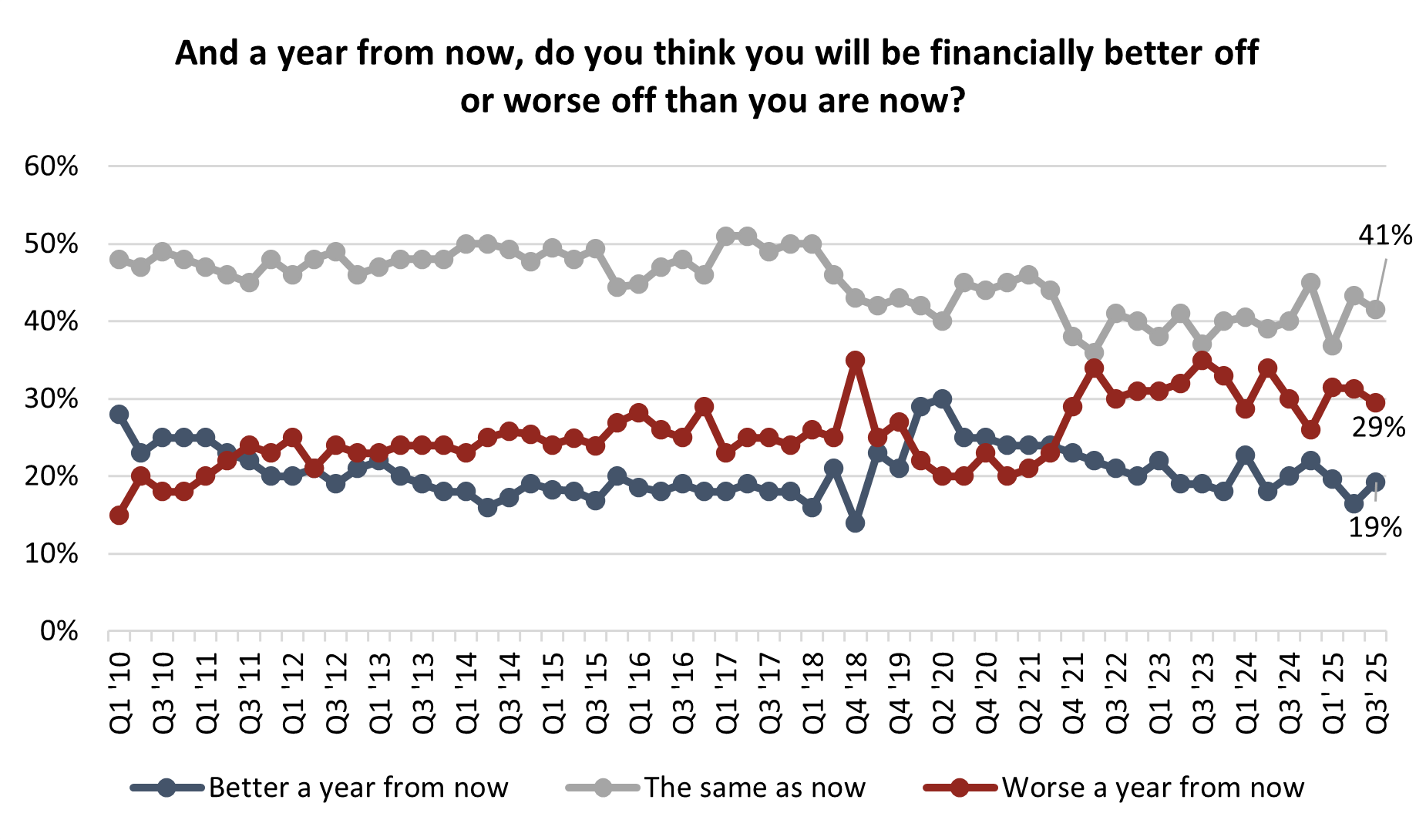
Expectations for the coming year are not particularly rosy. One-in-five (19%) say they feel they will see an improvement by September 2026, while 29 per cent say they’ll be worse off. The largest group view this forecast with no expected change:
 Positivity about Canadian economy evaporates
Unemployment hit 7.1% in August, the highest rate since the spring of 2016 (COVID-era data from 2020 and 2021 excluded). Recent projections from RBC suggested low single-digit GDP growth for the year, while many provincial deficits are forecast to balloon. With continued uncertainty over major international trade relationships including the U.S. and China, a growing bubble of optimism among Canadians over the state of the national economy has burst. Canadians who describe the Canadian economy as good or very good has dropped 14 points this quarter compared to June:
Three-in-five describe the economy as poor or very poor:
 Those who are of working age lean significantly toward saying the economy is in a bad place, with more than three-in-five 18- to 64-year-olds holding this view. Canadians of retirement age are significantly more positive:
 Views of provincial economies
Closer to home, provincial economic perceptions vary significantly. In Quebec, residents are most pessimistic, with one-in-three (32%) saying the economy is good or very good. The province is experiencing weak revenue growth and significant consecutive deficits. Most provinces are dealing with similar challenges in this economic environment, with each and every one of them projecting a deficit for the 2025-26 year:
| Province | 2025–26 projected balance (C$ millions) | Source |
| British Columbia | -11,600 | Q1 Update – Sept 2025 |
| Alberta | -6,500 | Q1 Fiscal Update – Aug 2025 |
| Saskatchewan | -349 | Q1 Fiscal Update – Aug 2025 |
| Manitoba | -794 | Budget 2025 |
| Ontario | -14,600 | Q1 Finances – Aug 2025 |
| Québec | -13,600 | Budget 2025 – March |
| New Brunswick | -669 | Q1 Update – Aug 2025 |
| Nova Scotia | -898 | Budget 2025 – Feb |
| Prince Edward Island | -184 | Budget 2025 – Apr |
| Newfoundland & Labrador | -372 | Budget 2025 – Apr |
Despite this, Saskatchewan and Alberta residents are more positive about how their provincial governments are weathering the storm:

For detailed results by age, gender, region, education, and other demographics, click here.
For PDF of full release, click here.
For questionnaire, click here.
MEDIA CONTACTS:
Shachi Kurl, President: 604.908.1693 shachi.kurl@angusreid.org @shachikurl
Dave Korzinski, Research Director: 250.899.0821 dave.korzinski@angusreid.org