

One-third, and half of past Liberals voters, would send more than the $8 million already committed
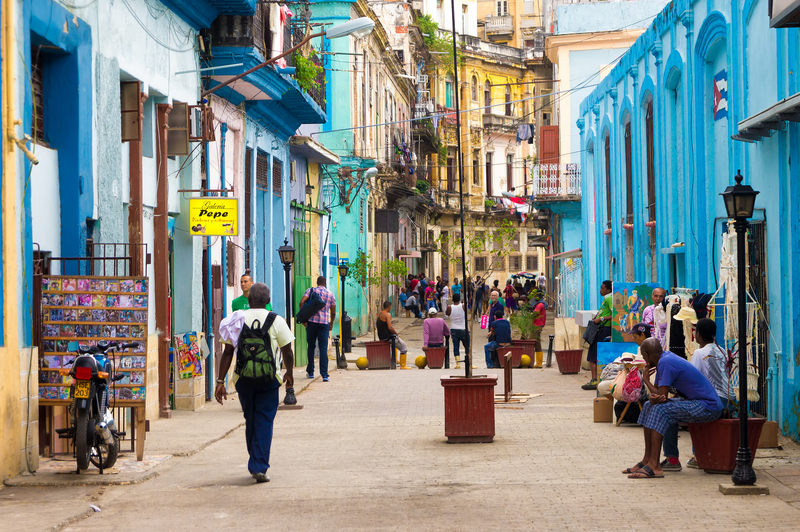
April 3, 2026 – The war in Iran and its ripple effects on the global economy has consumed much of the media oxygen in recent weeks. It has obscured the ongoing crisis in Cuba, subject to a punishing oil blockade that has starved it of tourism, a vital economic lifeline.
New data from the non-profit Angus Reid Institute finds that Canadians more supportive than not of Canada sending aid to the beleaguered Caribbean country even if it risks tension with the United States. Half (51%) want Canada to provide aid despite the potential of further upsetting the U.S.-Canada relationship, three-in-10 (31%) believe instead that maintaining positive relations with the Trump administration should be more important.

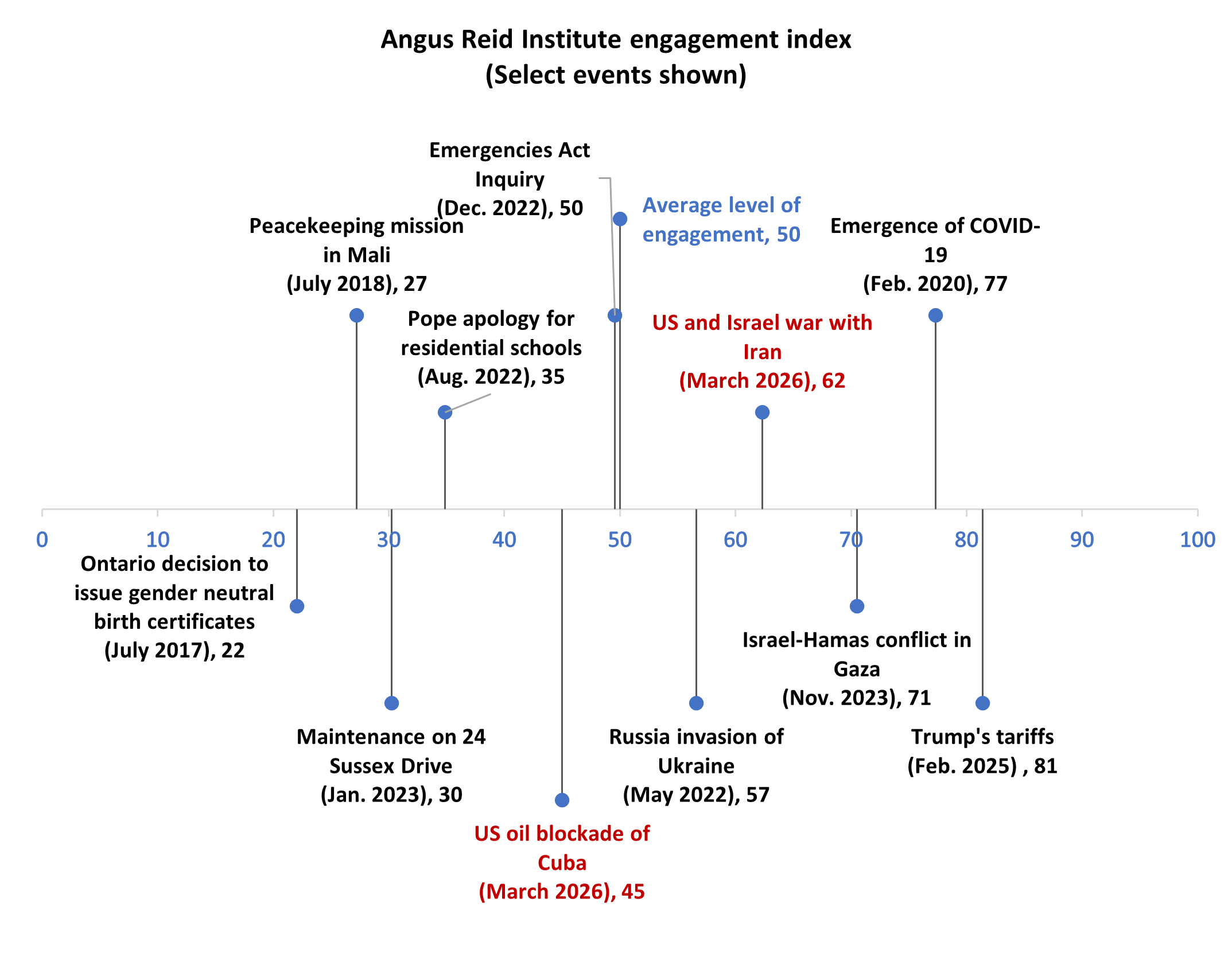
The focus on the U.S. and Israel war on Iran is evident when comparing the attention paid to the two international news stories by Canadians. The Angus Reid Institute engagement index scores attention paid to the U.S. oil blockade of Cuba as a 45, lower than average level of engagement of 50. The war in Iran scores a 62.
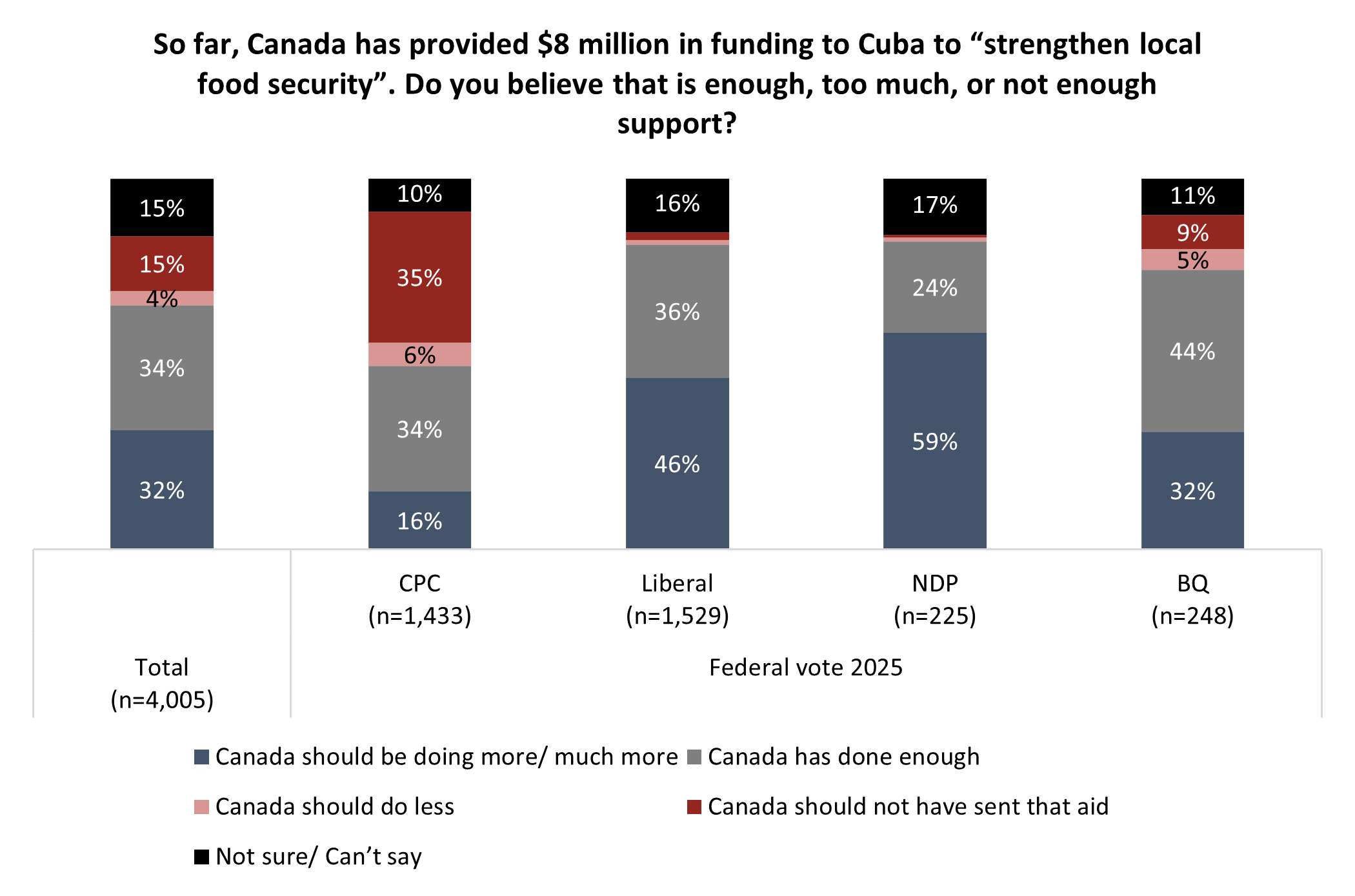
So far, Canada has supplied $8 million in humanitarian aid, mostly to help fortify Cuba’s food security. One-third (34%) say that is enough support from Canada; one-third (32%) want their country to do more to assist. There are also one-in-five (19%) who believe Canada should be doing less than that or should not have sent that aid at all.
Awareness of situation in Cuba relatively low
The history of the U.S. economic embargo on Cuba dates to 1960 following the Cuban Revolution and the country’s closer relationship with the Soviet Union during the Cold War. Canada did not follow suit by severing economic ties, instead the country maintained relations with Cuba throughout and after the Cold War. Currently, Canada is the second-largest foreign investor in Cuba after Spain.
The U.S. had previously gone through a period of softening its stance towards Cuba during the administration of former President Barack Obama. But things changed back to previous levels during the first term of President Donald Trump. This year, Trump escalated things further by threatening tariffs on country’s that supplied Cuba with oil in January along with the U.S. taking control of Venezuelan oil exports, Cuba’s chief source of foreign fuel. This led to a near total oil blockade against Cuba, resulting in power outages, fuel rationing and the suspension of most tourist flights to the country, a major hit to the island nation’s economy.
Half of Canadians (51%) say they are following the story in Cuba “very closely” (14%) or “closely” (38%). One-third (36%) say they are scanning headlines.
Canadians’ awareness of the current crisis in Cuba is below average compared to many recent news events. The Angus Reid Institute’s engagement index measures awareness to news stories with 50 being an average score. The current situation in Cuba scores a 45, much lower than the U.S. and Israel war with Iran, which scores a 62:
Half say U.S. tension should not influence whether or not Canada sends aid
Canada announced in February it planned to send $8 million worth of aid to Cuba to “strengthen local food security and nutrition”. Some have called Canada to do more, but there is concern that further Canadian aid could risk Canada-U.S. relations as the two countries engage in rocky trade negotiations.
Half (51%) of Canadians say that in this case, Canadian aid policy should not be influenced by the U.S. Three-in-ten (31%) believe Canada should avoid actions that would potentially further draw the ire of Trump. Those who voted Conservative in last year’s federal election are much more likely than others (55%) to believe that Canada should avoid further upsetting U.S.-Canada relations.
These data follow a pretty consistent majority view among Canadians that Canada should be looking for a hard line in U.S. trade negotiations rather than making concessions to maintain a positive relationship with the U.S.
One-third say enough done already; one-third want more
Cuba’s situation has ameliorated in recent days after a Russian tanker delivered a load of fuel to the island, ending what had been a near-total fuel blockade dating back to January. The situation had previously been dire, with nationwide electricity blackouts, severe rationing and struggles to keep hospitals operating.
Canada has so far only announced the $8 million in aid. These data, taken in mid-March, show Canadians are as likely to believe Canada has done enough (34%) as say Canada should be doing more (32%). One-in-five (19%) say Canada should have done less or not sent that aid in the first place.
The latter is more likely the position of those who voted CPC in 2025, two-in-five of whom (41%) say Canada should have done less than the $8 million in aid it sent. However, that is a minority opinion among CPC voters, with half (50%) saying Canada has done enough or should be doing more.
Those who voted Liberal, NDP, and BQ, are much more likely to want Canada to be sending further aid to Cuba:
METHODOLOGY
| The Angus Reid Institute conducted an online survey from March 11-17, 2026, among a randomized sample of 4,005 Canadian adults. Respondents are drawn from the Angus Reid Forum, a large-scale online panel developed to include Canadian residents in each of the 343 federal ridings in Canada and representative of the Canadian population by age, gender, family income, ethnic status and education. The sample was weighted to be representative of adults nationwide according to region, gender, age, household income, and education, based on the Canadian census. For comparison purposes only, a probability sample of this size would carry a margin of error of +/- 1.5 percentage points, 19 times out of 20. Discrepancies in or between totals are due to rounding. The survey was self-commissioned and paid for by ARI. Detailed tables are found at the end of this release.
For more information on our polling methods, click here. |
For detailed results by age, gender, region, education, and other demographics, click here.
For PDF of full release, click here.
For questionnaire, click here.
MEDIA CONTACT:
Shachi Kurl, President: 604.908.1693 shachi.kurl@angusreid.org @shachikurl
Dave Korzinski, Research Director: 250.899.0821 dave.korzinski@angusreid.org