

Majorities acknowledge that what happened at Indian Residential Schools was ‘cultural genocide’
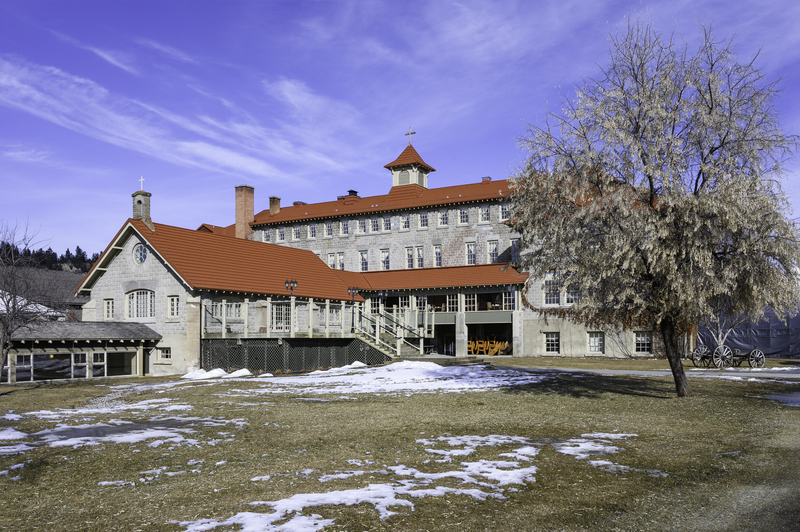
August 14, 2025 – In the wake of the Truth and Reconciliation Commission report in 2015, many Canadians have been grappling with the nation’s treatment of Indigenous Peoples. One of the key conversations has centred around Indian Residential schools (IRS), and the discovery of soil “anomalies” through ground-penetrating radar, initially referred to as the graves of children at what was once the largest residential school in the nation in Kamloops.
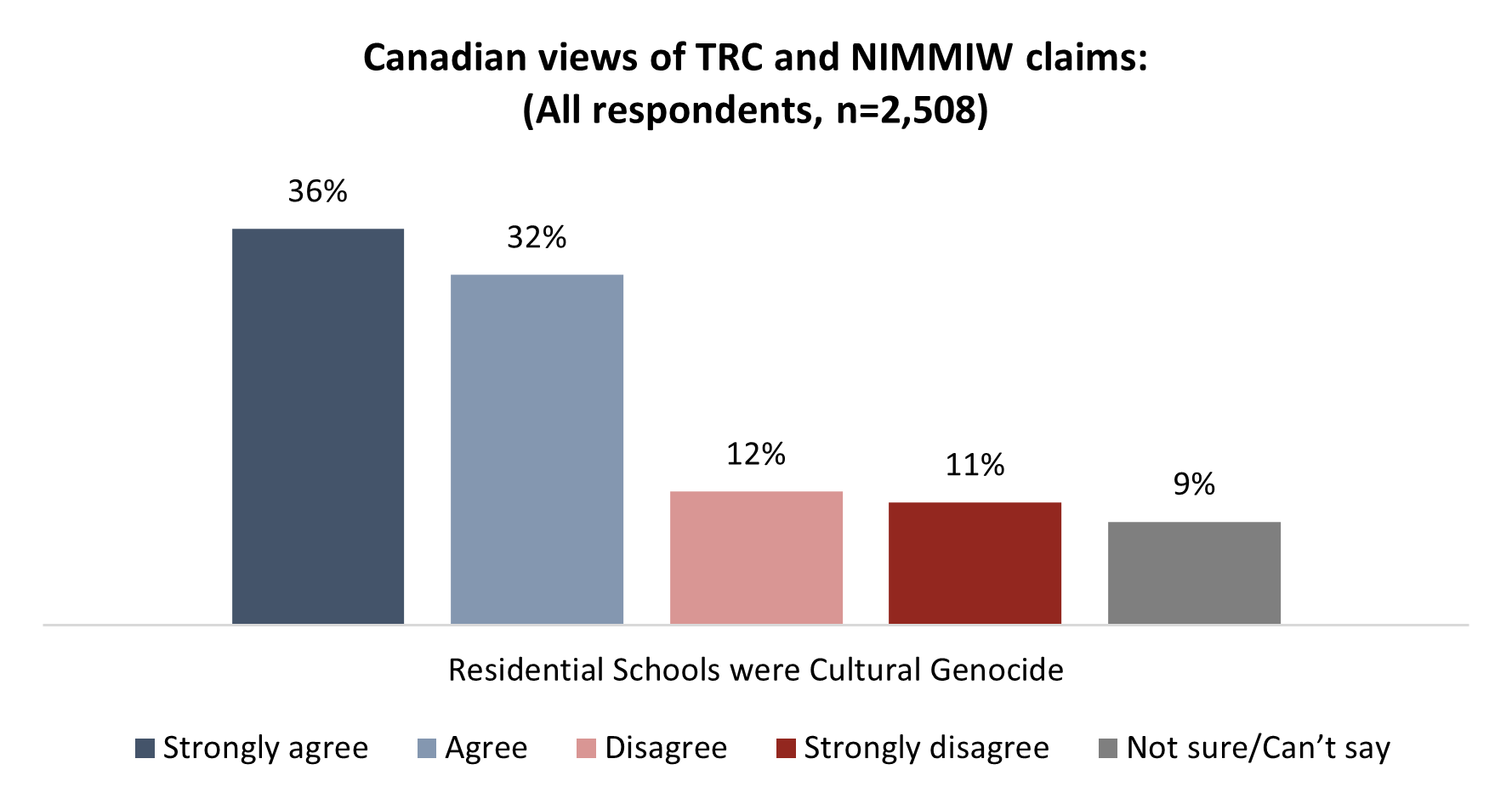
New data from the non-profit Angus Reid Institute finds Canadians sympathetic to the harmful legacy of these schools. Indeed, two-thirds (68%) say that IRS were a form of cultural genocide. Half (54%) also say that Canada needs to continue to address the legacy left by these schools on Indigenous people. More than 150,000 children attended these schools, representing approximately one-third of Indigenous children.
For full questionnaire text, click here.
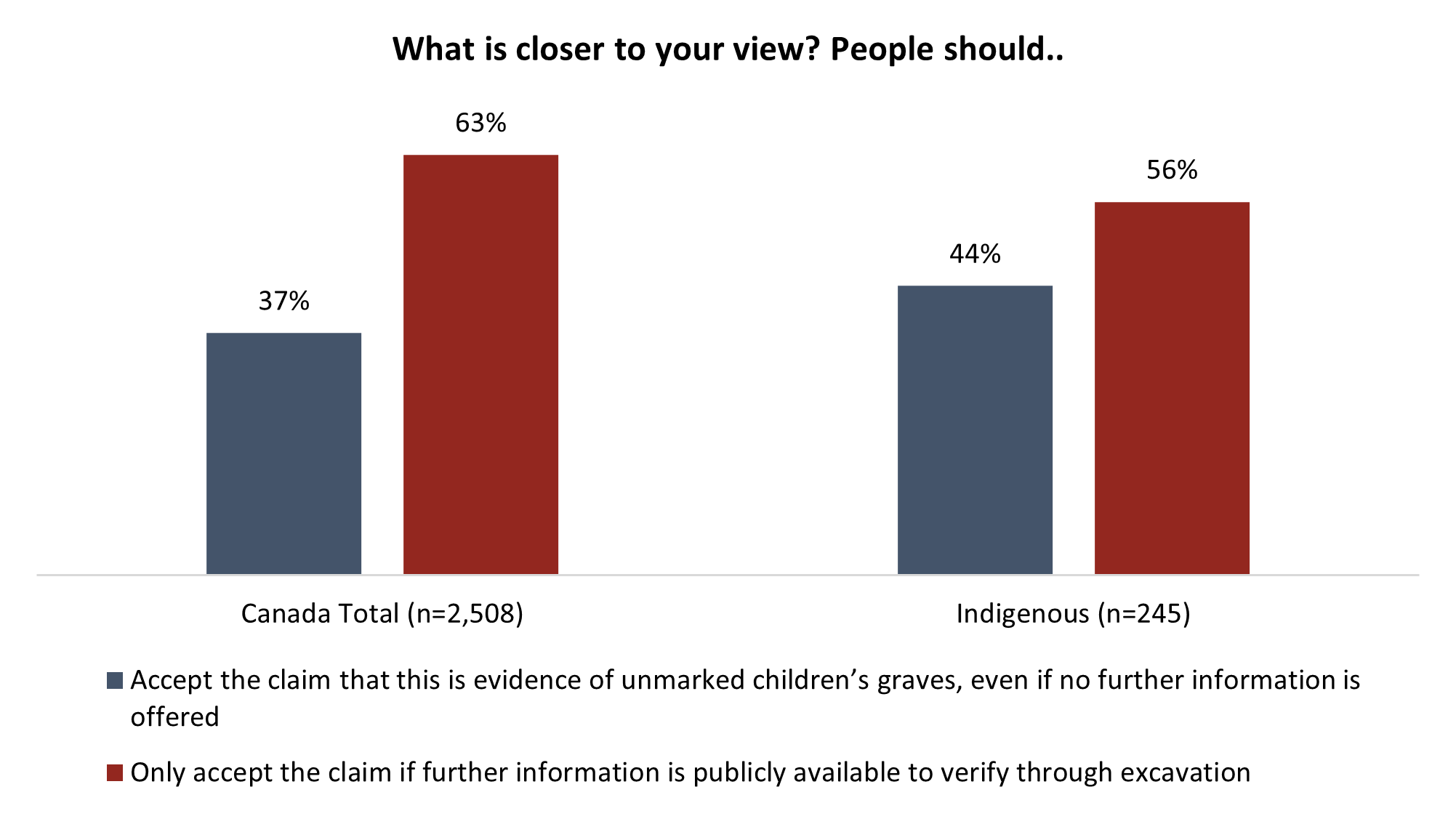
As the four-year anniversary of the discovery passed in May, there is, however, widespread hesitancy to accept claims made by the Tkʼemlúps te Secwépem First Nation without additional evidence. To date, no human remains have been confirmed or exhumed and suspected anomalies remain unverified. The federal government has provided more than $12 million to assist in the investigation, but disturbance of the sites has not been agreed upon. A majority of Canadians (63%) and Indigenous people (56%) hold the view that further evidence through exhumation is necessary to accept that the remains of children are buried at the site.
Over the past four years, there have been several cases where professors, high school teachers, lawyers and politicians have been fired or forced to resign after questioning the conclusions of the Truth and Reconciliation Commission. Asked whether they feel that job loss is a fair or unfair way of treating people who raise questions about the TRC report, by a significant margin Canadians say that such action is unfair. Fewer than three-in-10 would force the resignation or ask for the firing of professors, high school teachers, or lawyers who raise questions. Approximately half say that is unfair. There is a divide, however, among Canadians over how politicians who engage in this should be handled. Equal numbers say it is fair or unfair to hold those individuals accountable through firing or resignation. Here the results rest starkly on party lines, with Conservatives much more likely to feel this is unfair.
A majority also draw a line at the idea of criminalizing this type of public statement, as has been proposed by some. This includes Kimberly Murray, appointed as Independent Special Interlocutor for Missing Children and Unmarked Graves and Burial Sites associated with Indian Residential Schools in 2022. Her report called for “urgent consideration” of legal mechanisms — both civil and criminal sanctions — against residential school denialism.
By a wide margin (63% to 24%) Canadians oppose the criminalization of public statements of denialism. Indigenous respondents were split on this issue with 45 per cent opposing this, and 42 per cent saying that such denialism should be a criminal offense.
*A note on sample. The Angus Reid Institute collected responses from those who self-identify as Indigenous in this survey. This is not representative of all Indigenous experiences and perspectives. The total number of responses from Indigenous individuals (245 responses) was weighted within the total sample to be statistically representative at five per cent. Please consider these views as informative but not authoritative.
INDEX
Part One: Questions and consequences in residential school skepticism
-
High awareness for Kamloops discovery
-
Most say more evidence needed before they can accept claims
-
Gender, generation, colour views of whether “denialism” should be fireable
-
Most agree it should not be a criminal offense
Part Two: Part Two: Residential school legacy seen as enduring by half
-
Though many overestimate how many attended
-
Cultural genocide seen as an accurate descriptor
-
Fewer, but still majority, say broader policies were genocide
Part One: Questions and consequences for residential school skepticism
In 2021, the Tkʼemlúps te Secwépem First Nation in Kamloops made headlines around the world when it announced it had discovered 215 unmarked graves of children on a former Indian Residential School site, formerly the largest such school in Canada. Former Prime Minister Justin Trudeau announced that the flags on parliament hill would be lowered to half mast, and other such discoveries were announced in the wake, including in Saskatchewan, Manitoba, Ontario and other areas in British Columbia. The terminology of “unmarked graves” in Kamloops was changed to “anomalies” as the investigation continues. Other First Nations have used the terms “plausible burials” or “reflections”.
While these conversations are difficult for some, Angus Reid Institute engaged Canadians in questions about these issues, hoping to better inform ongoing discussion and debate. For the full questionnaire text, please click here.
High awareness for Kamloops discovery
Awareness of the Kamloops discovery is massive across the country. Fully three-quarters of Canadians (77%) have followed the issue and had at least some conversation about it. This peaks in B.C. at 88 per cent:

Most say more evidence needed before they can accept claims
As the years have passed, some debate has emerged about what should be required of First Nations to confirm these claims. Some of this is based on the millions of dollars of federal funding that were sent in order to assist in the investigation. Tk’emlúps te Secwépemc leadership has emphasized that the pace of the work is determined by survivors and their families, not by external pressure. Concerns in the community have been expressed about disturbing these sites, and conversations continue about how best to proceed. For many Canadians, more information is required before they are fully willing to accept the disturbing claims of unmarked children’s graves.
Full question text: “The Kamloops band’s claim of 215 unmarked graves of children was later revised to about 200 “anomalies” and suspected burial sites. The federal government has given $12.1 million in funding to assist in investigating this issue. To date, no additional reports have been made public.
What is closer to your view?”

Younger women are the only age and gender group wherein a majority have no issue accepting the claims with no additional information. For others, further verification would be needed:

Among Indigenous identifying individuals, more than half also feel that the claim should only be accepted with further proof, though they are more likely than others to say they’re satisfied with what has been offered already:
Views of whether “denialism” should be punishable, or illegal
Historian Sean Carleton has described residential school denialism as a strategy used by some to “misrepresent and distort basic facts about residential schools to shake public confidence in the stories of survivors”. Those accused of denialism argue that the evidence of harms at residential schools is disputable or unreliable, or viewed through a modern lens that is not relevant to the time that events took place. Angus Reid Institute sought not to define whether or not this type of behaviour is defensible, but to engage in how it should be handled across institutions.
There have been many examples in recent years of public figures being censured or fired for questioning the harms of residential schools or the ongoing investigation in Kamloops. B.C. MLA Dallas Brodie was kicked out of the Conservative Party of B.C. after she “mocked and belittled” testimony from residential school survivors earlier this year. Fellow MLA Aaron Gunn has remained with the party, though he was accused of downplaying the impact of residential schools in the past. Gunn clarified that he did not dispute the “truly horrific events” that took place at these schools. Senator Lynn Beyak was suspended from the Canadian Senate twice for defending the residential school system.
Frances Widdowson was fired from Mount Royal University in 2022 in part for espousing the benefits of residential schools.
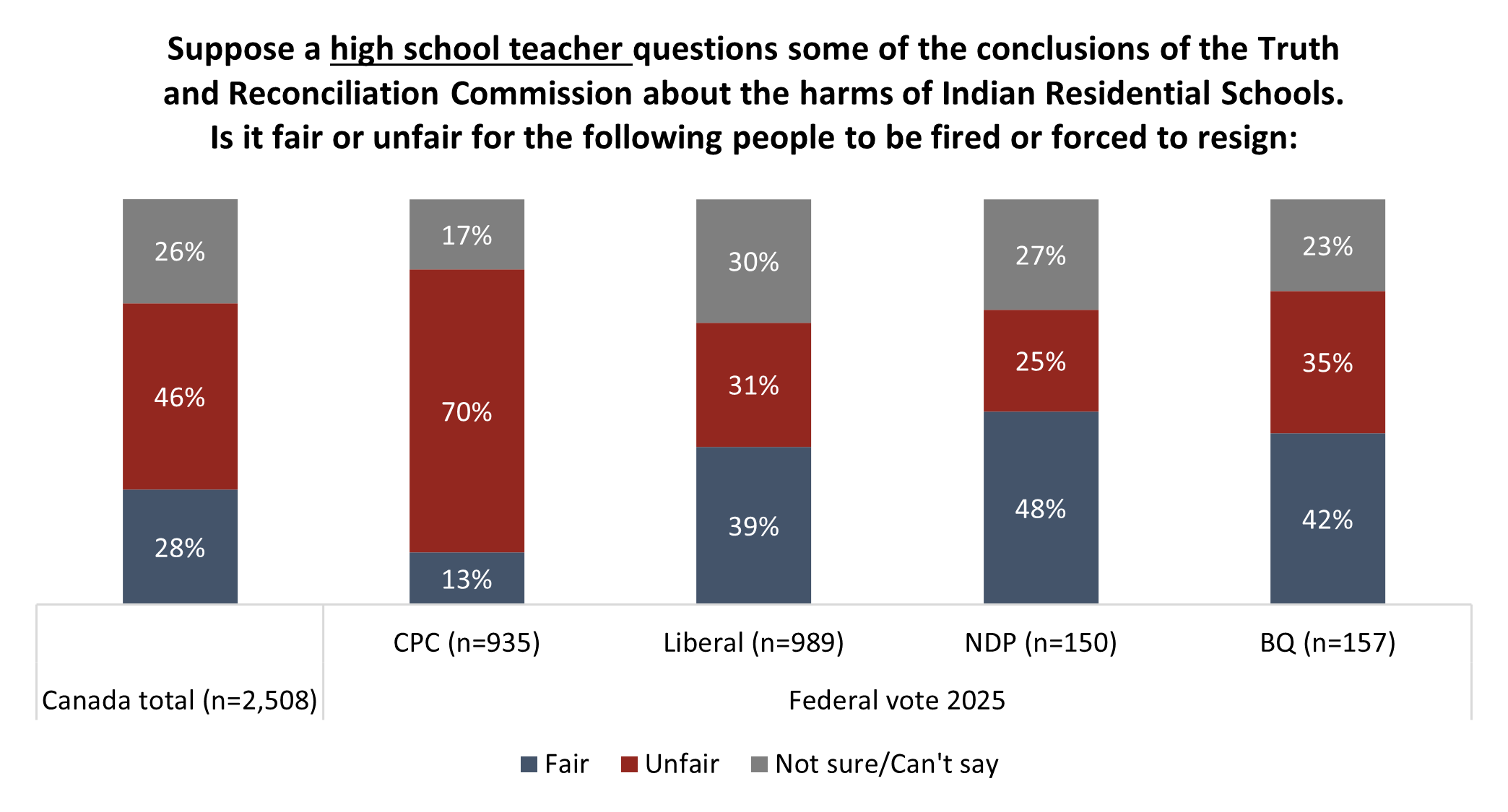
Canadians are more likely to say that punishing individuals with job loss across a number of professional positions is unfair, rather than fair, with a large number saying they’re unsure. When it comes to politicians, there is more of a sense that forcing resignation is fair, though it is still counterbalanced by the same number of people saying it is unfair:
 Political views are key to informing how Canadians feel about this issue. Two-thirds of Conservatives feel this is unfair, while no more than one-quarter of all other party supporters say the same.
Women of all ages are more likely than men to say it is fair to force the resignation of a politician who engages in residential school denialism, while men over the age of 34 are most likely to push back (see detailed tables).
 As noted in the first graph of this section, sentiment regarding the other four positions – university professor, high school teacher, lawyer, or journalist – are similar. Much of the sense that this is unfair is led by past Conservative Party voters, while Liberals are largely divided and uncertain:
 Most agree it should not be a criminal offense
While punishing a person at the employment level is seen as mostly unfair, starker are the views of the criminalization of this type of behaviour. Some, including NDP Member of Parliament Leah Gazan, and the First Nations Leadership Council in British Columbia, have called for the government to pass a law to criminalize residential school denialism, by classifying it as hate speech.
For most Canadians, this is a step too far. Three-in-five (62%) oppose the idea, with the largest group strongly opposing it (36%). Even among the demographic most concerned about this issue at an age and gender level – 18- to 34-year-old women – support rises to just 28 per cent.

Notably, among those who identify as Indigenous – 245 of whom participated in this survey – views are divided. Similar numbers support (42%) and oppose (45%) the criminalization of denialism: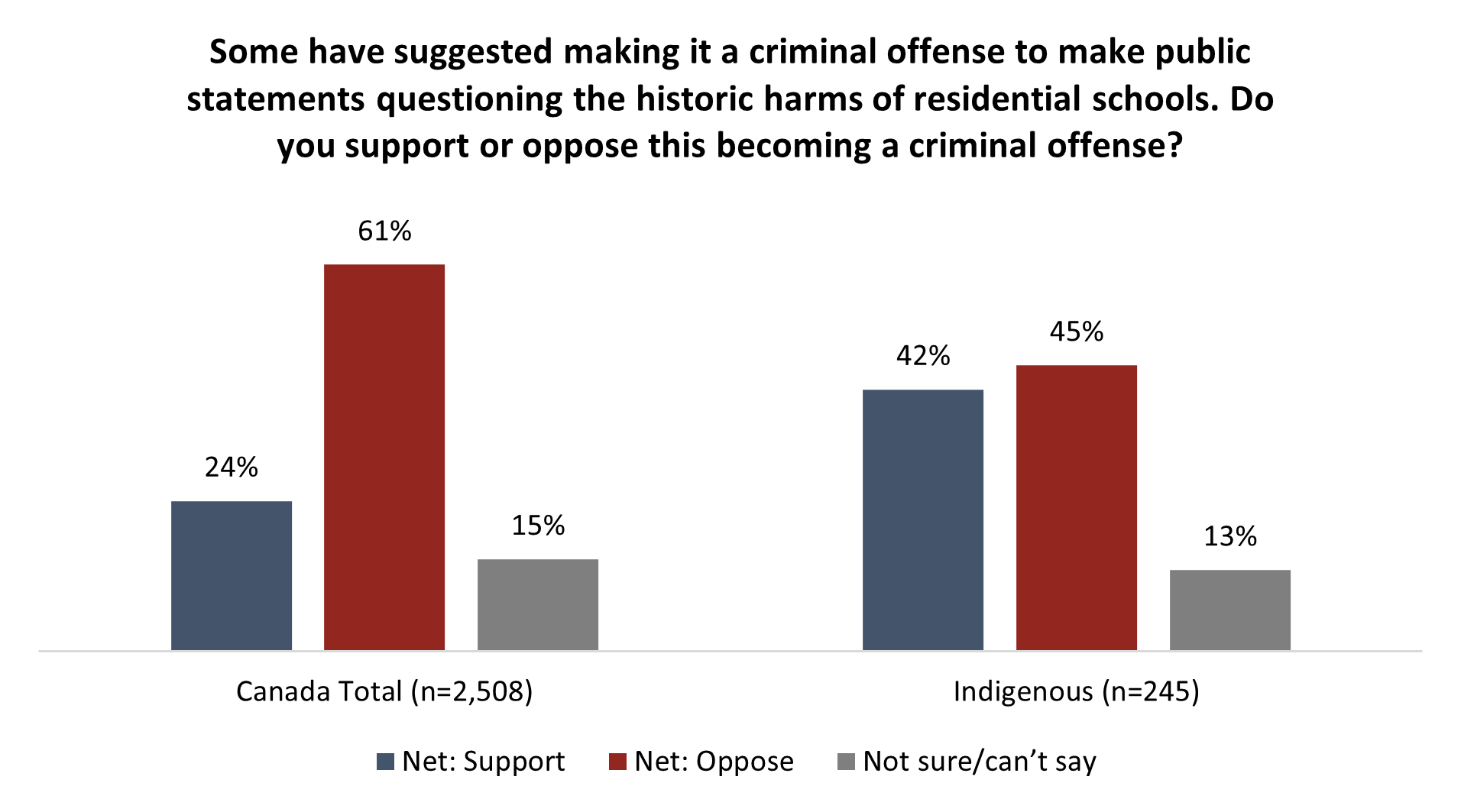
Part Two: Residential school legacy seen as enduring by half
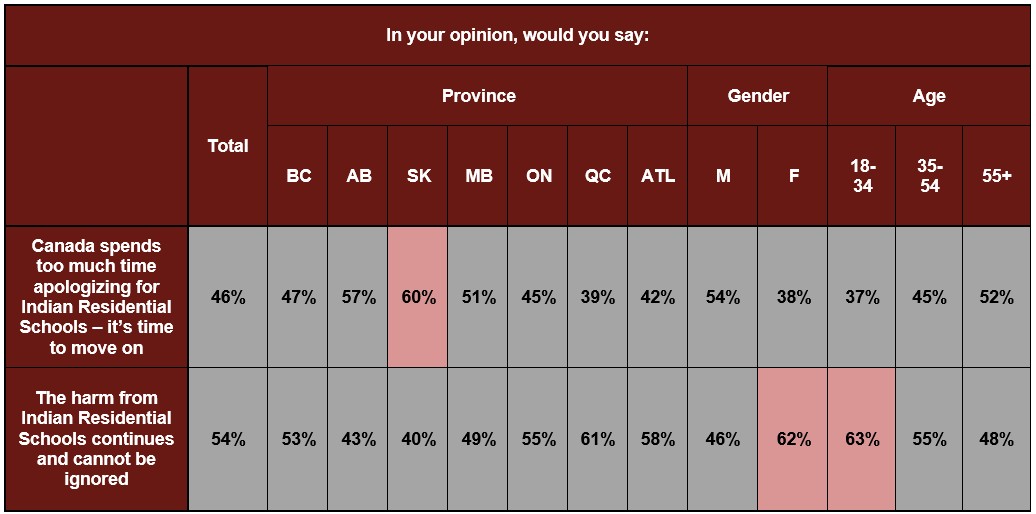
Much of the debate that continues in modern Canada is not necessarily contingent on the harms of residential schools in the past, which Canadians largely agree was devastating, but the enduring legacy. Consider that while a slight majority (54%) say that the harm from Indian Residential Schools continues, nearly the same amount (46%) disagree, and feel that Canada should focus less on addressing this. Notably, women and younger people are more likely to hold the former position.
Though many overestimate how many attended
Between 1883 and 1996, an estimated 150,000 Indigenous children were forced to attend residential schools in Canada. Over the history of the system, about 30 per cent of Indigenous children attended residential schools. Data on these enrolment numbers are challenging to firmly identify, but census data suggest this proportion to be a best estimate.
Related: Canadians blame federal government, churches, society, equally for Residential Schools
Angus Reid Institute asked Canadians for their perception of how many children attended these schools, finding few – 18 per cent – able to identify the 20 to 39 per cent range. Many vastly overestimate this proportion at 60 per cent or higher:
 Cultural genocide seen as an accurate descriptor
After more than six years of cross-country events, community hearings, and conversations with those who attended residential schools, the Truth and Reconciliation Commission released its report in 2015. The TRC concluded that residential schools were a form of cultural genocide, designed to destroy Indigenous culture. Asked whether they feel this is accurate, the vast majority of Canadians affirm the idea. One-in-five disagree:
Full question text: “The Truth and Reconciliation Commission has referred to what happened at Canada’s former Indian Residential Schools as “cultural genocide”. Do you agree or disagree with using the term “cultural genocide” to describe what happened at these schools?”
Fewer, but still majority, say broader policies were genocide
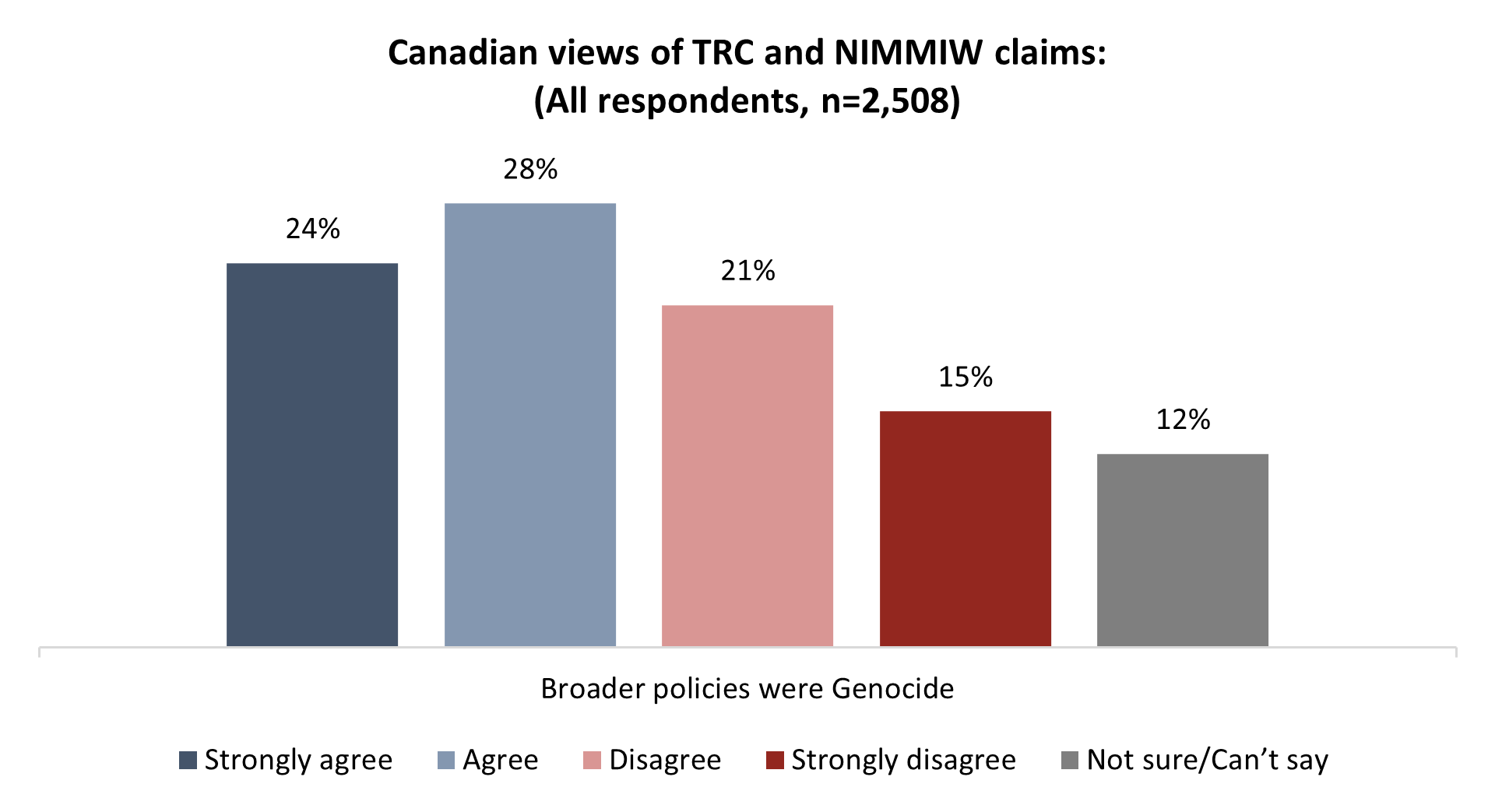
In 2019, after a three-year study, the National Inquiry into Missing and Murdered Indigenous Women and Girls reported that Canada’s treatment and policies toward Indigenous women and girls constituted genocide. Prime Minister Justin Trudeau reaffirmed this position after the report was made public. Canadians lean toward agreeing, but at a lower level than those who see cultural genocide in residential schools. Half (52%) agree, while 36 per cent disagree:
Full question text: “In 2019, the National Inquiry into Missing and Murdered Indigenous Women and Girls, went further and stated that Canada’s broader history of policies toward Indigenous peoples amount to “genocide” that is, the deliberate and systematic destruction of a group of people. Do you agree or disagree with using this term?”
For detailed results by age, gender, region, education, and other demographics, click here.
For PDF of full release, click here.
For full questionnaire, click here.
MEDIA CONTACT:
Angus Reid, Chairman: 604.505.2229 angus@angusreid.com
Dave Korzinski, Research Director: 250.899.0821 dave.korzinski@angusreid.org