


Close to equal numbers say they agree with Canada Post (34%) and union workers’ (29%)
December 4, 2024 – This post-Black Friday week is the normally the busiest of the year for Canada Post, where it would be expected to deliver approximately two million packages each day. However, ongoing strike action from the Canadian Union of Postal Workers has seen silent days joining unseasonably early silent nights at Canada Post offices across the country. As the stalemate continues, Canadians are facing significant delays in sending and receiving their holiday well wishes and gifts.
Related: Study of union membership benefits and costs
New data from the non-profit Angus Reid Institute finds seven-in-10 Canadians already affected by delays in either sending or receiving packages – a number that will only grow as the strike approaches the three-week mark.
The dispute centres around a number of different issues. Workers want a 24 per cent wage increase over four years and improved benefits including better sick leave. The union also disputes a push by Canada Post to add weekend deliveries and takes umbrage with the increasing number of part-time or contract workers Canada Post has been hiring. Canada Post is countering by suggesting that these changes are needed, given the financial pressures the crown corporation is facing, losing close to half a billion dollars in the first half of 2024.
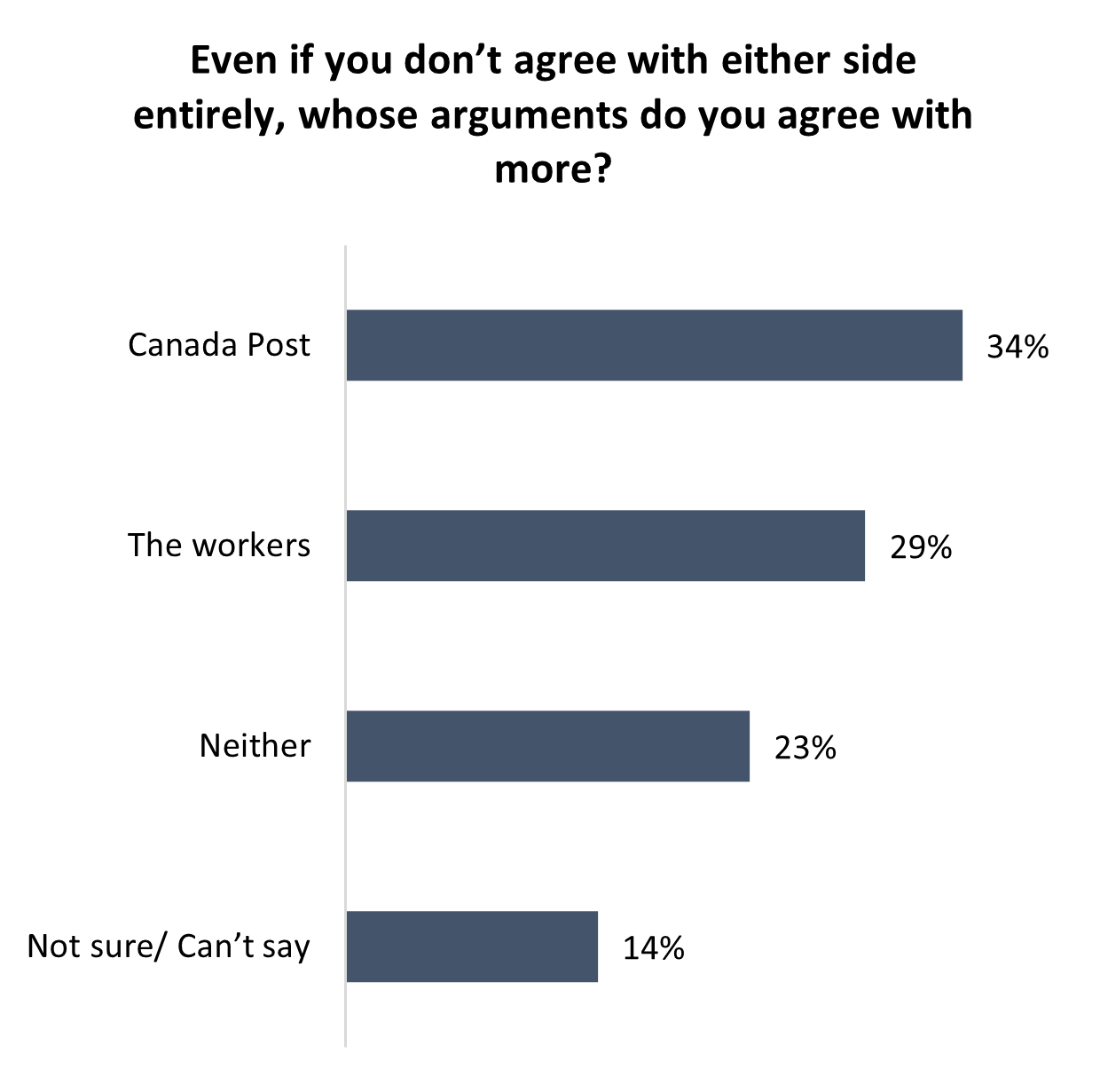
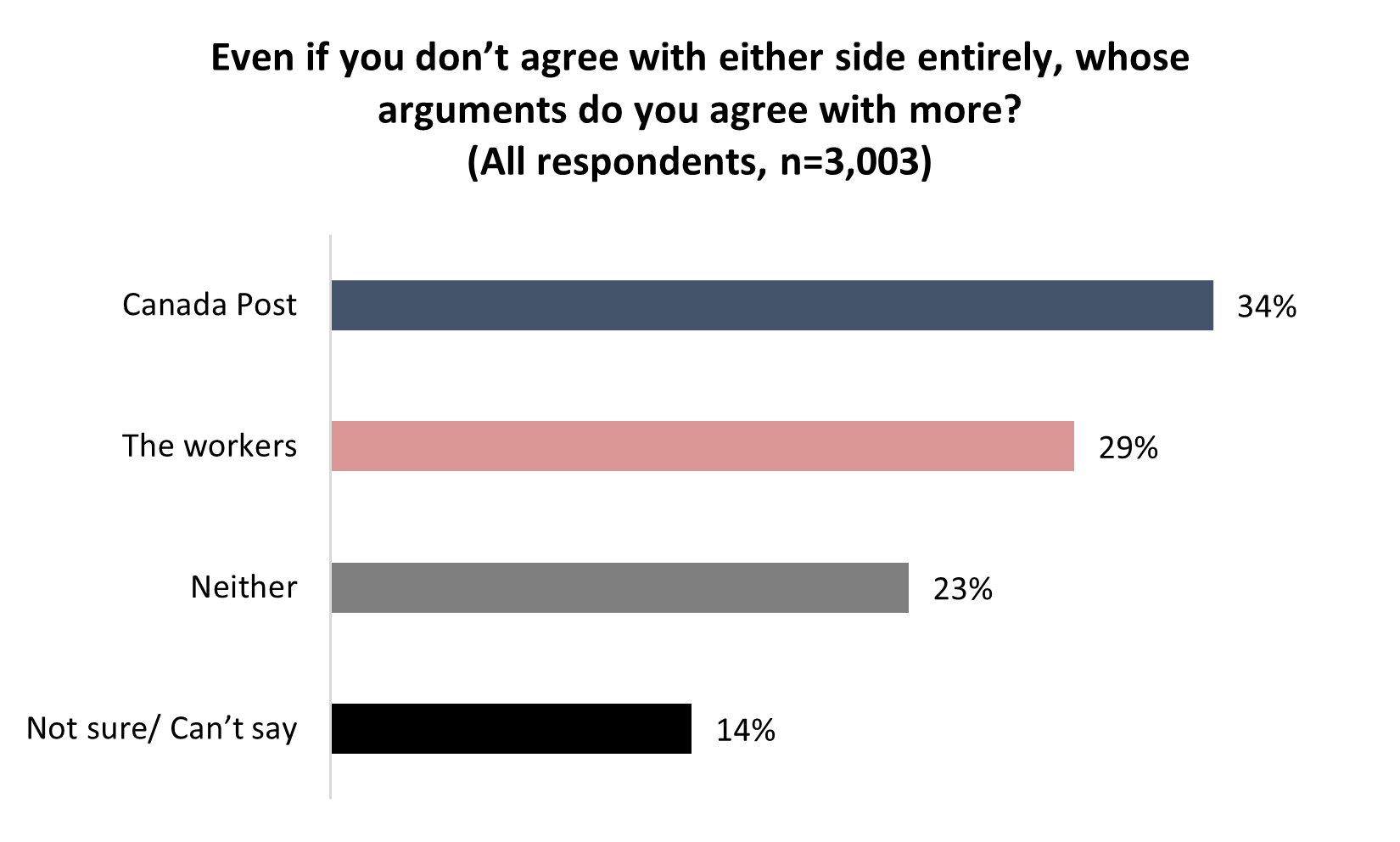
As the two camps swap proposals, Canadians are evidently sympathetic to both sides of the debate. One-third (34%) say that Canada Post is right to push back on demands and attempt to change how the business operates, given the financial hemorrhage it has endured in recent years. Close to the same number (29%) say that they stand with the union in their demands. One-quarter (23%) offer sympathy to neither, and likely just want their letters and packages back on the move.
About ARI
The Angus Reid Institute (ARI) was founded in October 2014 by pollster and sociologist, Dr. Angus Reid. ARI is a national, not-for-profit, non-partisan public opinion research foundation established to advance education by commissioning, conducting and disseminating to the public accessible and impartial statistical data, research and policy analysis on economics, political science, philanthropy, public administration, domestic and international affairs and other socio-economic issues of importance to Canada and its world.
INDEX
Part One: You’ve (not) Got Mail
Part Two: Whose side are you on?
Part One: You’ve (not) Got Mail
The Canadian Union of Postal Workers went on strike on Nov. 15 after reportedly more than a year of discussions with Canada Post on labour demands. Workers are pushing for wage increases, sick benefits, and concessions from Canada Post on re-structuring to include weekends and allow for contract delivery. Canada Post has seen its share of the parcel delivery market drop from more than 60 per cent pre-pandemic to less than 30 per cent in 2023 as competitors like Amazon and FedEx have taken a bigger role in Canadians’ lives.
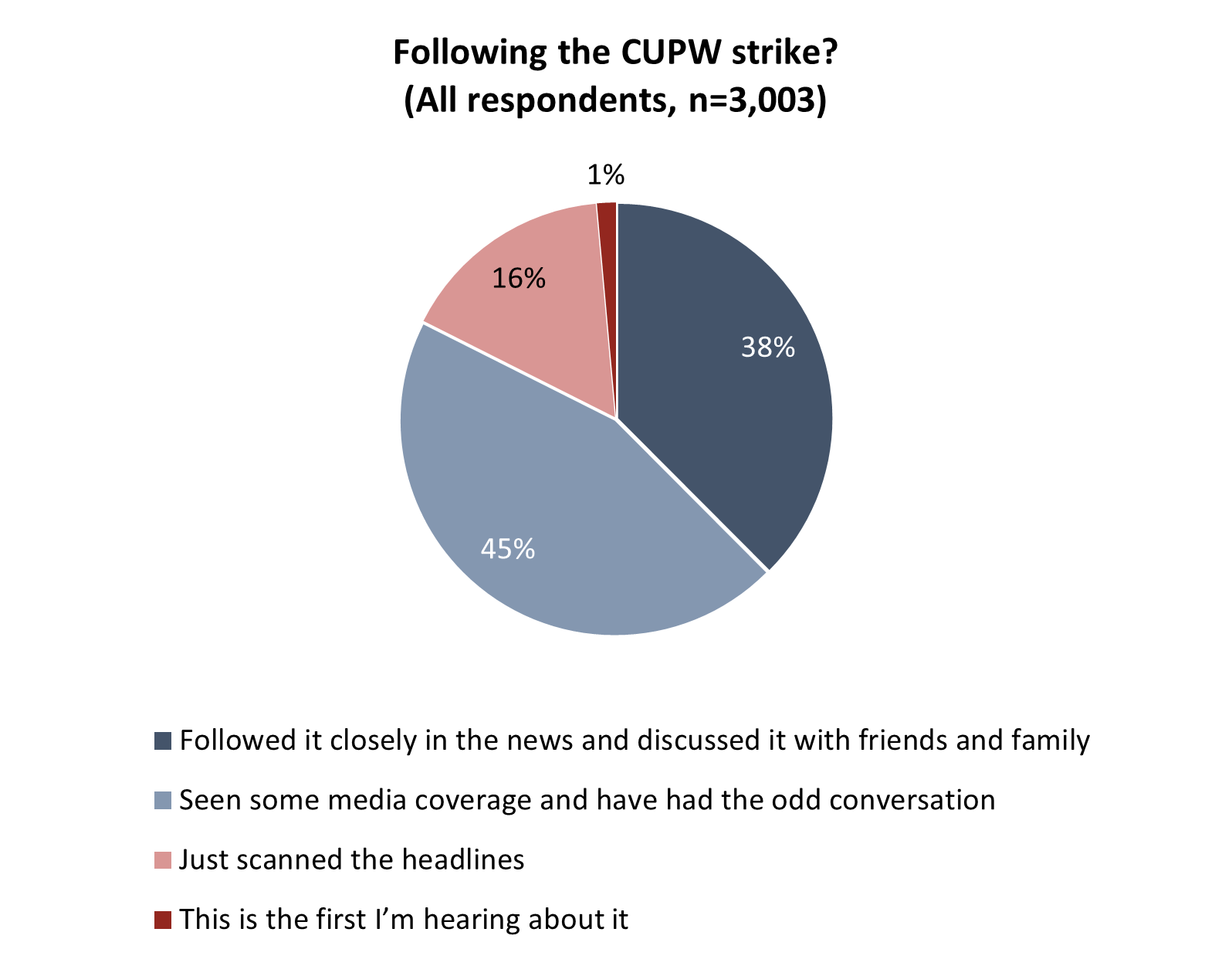
Given the scale of Canada Post’s visibility this time of year, it is perhaps unsurprising that the vast majority of Canadians say they have been following this story in recent weeks, and nearly all have heard about it, even if they haven’t scanned any headlines or read any stories:
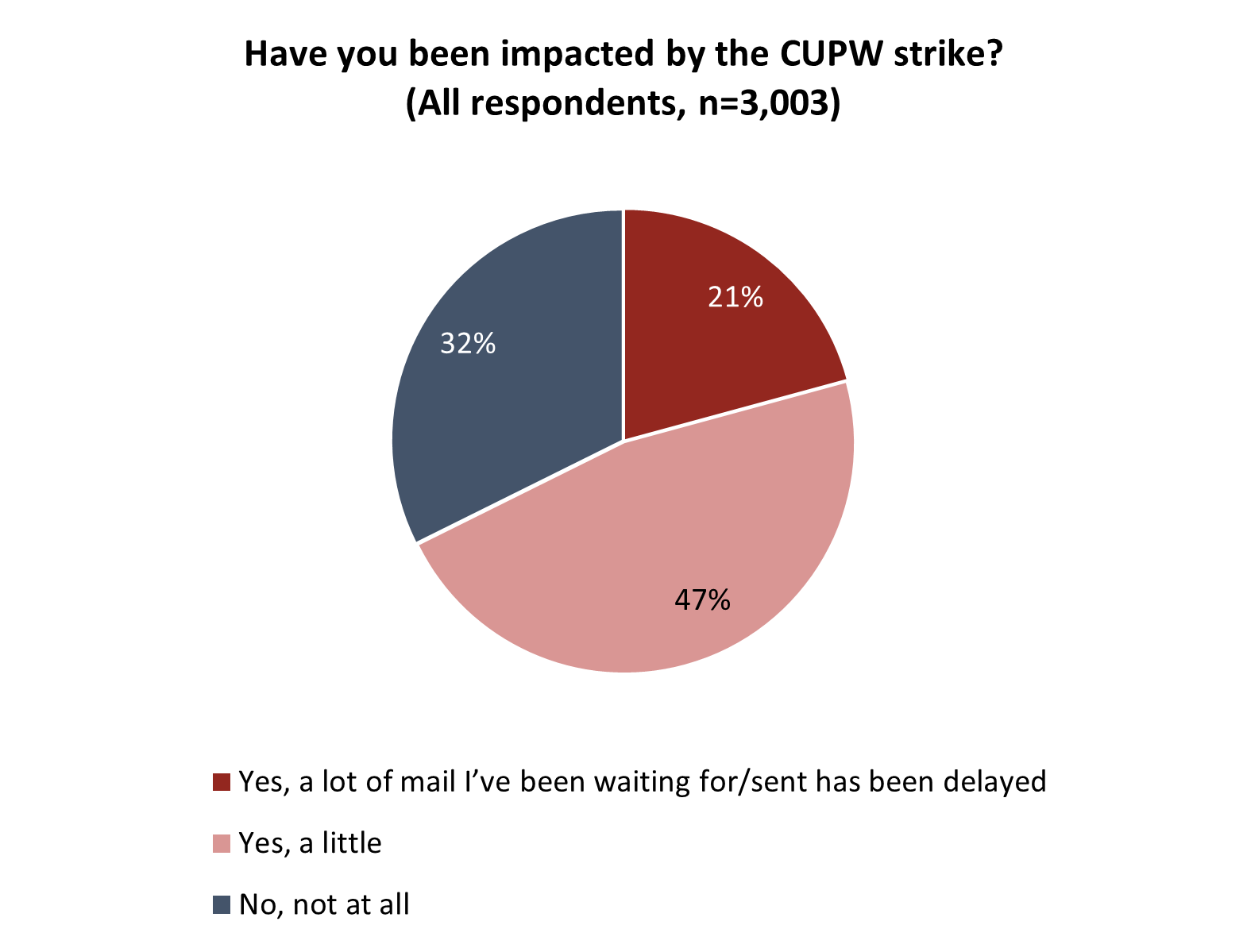
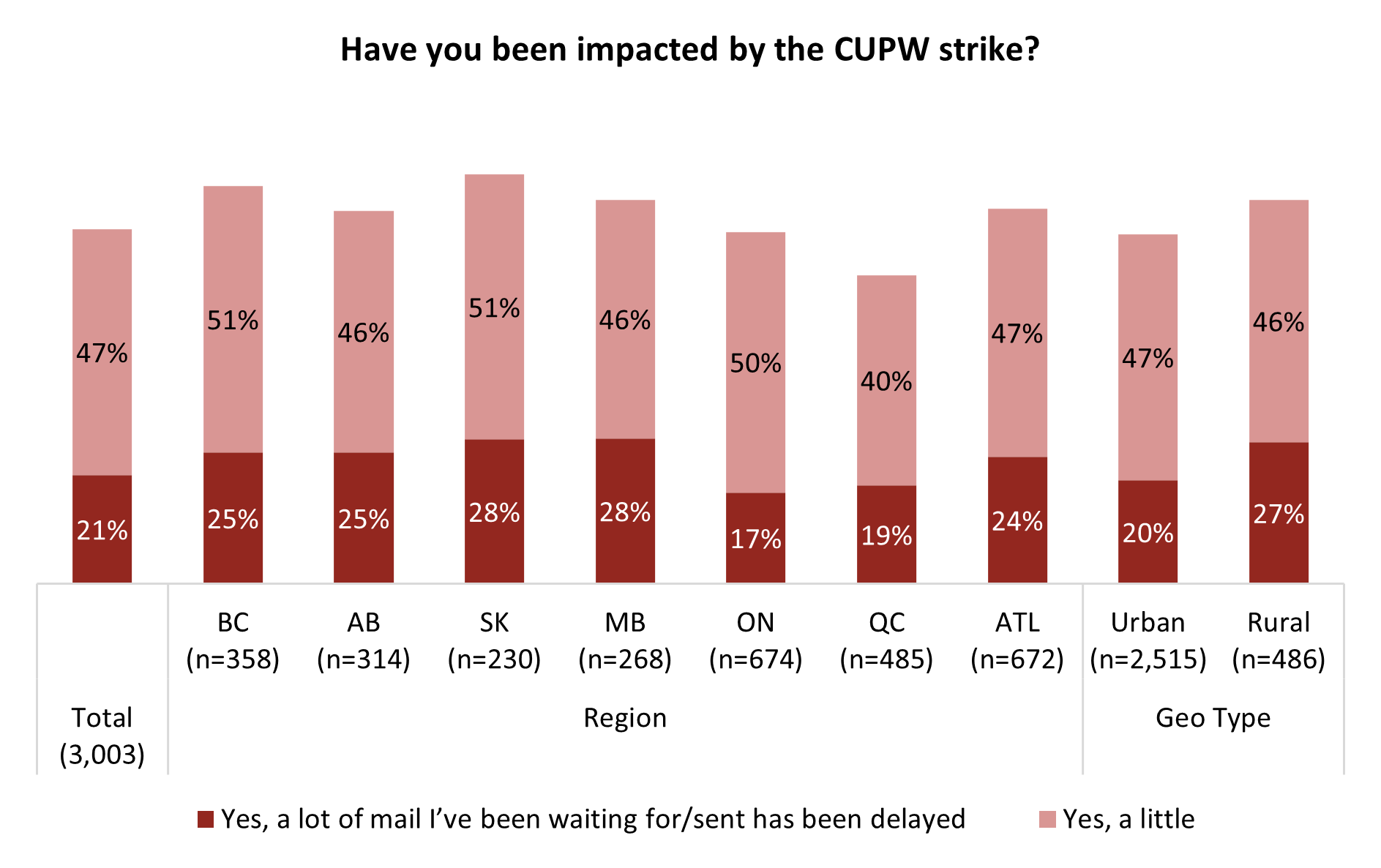
More than simply hearing or reading about the strike, most Canadians have also been personally affected within the first three weeks of labour action. One-in-five say they’ve had a considerable amount of mail delayed, while half the impact has been smaller but felt. One-third (32%) have yet to face any fallout from the strike.
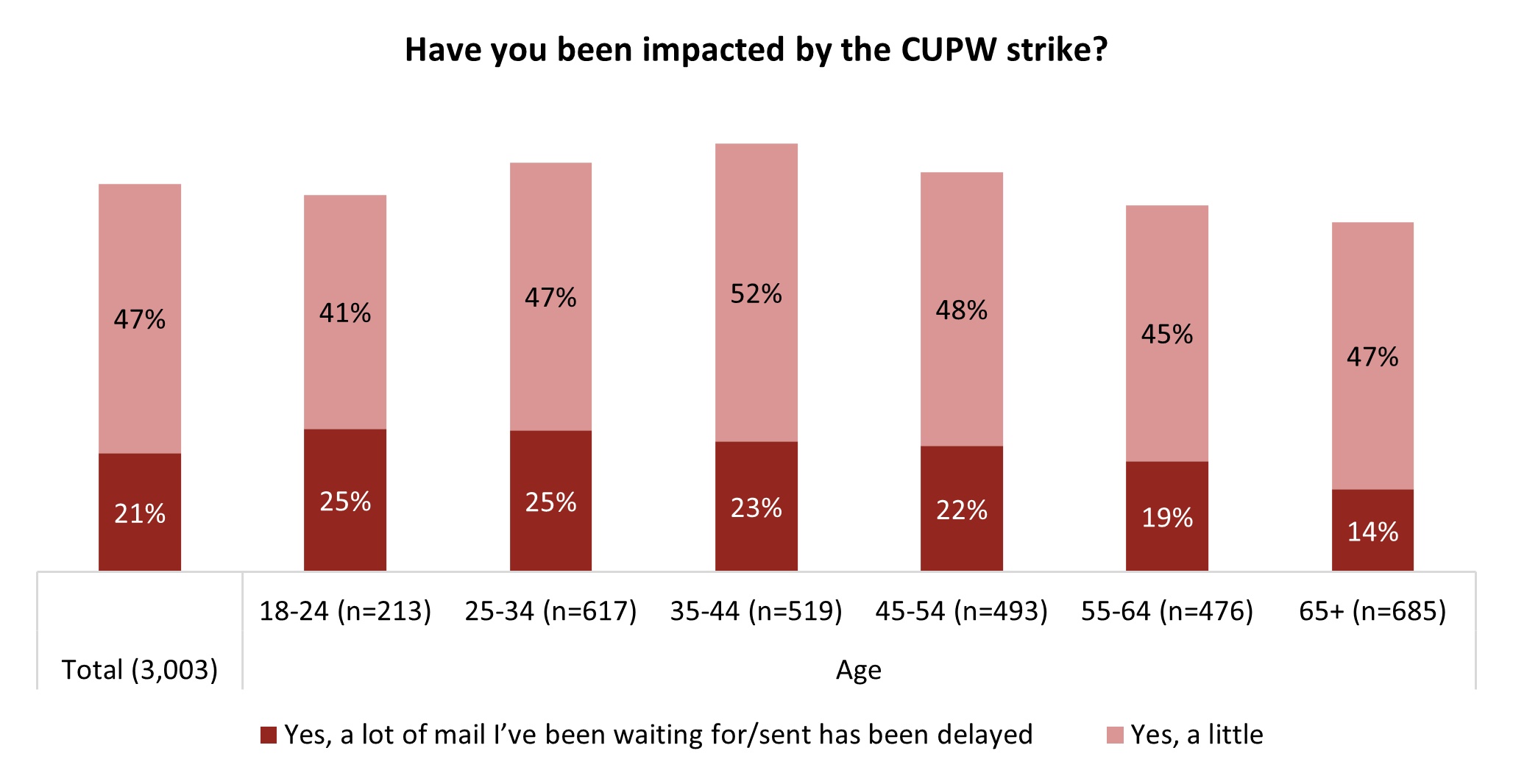
Canadian seniors are often hit hard by postal strikes, given their reliance on more traditional mailing methods, and dependence on Canada Post for paying bills and government benefits. The government has reassured seniors that benefits will still arrive on time, but three-in-five (61%) say they have been affected by the labour stoppage. Notably, however, it is 35- to 44-year-olds who profess the highest level of disruption so far, with three-quarters (75%) saying mail has been delayed one way or another:
At least three-in-five Canadians in all regions have been affected, while notable rural residents are more likely (27% to 20%) to say they have been significantly impacted:
Part Two: Whose side are you on?
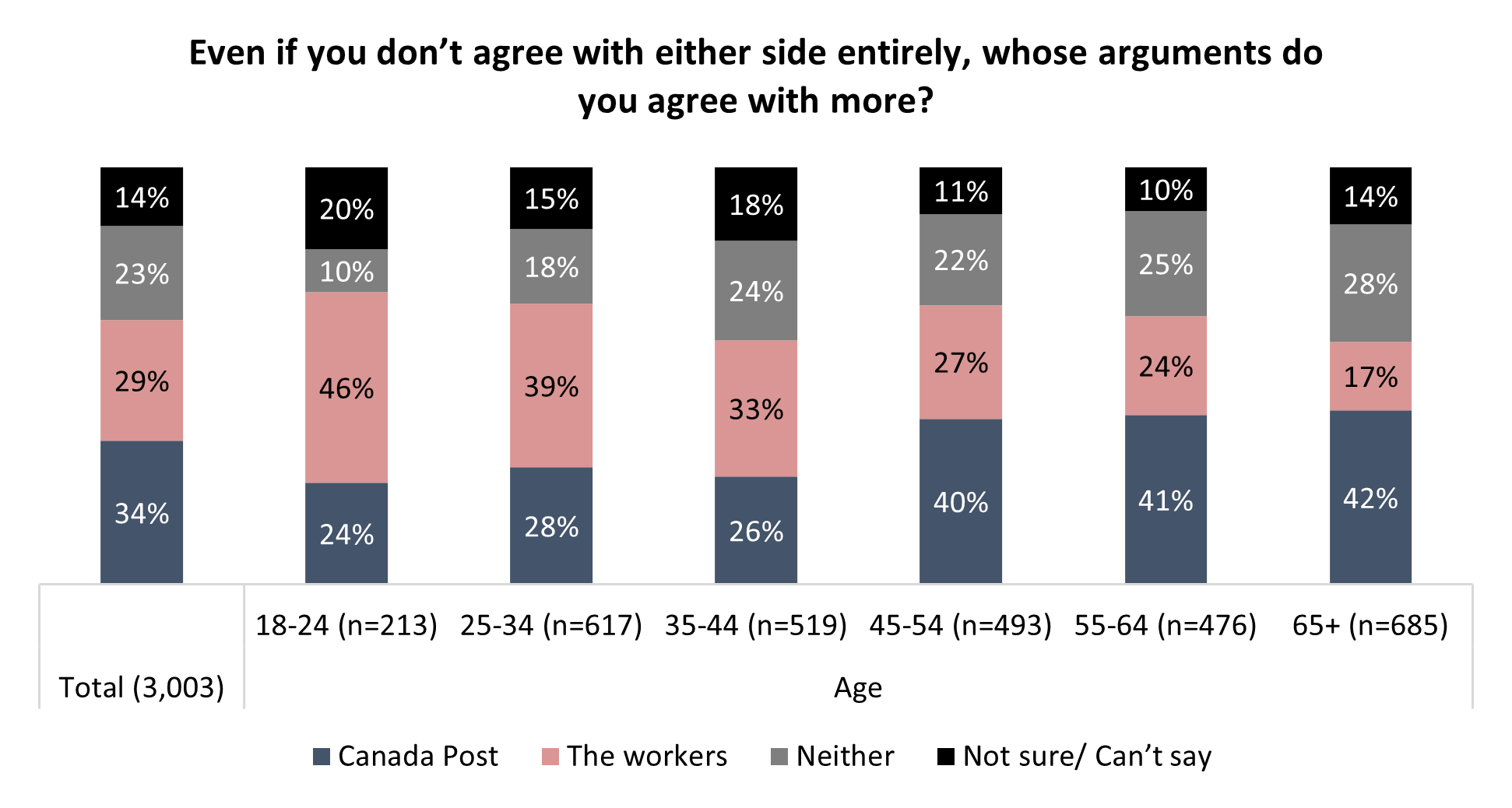
As the labour dispute continues, workers and consumers alike take on a growing burden. The Angus Reid Institute asked Canadians which side they’re more sympathetic to, given the arguments made publicly by the union and Canada Post. One-in-three (34%) are amenable to Canada Post’s narrative about the need for more flexibility and the growing financial challenges the crown corporation faces in the modern delivery world. Three-in-10 (29%) say they side more with the workers in their demands for better pay and protections against contract workers and weekend delivery. For one-quarter (23%) neither side hits the mark.
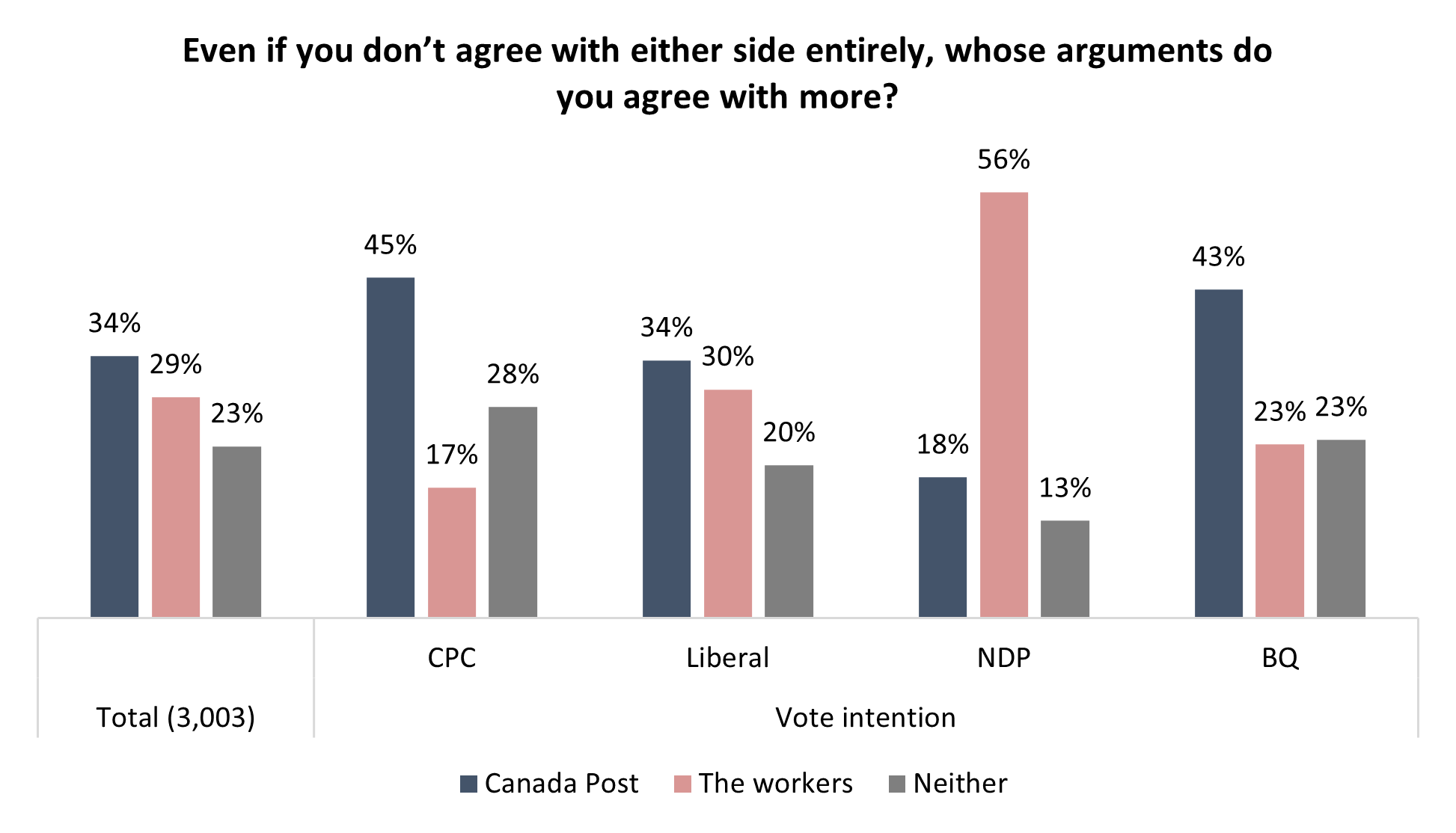
Those who would support the Conservatives in a future federal election are more amenable to the Canada Post side of the debate (45%) than would-be Liberal (34%) or NDP (18%) voters but are also most likely to say neither side has their sympathy. NDP voters are the only group of partisans for which a majority are supportive of the CUPW:
Those who have been significantly affected by the strike are more likely than those who have been minimally impacted to say they side with Canada Post, but notably, they share that opinion at the same level as those who have not noticed an impact at all:

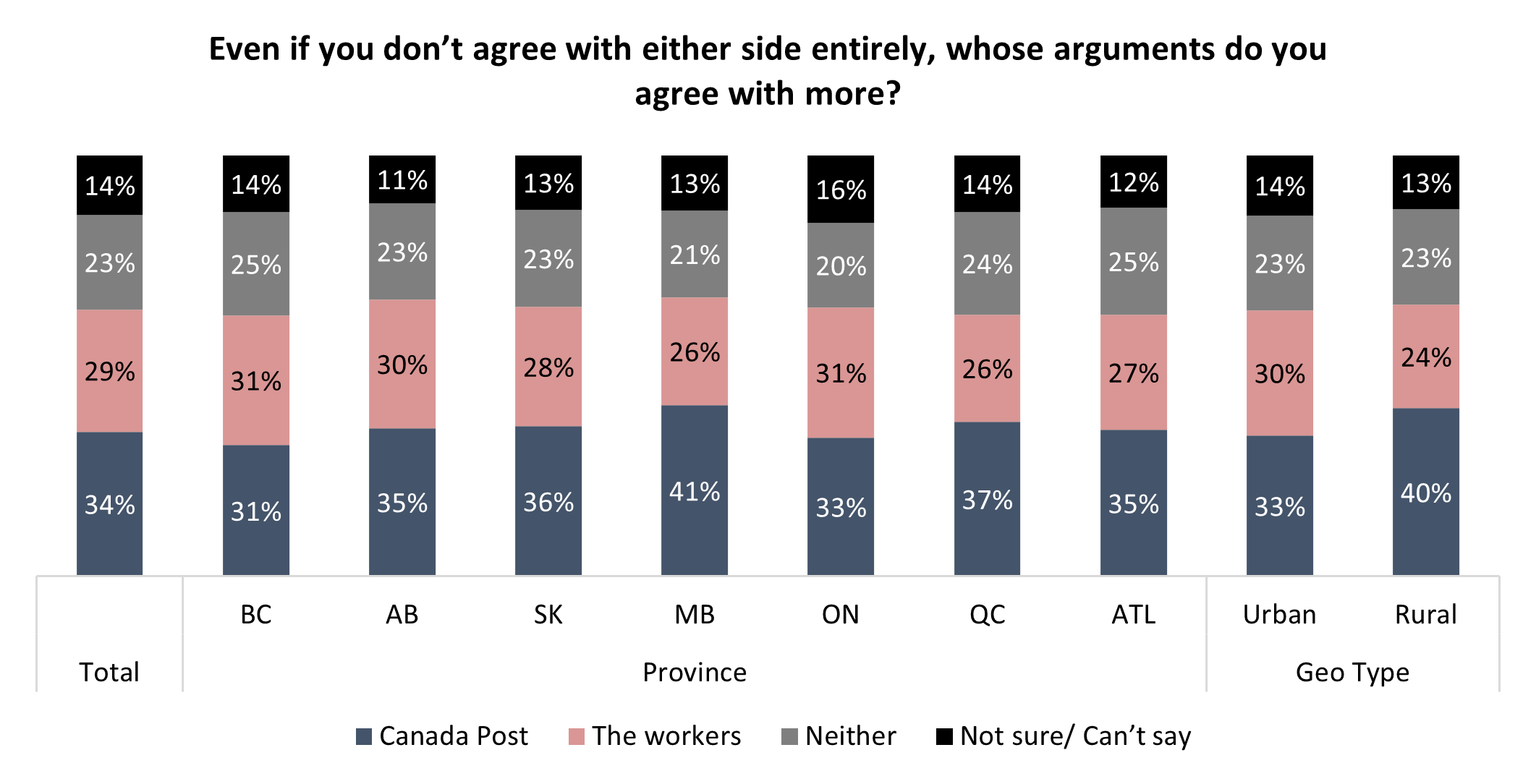
Rural Canadians show the highest gap between support for Canada Post and support for the CUPW (16-point gap). B.C. and Ontario residents are most divided:
Generationally, younger Canadians are much more likely to side with the workers than those over the age of 44. Those 45 and older say their sympathies are more with Canada Post as it figures out how to navigate a new business environment:
METHODOLOGY:
The Angus Reid Institute conducted an online survey from November 29 – December 2, 2024 among a representative randomized sample of 3,003 Canadian adults who are members of Angus Reid Forum. For comparison purposes only, a probability sample of this size would carry a margin of error of +/- 1.5 percentage points, 19 times out of 20. Discrepancies in or between totals are due to rounding. The survey was self-commissioned and paid for by ARI. Detailed tables are found at the end of this release.
For detailed results by age, gender, region, education, and other demographics, click here.
For full release, click here.
For questionnaire, click here.
MEDIA CONTACT:
Shachi Kurl, President: 604.908.1693 shachi.kurl@angusreid.org
Dave Korzinski, Research Director: 250.899.0821 dave.korzinski@angusreid.org
Jon Roe, Research Associate: 825.437.1147 jon.roe@angusreid.org